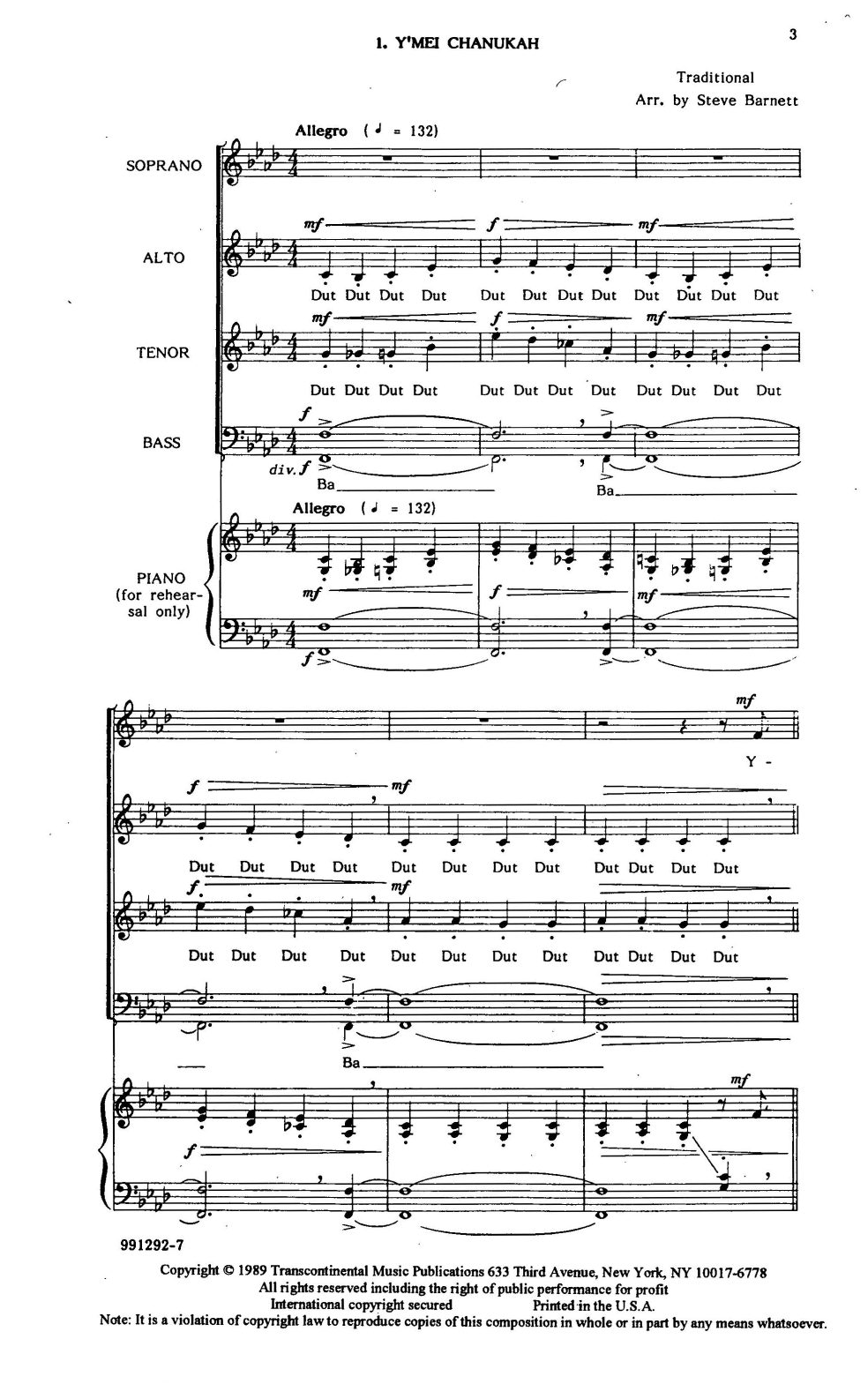
Barnett's arrangement brings fresh energy to a traditional text without sacrificing its spiritual weight. The piano part is approachable for rehearsal yet musically engaging enough that singers stay invested even during the accompaniment passages. SATB writing that balances accessibility with genuine four-part writing makes this genuinely singable across mixed ability levels.
What to expect
The piece strikes a balance between reverent and warm, inviting singers and listeners into familiar territory while offering fresh harmonic and textural choices. Barnett's orchestration of four-part voices creates moments of lush harmonic color that feel earned rather than gratuitous. There's space for both intimacy and lift.
Who it's for
Choirs seeking contemporary arrangements of liturgical or spiritual texts will find this a solid addition to their repertoire. Directors building a balanced concert program benefit from having quality SATB works that engage singers without requiring extensive rehearsal time. This works equally well for church musicians and secular choral programs.
How to get the most out of it
Treat the piano part as a full ensemble voice during rehearsal, not background texture. Pianists should shape phrases alongside the choir to establish style and pacing early.
Identify moments where voices split into divisi and map those sections carefully before full ensemble runs. Mark your score so singers know exactly where the texture shifts.
Balance soprano and alto lines when they diverge from the main melody. These inner parts carry harmonic information that shouldn't disappear under the stronger tenor and bass voices.
Lock in rhythmic precision during the early rehearsals; once the foundation is solid, focus on expressive phrasing and emotional resonance in the text.
How to use it
Place this comfortably in a concert devoted to seasonal or spiritual music, where it can sit alongside both traditional settings and other contemporary arrangements. Its moderate difficulty makes it useful as an early-season programming choice while your ensemble builds ensemble confidence. Consider programming it in a set with other works that explore similar thematic territory.
Skills your students will build
Four-part harmonic listening and balancing
Singing divisi sections with accuracy and independence
Rhythmic precision while maintaining expressive phrasing
Text painting and emotional communication in spiritual music
You May Also Like
Scan to Complete Your Purchase
Use your phone's camera to scan the code below
You'll log in on your phone and the order will be added to your account