Wouldn't It Be Loverly (from My Fair Lady) Sheet Music Preview

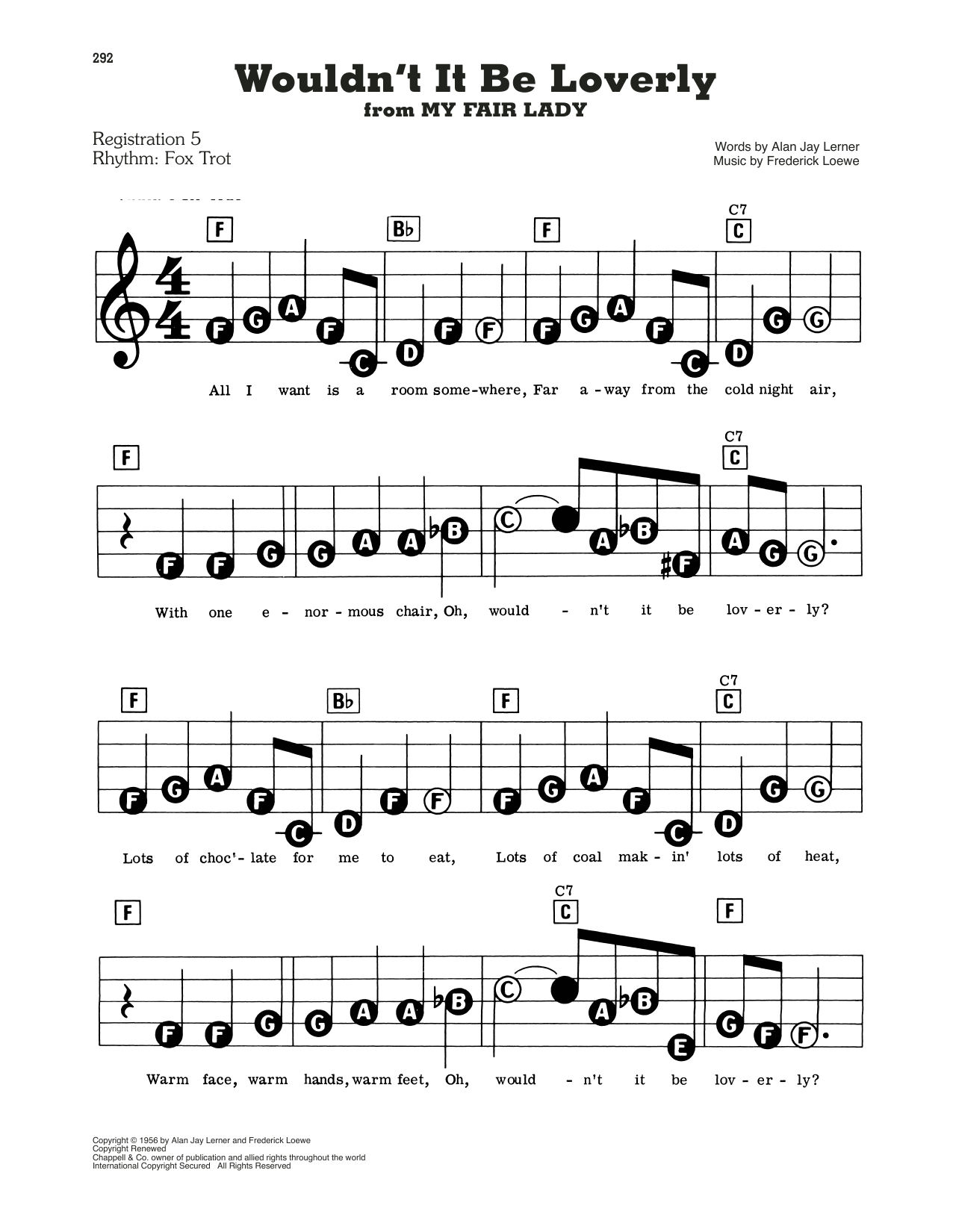
Wouldn't It Be Loverly (from My Fair Lady): E-Z Play Today

Item: 35-DS01740669

Digital Download
$4.99
Description

Wouldn't It Be Loverly (from My Fair Lady): E-Z Play Today isn't in MakeMusic Cloud just yet...but it could be. Let us know you'd like to see it, and you'll help shape what comes next. In the meantime, start a free trial and dive into thousands of interactive titles your students can play along with today.

Sample Audio
No sample audio found.
Sample Video
Additional Details
Publisher: Hal Leonard
Page Count: 2
SKU: 35-DS01740669

More about this title

About the Creator: Frederick Loewe

Frederick Loewe composed the music for My Fair Lady alongside lyricist Alan Jay Lerner, creating one of Broadway's most enduring scores. His gift for melody and harmonic sophistication earned him eight Tony nominations and helped establish the modern musical theater standard. Loewe's work demonstrates how accessible charm and genuine compositional craft can coexist in popular music.

Why we love this

The E-Z Play arrangement strips away complexity without sacrificing the song's warmth and singability. Eliza's dream of simple domestic contentment translates perfectly to this streamlined format, giving students access to one of Broadway's most beloved melodies in just two pages.

What to expect

Tender and wistful, the song inhabits a small moment of vulnerability. There's an aching simplicity to Eliza's longing for ordinary comfort that the straightforward melody captures perfectly.

Who it's for

Students in their first years of piano study will find this arrangement accessible without feeling watered down. Singers preparing auditions or classroom performances benefit from having a simple, reliable piano reduction that lets the voice shine.

How to get the most out of it

  • Shape the melody with gentle, natural phrasing that mirrors conversational speech rather than pushing for dramatic effect.
  • Keep the accompaniment unhurried; the beauty lives in clarity and space, not in driving the tempo forward.
  • Pay attention to the lyrical sentiment when setting your dynamics; this is a quiet hope, not a proclamation.

How to use it

Pair this with other musical theater standards to build a beginner's toolkit of essential songs. It works equally well as an accompaniment for a vocalist or as a solo piano feature that demonstrates emotional maturity in young players.

Skills your students will build

  • Playing lyrical melodies with musical shape and intention
  • Managing simple accompaniment patterns without rhythmic tension
  • Voicing chords accurately in the key of E-flat major
  • Balancing melody and harmony to support vocal performance

You May Also Like