
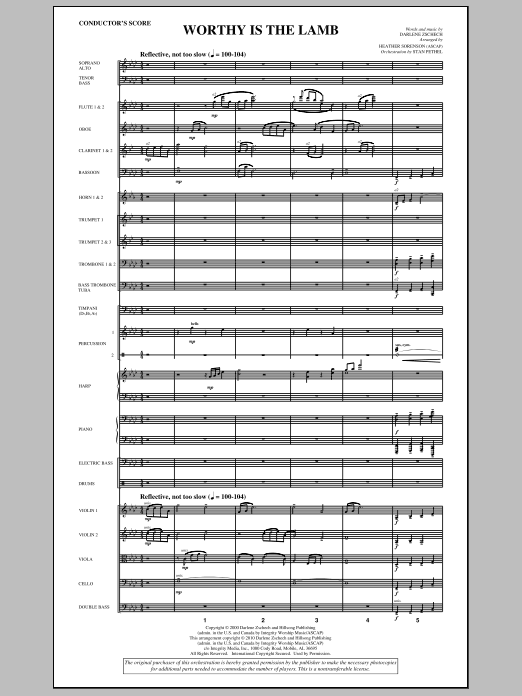

Worthy Is The Lamb: Choral Instrumental Pak
By Darlene Zschech / Arranged by Heather Sorenson
Item: 35-PK00166090
$65.00
Pickup currently not available
Buy Extra Parts (Digital PDF Download)
Parts Added to Cart!
Description
From the popular Hillsong worship movement comes one of their most popular worship choruses now set for choir and orchestrated for traditional church use. This gradually building song of praise lifts our hearts to the throne of the Almighty with words of affirmation and adoration to the Lamb. It is sure to be accepted with joy by choirs of all ages as the sounds of this dynamic piece echoes through the sanctuary. Solid choral writing and a powerful accompaniment characterize this sure-fire setting.


Worthy Is The Lamb: Choral Instrumental Pak isn't in MakeMusic Cloud just yet...but it could be. Let us know you'd like to see it, and you'll help shape what comes next. In the meantime, start a free trial and dive into thousands of interactive titles your students can play along with today.
Request This Title
Tell us you want it.
Start Your Free Trial
Explore everything that's ready to play right now.
Sample Audio
No sample audio found.
Sample Video
No sample videos found.
Additional Details
Publisher:
Hal Leonard
SKU:
35-PK00166090
More about this title
About the Composer: Darlene Zschech
Darlene Zschech is the lead singer and songwriter of Hillsong United, one of the most influential contemporary worship bands of the past two decades. Her songwriting has shaped modern congregational worship across denominations, with pieces that balance theological depth against immediate musical accessibility.
Zschech's gift for crafting melodies that lodge in memory while remaining singable across skill levels has made her one of the most performed living composers in churches worldwide. Her arrangements prioritize congregational participation without sacrificing musical substance, making her work equally valuable in concert settings and worship contexts.
Why we love this
This arrangement captures what makes the original so compelling: a progression that genuinely builds rather than simply repeats, and orchestration that supports without overwhelming your choir's sound. Heather Sorenson's setting respects the harmonic sophistication of Zschech's composition while remaining playable by mixed choirs at various skill levels, and it gives you flexibility in how you deploy the instrumental forces available to you.
What to expect
Bright and ascending, like a wave building toward a moment of collective recognition and joy. The harmonic language feels both familiar and slightly sophisticated, creating space for reflection before the piece opens into full-hearted proclamation.
Who it's for
Any choir seeking contemporary worship material with genuine musical substance. This works equally well for churches wanting a fresh take on modern praise and for concert choirs programming a contemporary or sacred set.
How to get the most out of it
- Map out where the dynamic growth occurs across the piece and plan your tempo subtly through those moments; the building effect depends on accumulated forward momentum, not sudden jumps.
- The text of affirmation and adoration requires genuine vocal commitment from your singers. Rehearse with focus on diction clarity during the layered sections so words cut through the orchestral texture.
- Align your orchestra parts early, particularly the string and horn lines that carry harmonic weight during the climactic passages. This clarity will anchor your choir's intonation.
- Balance the accompaniment so it supports rather than dominates; this piece works best when your singers' voices remain the primary focus throughout.
How to use it
This is a natural fit for Easter services or spring concerts celebrating resurrection and renewal. It also pairs effectively with traditional hymnic repertoire on mixed programs, offering a bridge between classical and contemporary musical sensibilities without requiring listeners to abandon either.
Skills your students will build
- Sustaining energy and focus across a progressively building arrangement
- Blending voices while maintaining individual line clarity in layered textures
- Responding to orchestral accompaniment without rhythmic dependence on it
- Communicating theological text through vocal expression and phrasing