
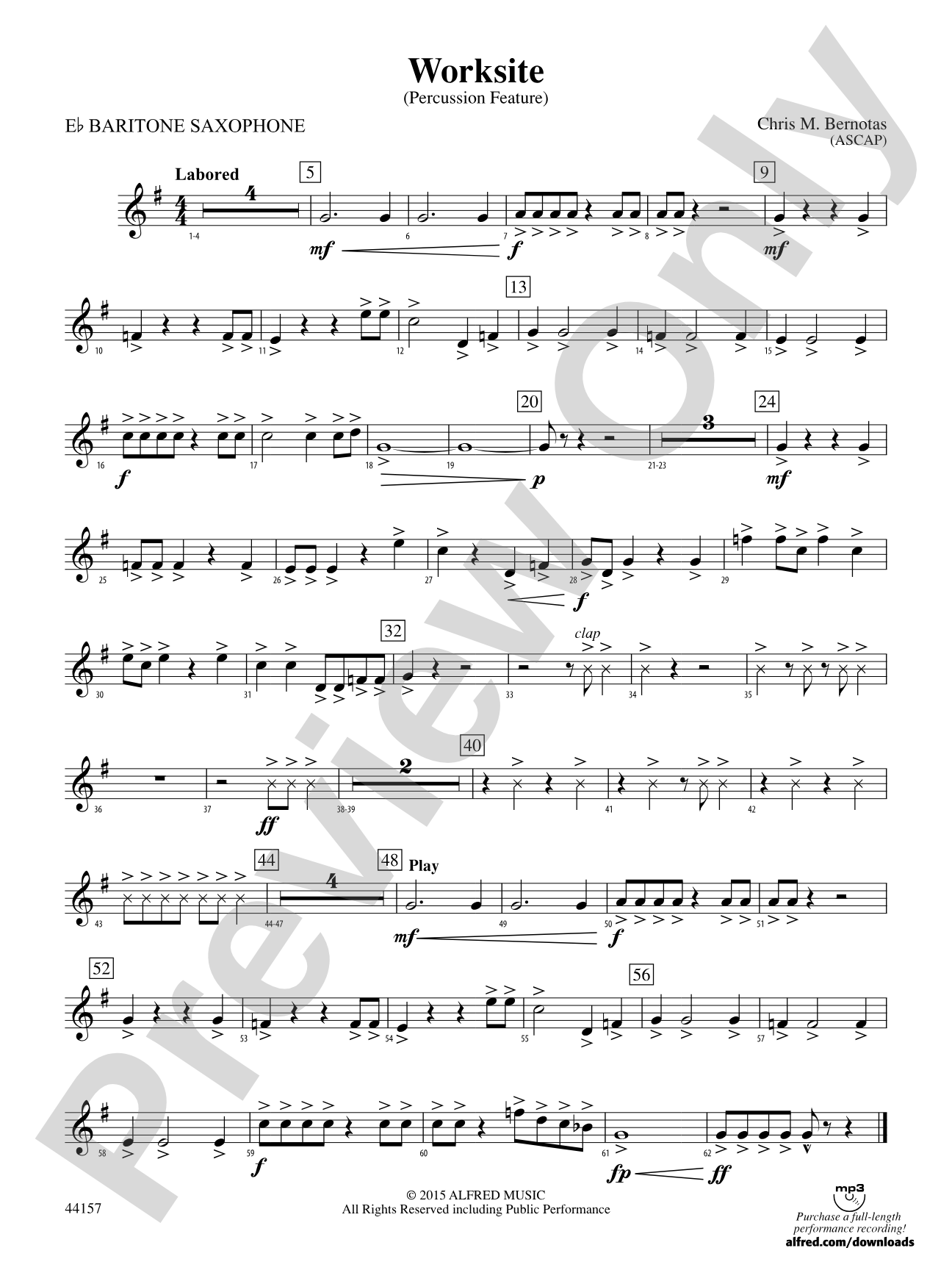

Worksite: E-flat Baritone Saxophone
Percussion Feature
By Chris M. Bernotas
Grade: 1 (Very Easy)
Item: 00-PC-0017007_BTX
$3.00
Pickup currently not available
Description
"Worksite" will become a band member and director favorite with its infectious melody and exciting percussion feature. Break out the buckets and garbage cans for this one as they will be taking center stage, making music in the construction zone. Standard percussion instruments can be substituted and are marked in the score. (2:15)


Don't just read it, hear it, play along with it, and watch your students grow with it. In MakeMusic Cloud, Worksite: E-flat Baritone Saxophone comes alive with professional accompaniment, adjustable tempo, and built-in practice tools that turn solo practice into real progress.
Open in the Player
Jump straight in and assign it today.
Start Your Free Trial
Open this title and explore the full library in minutes.
Sample Audio
1
Audio File
--:--
0:00
0:00
Sample Video
Additional Details
Series:
Sound Innovations for Concert Band
Publisher:
Alfred Music
Page Count:
142
SKU:
00-PC-0017007_BTX
More about this title
About the Composer: Chris M. Bernotas

Chris M. Bernotas brings over 25 years of instrumental music education experience to his work as a composer and conductor. Currently serving as Director of Instrumental Publications at Alfred Music, he has shaped band and orchestra curricula worldwide while maintaining deep connections to the classroom and rehearsal hall. His compositions balance musicality with pedagogical insight, reflecting the real challenges teachers face when selecting repertoire for developing ensembles.
Beyond the page, Bernotas is an active clinician and guest conductor who works directly with honor groups and student ensembles. He has co-authored multiple educational resources including the Sound Innovations series, Sound Percussion, Sound Artistry, and Sound Performance. His dual commitment to composition and teaching means his music consistently addresses both the musical and developmental needs of young musicians.
Why we love this
This piece cuts through the typical Grade 1 repertoire with genuine charm and a percussion feature that gives young musicians a chance to shine in an unconventional way. The construction-site concept creates immediate engagement for students without sacrificing musicality, and the practical substitution options mean you can execute this creatively regardless of what percussion equipment your band owns. It's the kind of novelty piece that works because the musical writing is solid underneath the fun.
What to expect
Energetic and playful, with the swagger of an actual construction site brought to musical life. The infectious melody hooks listeners immediately while the featured percussion transforms everyday sounds into genuine music-making, creating a sense of discovery for students who discover they can make music from objects around them.
Who it's for
Band directors seeking a high-energy, accessible piece that excites young musicians and audiences alike. This works especially well for beginning bands and younger ensembles that thrive on novelty and character-driven music while building fundamental performance skills.
How to get the most out of it
- Establish a consistent pulse with the percussion ensemble before full rehearsals; bucket and garbage can sounds require precise ensemble coordination just like any melodic section.
- Experiment with mallets and implements during early rehearsals to find the tonal colors that project well in your space; different striking techniques will dramatically affect audience impact.
- Balance the excitement of the percussion feature with clarity in the main melodic voices; Grade 1 players benefit from hearing a strong harmonic foundation beneath the rhythmic activity.
- Use the 2:15 duration as your rehearsal target; maintain momentum throughout so the novelty element enhances rather than overshadows the musical line.
How to use it
Program this at a family concert or community event where audiences include non-musicians; the construction-site concept generates immediate curiosity and warmth. It also works beautifully as a concert opener or closer that leaves the audience smiling, or as a morale-builder mid-rehearsal cycle when you need to remind students why making music together is fun.
Skills your students will build
- Rhythmic precision in percussion ensemble contexts
- Balancing accompaniment texture with featured melodic lines
- Dynamic control within a straightforward Grade 1 harmonic framework
- Ensemble listening and response to non-traditional sound sources