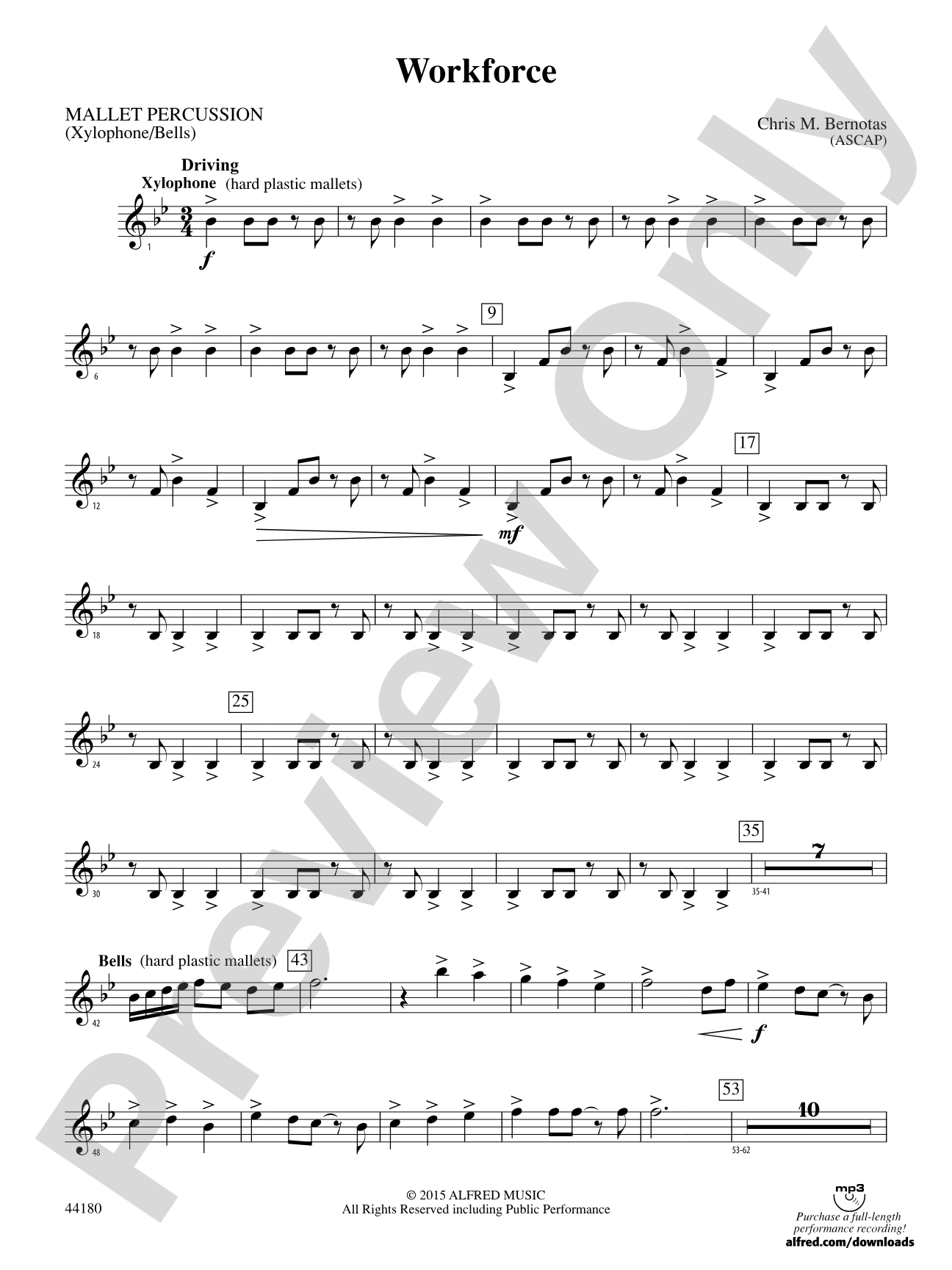
Workforce: Mallets Sheet Music Preview

Workforce: Mallets

By Chris M. Bernotas

Grade: 3 (Medium)

Item: 00-PC-0017030_M1

Digital Download
$3.00
Description
A school band is the ideal workforce. Within any musical ensemble all of the "workers" join together and help one another to create a magical experience. This piece brings energy and excitement, as all of the parts must work together to create the uplifting rhythmic groove and the beautiful lyric section. (4:50)

Don't just read it, hear it, play along with it, and watch your students grow with it. In MakeMusic Cloud, Workforce: Mallets comes alive with professional accompaniment, adjustable tempo, and built-in practice tools that turn solo practice into real progress.

Sample Audio
0:00
0:00
Sample Video
Additional Details
Series: Young Symphonic
Publisher: Alfred Music
Page Count: 276
SKU: 00-PC-0017030_M1

More about this title

About the Composer: Chris M. Bernotas

Chris M. Bernotas

Chris M. Bernotas brings over 25 years of music education experience to his work as a composer, conductor, and educator. As Director of Instrumental Publications at Alfred Music, he shapes band and orchestra curricula worldwide, grounding his compositional voice in the real challenges and triumphs of school music programs.

His teaching background informs every note he writes. Bernotas understands what students need to grow musically and what directors need to build stronger ensembles. Beyond composing, he serves as a guest conductor and clinician for honor groups and workshops, and has co-authored several influential pedagogical resources including the Sound Innovations series. His work consistently balances accessibility with artistry, creating pieces that engage young musicians while advancing their musicianship.

Why we love this

Bernotas captures the collective energy of a working band perfectly here. The piece demands genuine cooperation across all sections, making the ensemble success tangible and rewarding for students who can hear exactly how their part contributes to the whole. The balance between an infectious rhythmic groove and a genuine lyrical moment gives you programming flexibility and keeps players invested from rehearsal one.

What to expect

Workforce opens with infectious rhythmic momentum that pulls the band together like gears engaging. The energy feels modern and purposeful, celebrating the idea that every musician in the section matters. When the lyrical section arrives, the contrast is genuine and moving, creating a moment where students can hear the depth beneath the groove.

Who it's for

Band directors programming Grade 3 concert literature who need a piece that engages the entire ensemble and builds a sense of shared purpose. It works equally well as a strong concert selection or festival entry, appealing to students who respond to contemporary grooves and ensemble collaboration.

How to get the most out of it

  • Lock the rhythm section (percussion and low reeds) first; once that groove is solid, the energy cascades naturally through the rest of the band.
  • Shape the lyric section with phrasing that breathes; resist the urge to drive through it. Let the students hear the contrast between the high-energy opening and this more introspective moment.
  • Balance the upper woodwinds against the brass in the tutti passages. The piece works only when all voices are heard in the mix.
  • Conduct the rhythmic figures clearly in the opening section so students can lock in together; precision here makes the ensemble sound unified and powerful.

How to use it

Program this as a centerpiece for a concert celebrating ensemble work and contemporary voices in band literature. Its uplifting character makes it ideal for spring concerts, and the strong rhythmic profile appeals to younger band members while offering enough musical substance to satisfy more experienced players. At just under five minutes, it pairs well alongside classic concert repertoire or lighter novelty pieces.

Skills your students will build

  • Ensemble balance across full band texture
  • Locking rhythmic figures as a cohesive unit
  • Contrasting articulation styles (groove-based versus legato phrasing)
  • Listening to and supporting other sections in real time
  • Dynamic control across sustained lyrical passages

You May Also Like