
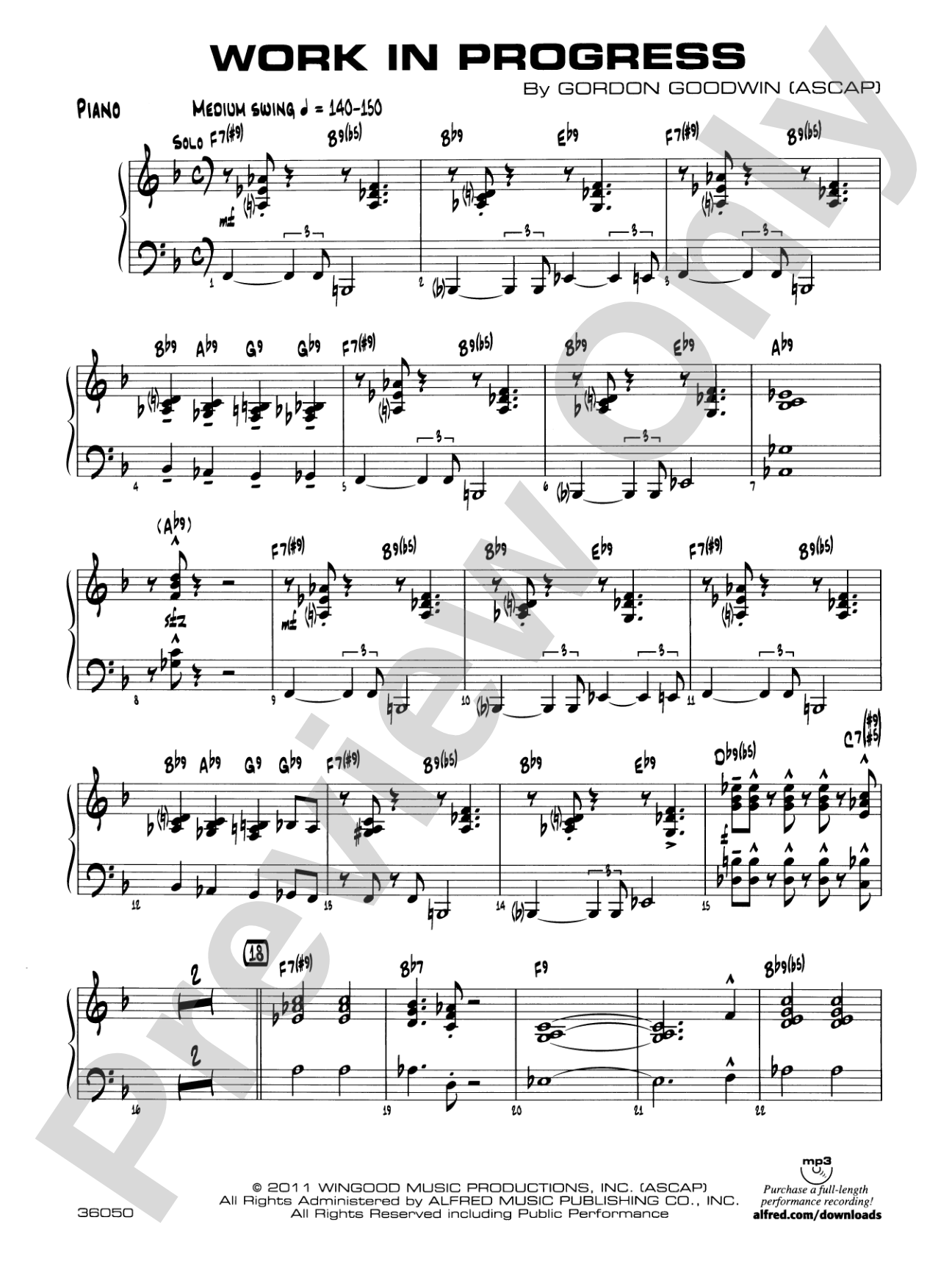
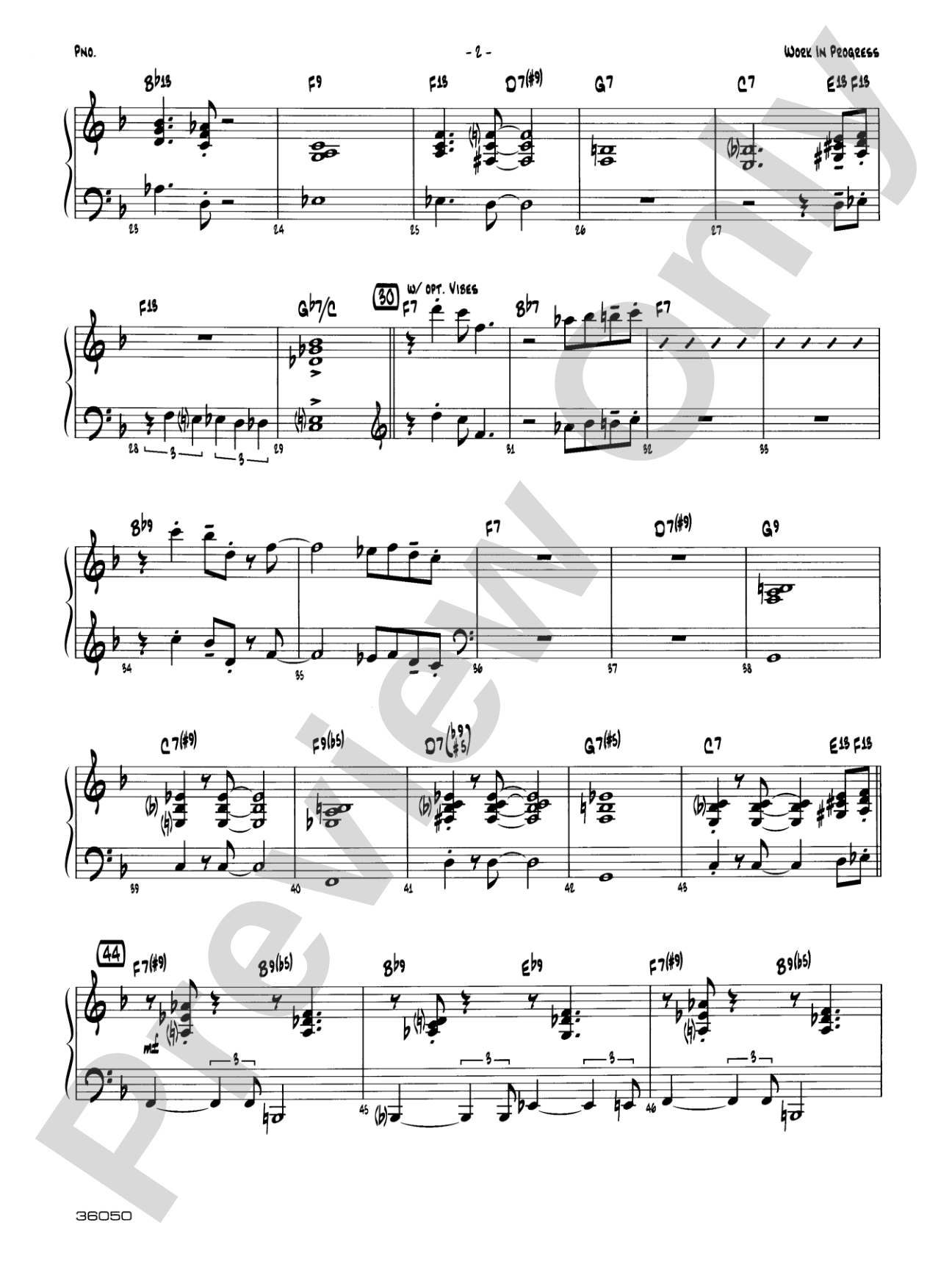

Work in Progress: Piano Accompaniment
By Gordon Goodwin
Grade: 3 (Medium)
Item: 00-PC-0017195_K
$3.00
Pickup currently not available
Description
If you want to play original Gordon Goodwin charts but find them too challenging, you have to try this chart! Lead trumpet range to written G on top of the staff with an open solo section and written-out solos provided for E-flat, B-flat instruments and trombone. It's the Gordon Goodwin Big Phat Band sound---but accessible for your band. This title is available in MakeMusic Cloud.


Don't just read it, hear it, play along with it, and watch your students grow with it. In MakeMusic Cloud, Work in Progress: Piano Accompaniment comes alive with professional accompaniment, adjustable tempo, and built-in practice tools that turn solo practice into real progress.
Open in the Player
Jump straight in and assign it today.
Start Your Free Trial
Open this title and explore the full library in minutes.
Sample Audio
1
Audio File
--:--
0:00
0:00
Sample Video
No sample videos found.
Additional Details
Series:
Jazz Band Series
Publisher:
Alfred Music
Page Count:
110
SKU:
00-PC-0017195_K
More about this title
About the Composer: Gordon Goodwin

Gordon Goodwin began composing at five years old, transcribing complete pieces from his imagination rather than fragments. His first big band arrangement, Hang Loose, arrived when he was thirteen, establishing a trajectory that would define his career across multiple musical domains.
As a three-time Emmy Award winner and Grammy-nominated composer, Goodwin's work spans film and television scoring (Bad Boys II, Remember the Titans, Star Trek: Nemesis, and others) alongside collaborations with major artists including Christina Aguilera, Quincy Jones, and Ray Charles. He has conducted symphony orchestras in major cities worldwide and currently leads Gordon Goodwin's Big Phat Band, the Los Angeles-based ensemble he founded in 2000. The band's albums have earned multiple Grammy nominations, with their debut making history as the first commercially released DVD audio title.
Why we love this
This chart delivers the Big Phat Band's sophisticated sound without demanding virtuoso chops from every section. Goodwin's accessible orchestration keeps the distinctive energy and harmonic vocabulary of his ensemble writing intact while respecting the realities of school and community bands, making it genuinely playable at Grade 3.
What to expect
Smooth, swinging, and contemporary. The chart moves with the groove of modern big band jazz without the angular complexity that often comes with Goodwin's full ensemble work. The writing breathes naturally and lets soloists shine while keeping the section backgrounds supportive and rhythmically grounded.
Who it's for
Jazz ensemble conductors who want to program Goodwin's style and sophistication but need something within reach of young or developing players. Lead trumpet players with solid fundamentals will find the range manageable, while saxophonists, trombonists, and other soloists get clear written parts to learn from before improvising.
How to get the most out of it
- Balance the lead trumpet solo section carefully. The open solo gives your lead player room to express, but watch that the band stays laid back and doesn't overshadow the soloist's interpretation.
- Use the written-out solos as reference recordings if available. Hearing how the parts breathe and swing will help your ensemble understand Goodwin's phrasing and style before laying down their own takes.
- Lock the rhythm section early in rehearsal. The groove sits at the heart of this chart; once your piano, bass, and drums lock together, the rest of the band will find the pocket more easily.
- Shape the ensemble dynamics to support each written solo. Even with scored solos provided, let your soloists breathe and lead; the band should follow their phrasing rather than override it.
How to use it
Program this as a concert feature that showcases your band's jazz credibility without requiring a separate jazz soloist or extended rehearsal time on complex harmonic language. It pairs well on a mixed concert with straight-ahead big band standards, giving audiences a taste of contemporary big band writing at its most accessible.
Skills your students will build
- Reading jazz ensemble scores with modern harmonic vocabulary and comping figures
- Executing swing rhythm and feel through ensemble playing
- Balancing solo exposure with ensemble cohesion
- Navigating written solos and learning to adapt or personalize them
- Playing with rhythmic precision in groove-based charts