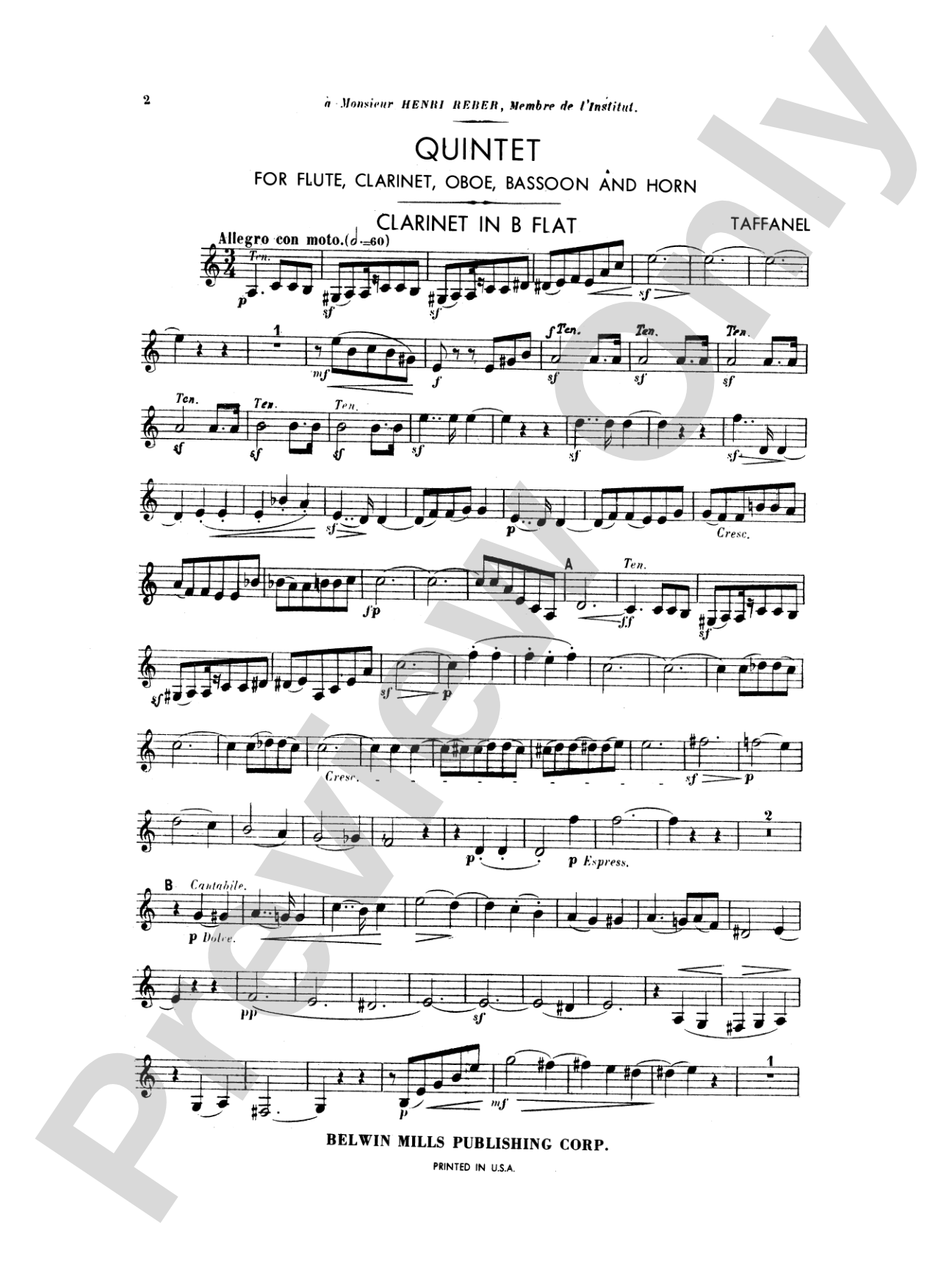
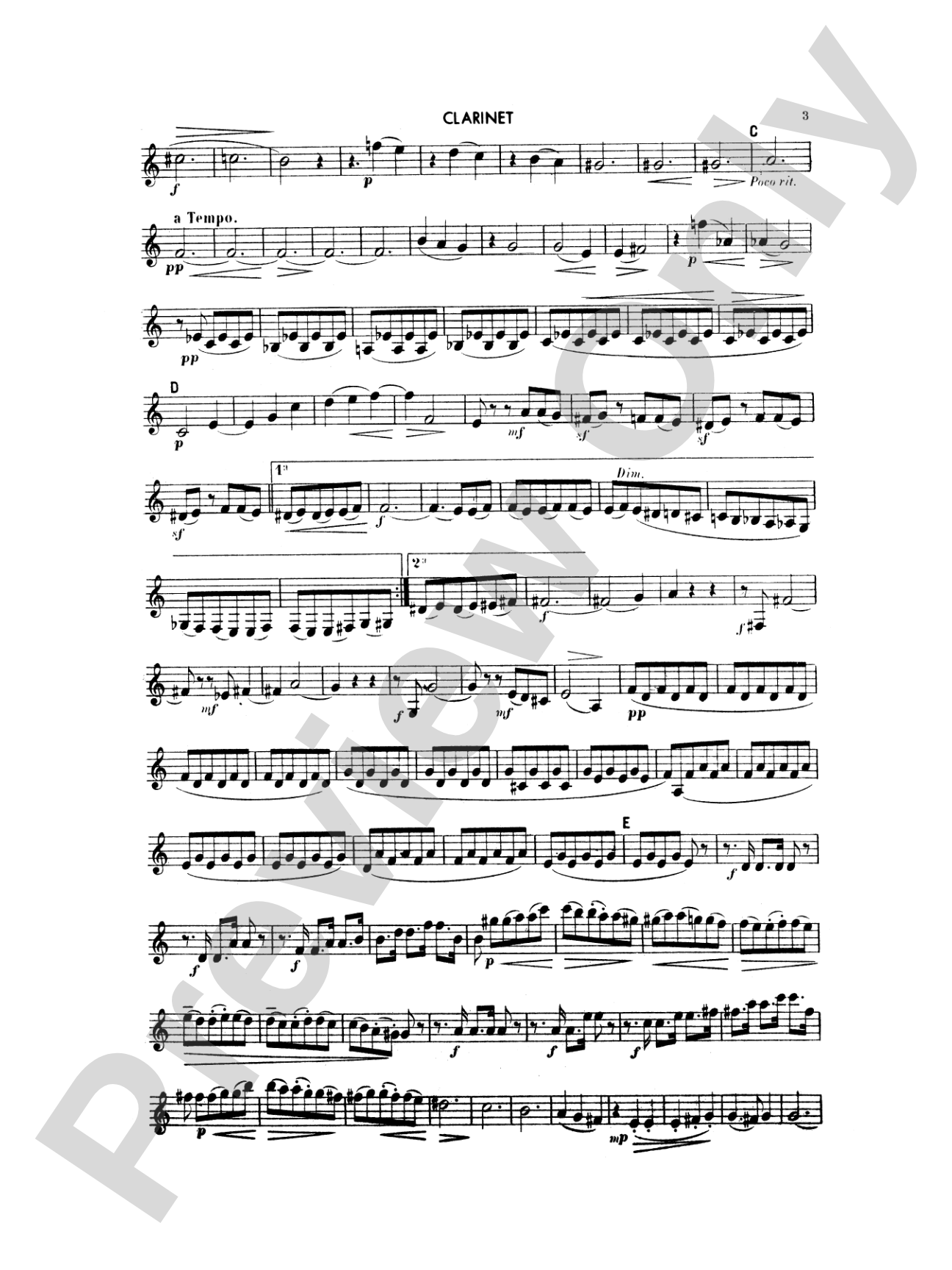
Woodwind Quintet: 1st B-flat Clarinet Sheet Music Preview

Woodwind Quintet: 1st B-flat Clarinet

By Paul Taffanel

Item: 00-PC-0002536_C1

Digital Download
$3.00
Description

Don't just read it, hear it, play along with it, and watch your students grow with it. In MakeMusic Cloud, Woodwind Quintet: 1st B-flat Clarinet comes alive with professional accompaniment, adjustable tempo, and built-in practice tools that turn solo practice into real progress.

Sample Audio
No sample audio found.
Sample Video
Additional Details
Series: Kalmus Edition
Publisher: Alfred Music
Page Count: 60
SKU: 00-PC-0002536_C1
Instrumentation: Flute, Clarinet, Oboe, Bassoon & Horn

More about this title

About the Composer: Paul Taffanel

Paul Taffanel (1844–1908) was a French flutist and composer who shaped the modern flute tradition through his virtuosic performances and pedagogical innovations. As a founding member of the Taffanel-Gaubert Woodwind Quintet, he championed the genre during an era when ensemble wind music was still developing its concert hall identity. His compositions for woodwinds balance technical brilliance with lyrical sophistication, reflecting his dual mastery of performance and composition.

Taffanel's legacy extends beyond his own works; his influence on flute technique and chamber music pedagogy remains embedded in European conservatory training. His quintet stands as a cornerstone of the woodwind chamber repertoire, marking a moment when French composers elevated wind ensemble writing to the standard of string quartets.

Why we love this

This quintet demonstrates why Taffanel's chamber writing earned respect across two continents: each voice receives genuine compositional attention rather than hierarchical support roles. The work rewards ensemble players who embrace its structural clarity and motivic development, offering both the polish needed for competitions and the musical substance that sustains audience engagement.

What to expect

The quintet unfolds with Romantic grace and formal clarity, moving through lyrical passages that showcase individual voices before weaving them into richer harmonic textures. There's an understated elegance throughout, as if the composer trusts the instrumentation itself to speak, rather than pushing for dramatic gestures. The writing sings in a distinctly French voice, refined but never precious.

Who it's for

Advanced high school and college quintet ensembles preparing for regional or national competitions, or chamber groups ready to perform concert-level Romantic wind music. Flutists and oboists benefit from the substantial solo writing, while clarinetists, horn players, and bassoonists develop ensemble cohesion and balance skills within a structured musical environment.

How to get the most out of it

  • Balance the sonority by listening to how the oboe and clarinet interact in their exposed passages; these voices carry significant thematic material and need projection without drowning the flute.
  • Establish a unified rhythmic approach in the faster sections by having the rhythm section (horn and bassoon) lock their articulations precisely before focusing on the solo lines.
  • Approach the lyrical passages with attention to phrase shape rather than metronomic precision; the Romantic idiom relies on subtle breathing and rubato that binds the quintet together.
  • Test intonation in the sustained harmonic moments, particularly where the clarinet sits above the oboe, as slight adjustments prevent a muddy sonority.

How to use it

Program this as a main-stage chamber work for a competition or festival performance, where its 60 pages and formal structure command a full recital context. It also serves well in a concert celebrating French wind music or in a program pairing Romantic chamber works from different traditions.

Skills your students will build

  • Balancing a five-part harmonic texture with differentiated roles for melody, countermelody, and accompaniment
  • Executing clear articulation and phrase pacing across the Romantic idiom
  • Reading and coordinating published quintet parts (Kalmus edition) in concert pitch
  • Managing intonation in sustained harmonic passages and shifting ensemble sonorities
  • Ensemble listening and response to exposed solo lines within a chamber context

You May Also Like