
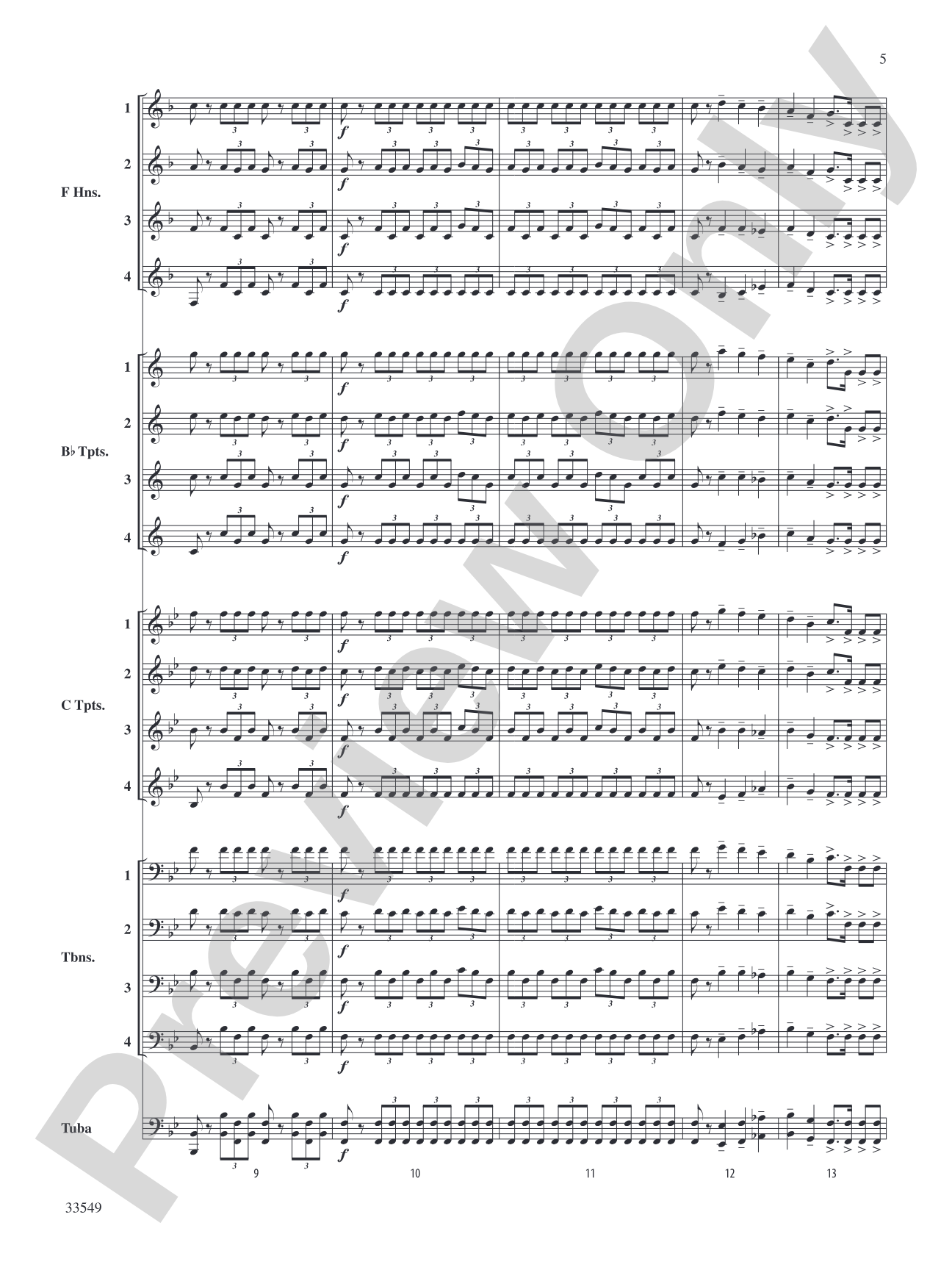
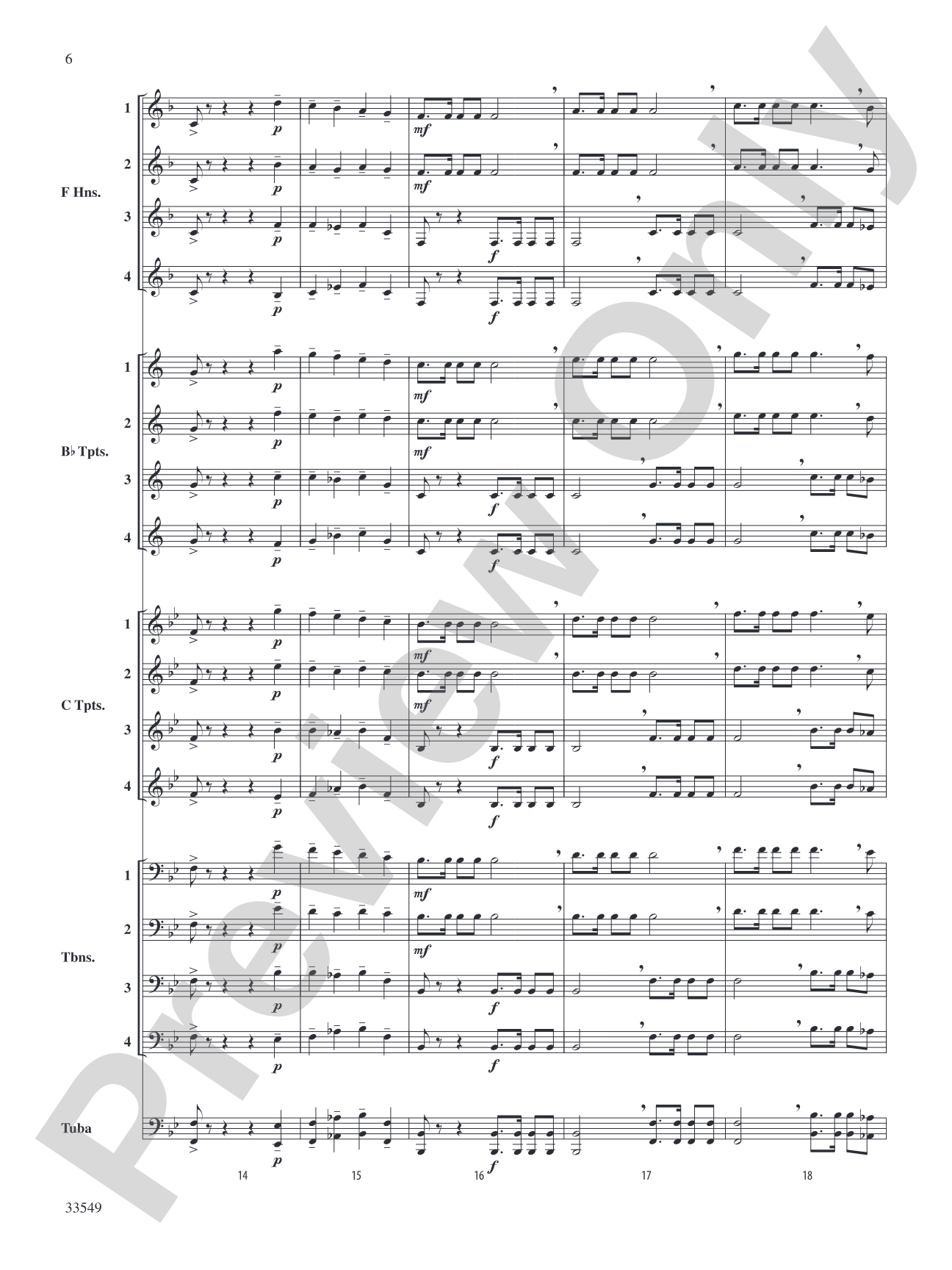
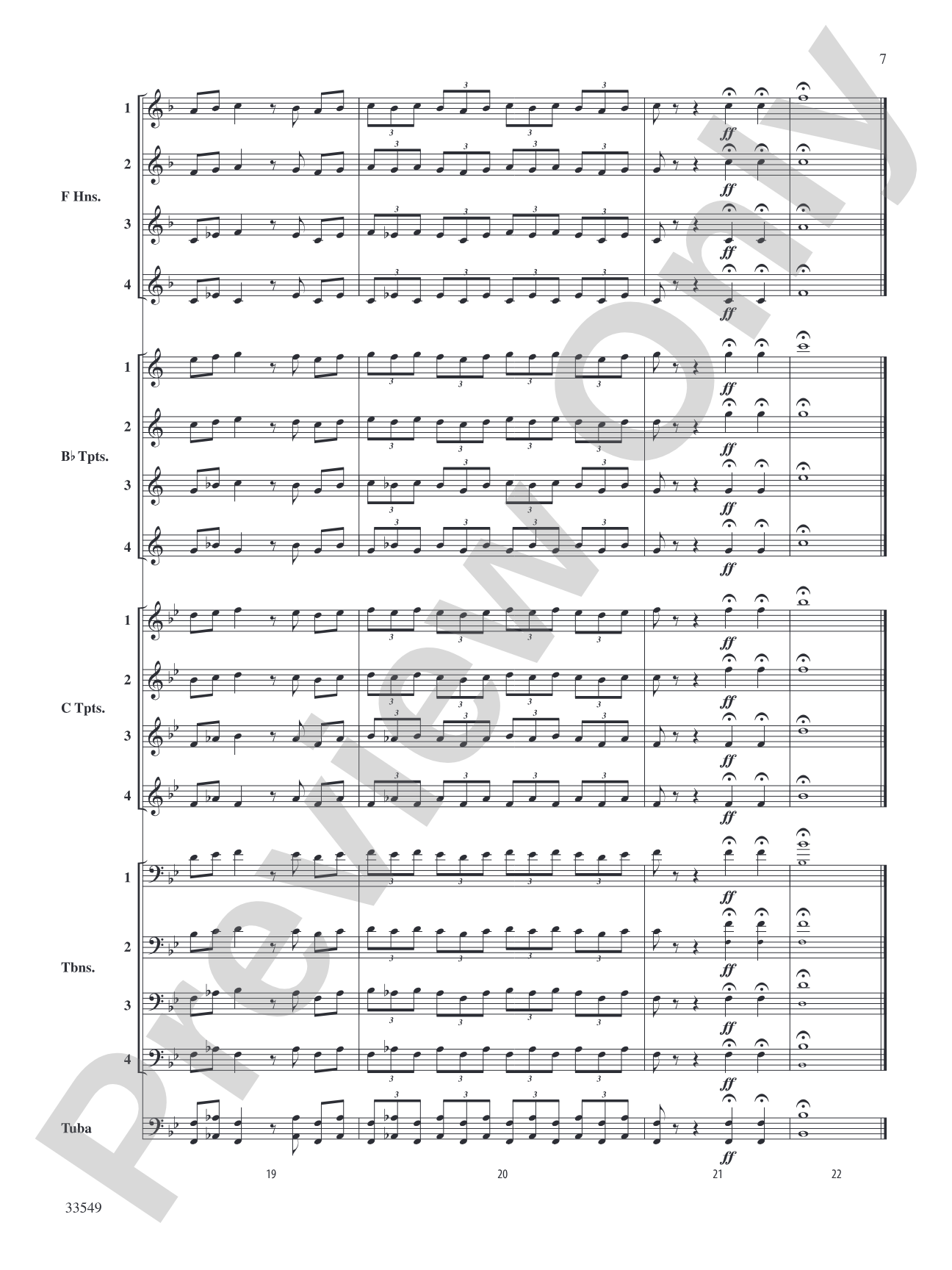


Woodbury Fanfare: Score
This Edition Is in Honor of the 350th Anniversary of the Founding of the Town of Woodbury, CT
By Leroy Anderson
Item: 00-PR-0002753
$8.00
Pickup currently not available
Description
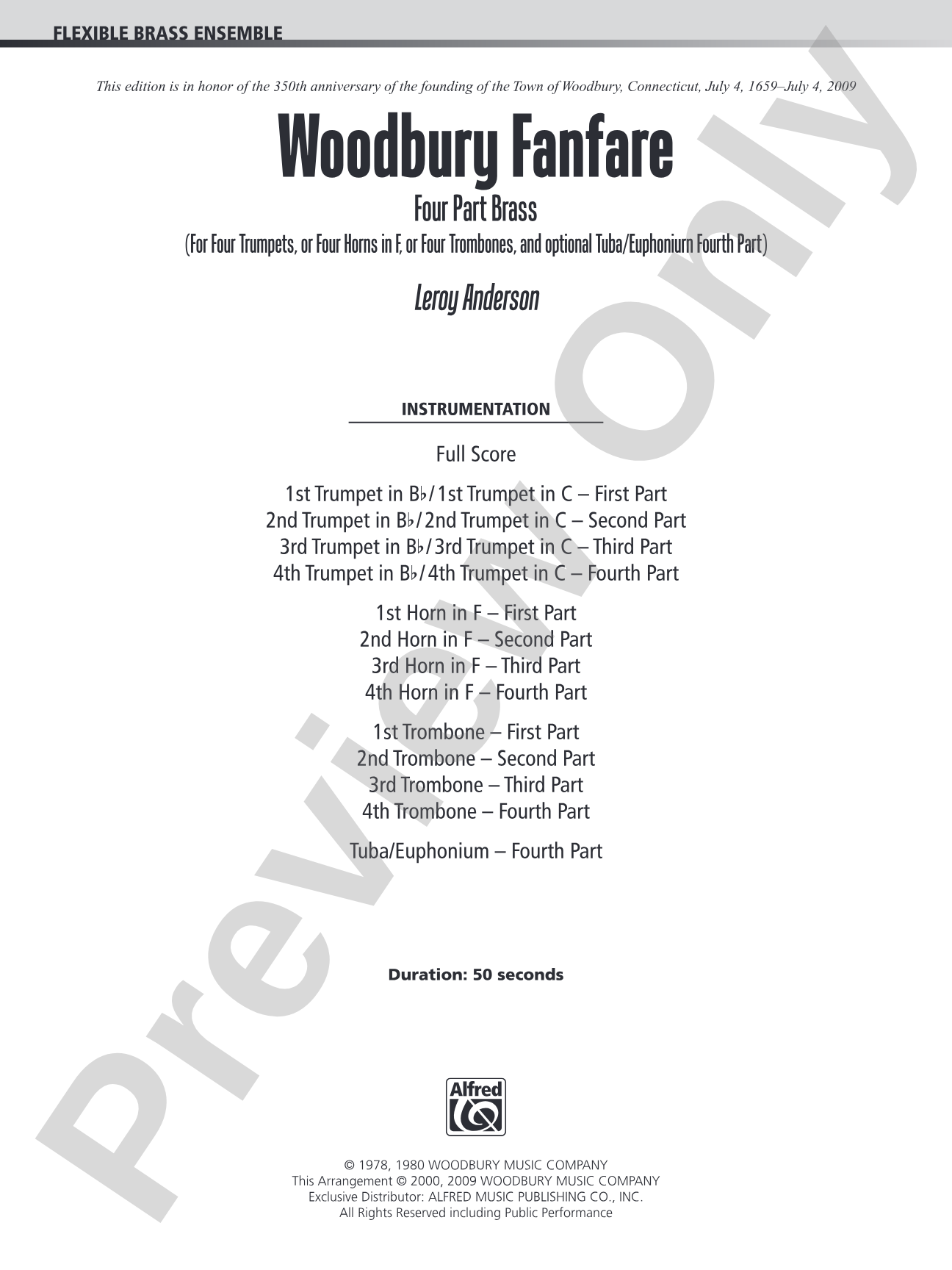
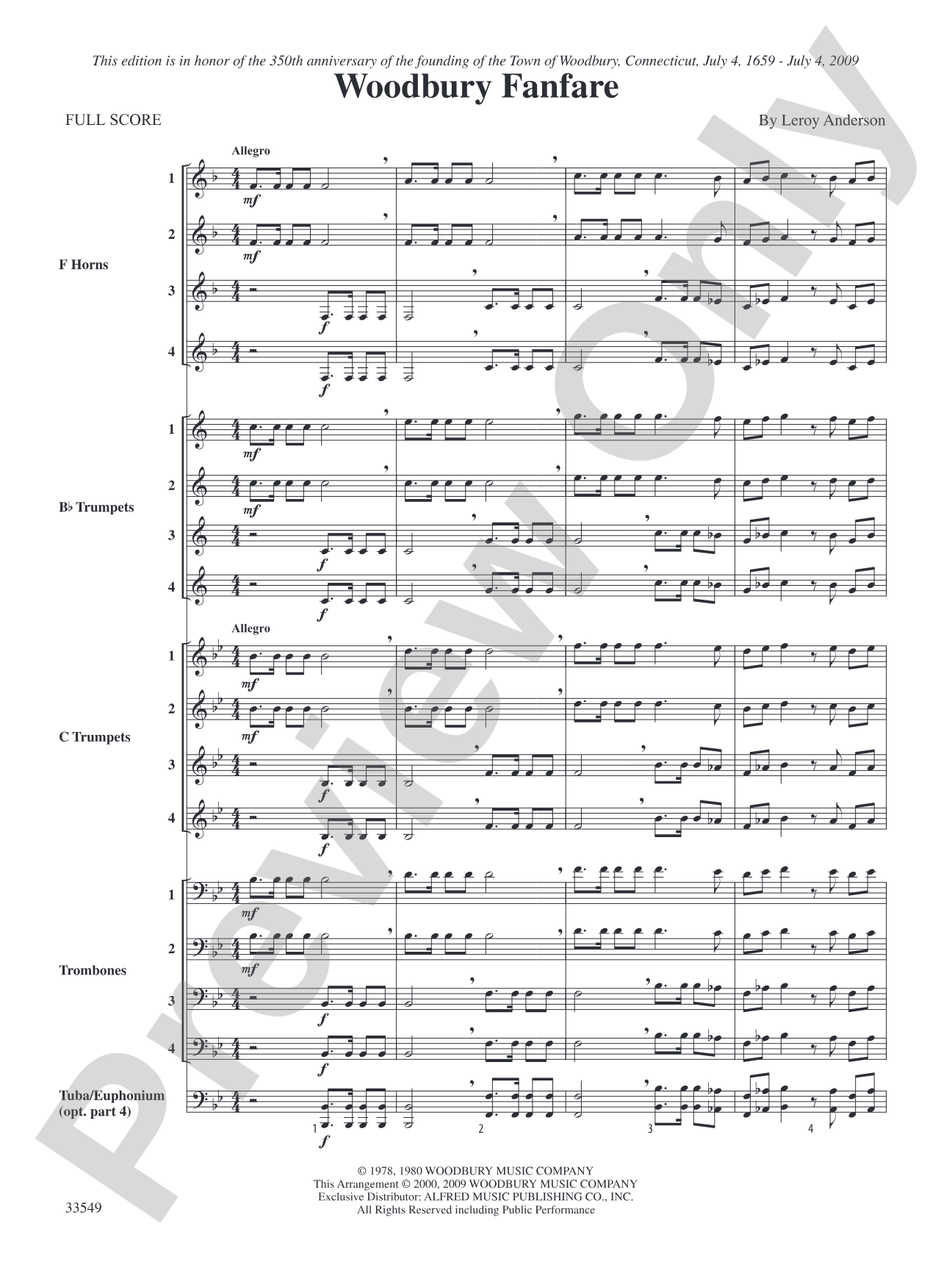
This edition is in honor of the 350th anniversary of the founding of the Town of Woodbury, Connecticut, July 4, 1659 -- July 4, 2009. For either 4 Trumpets, or 4 Horns in F, or 4 Trombones, with Opt.Euphonium/Tuba 4th Part.


Don't just read it, hear it, play along with it, and watch your students grow with it. In MakeMusic Cloud, Woodbury Fanfare: Score comes alive with professional accompaniment, adjustable tempo, and built-in practice tools that turn solo practice into real progress.
Open in the Player
Jump straight in and assign it today.
Start Your Free Trial
Open this title and explore the full library in minutes.
Sample Audio
No sample audio found.
Sample Video
No sample videos found.
Additional Details
Publisher:
Alfred Music
Page Count:
26
SKU:
00-PR-0002753
Instrumentation:
4-Part Brass (For 4 Trumpets, or 4 Horns in F, or 4 Trombones, with Opt. Euphonium/Tuba 4th Part)
More about this title
About the Composer: Leroy Anderson
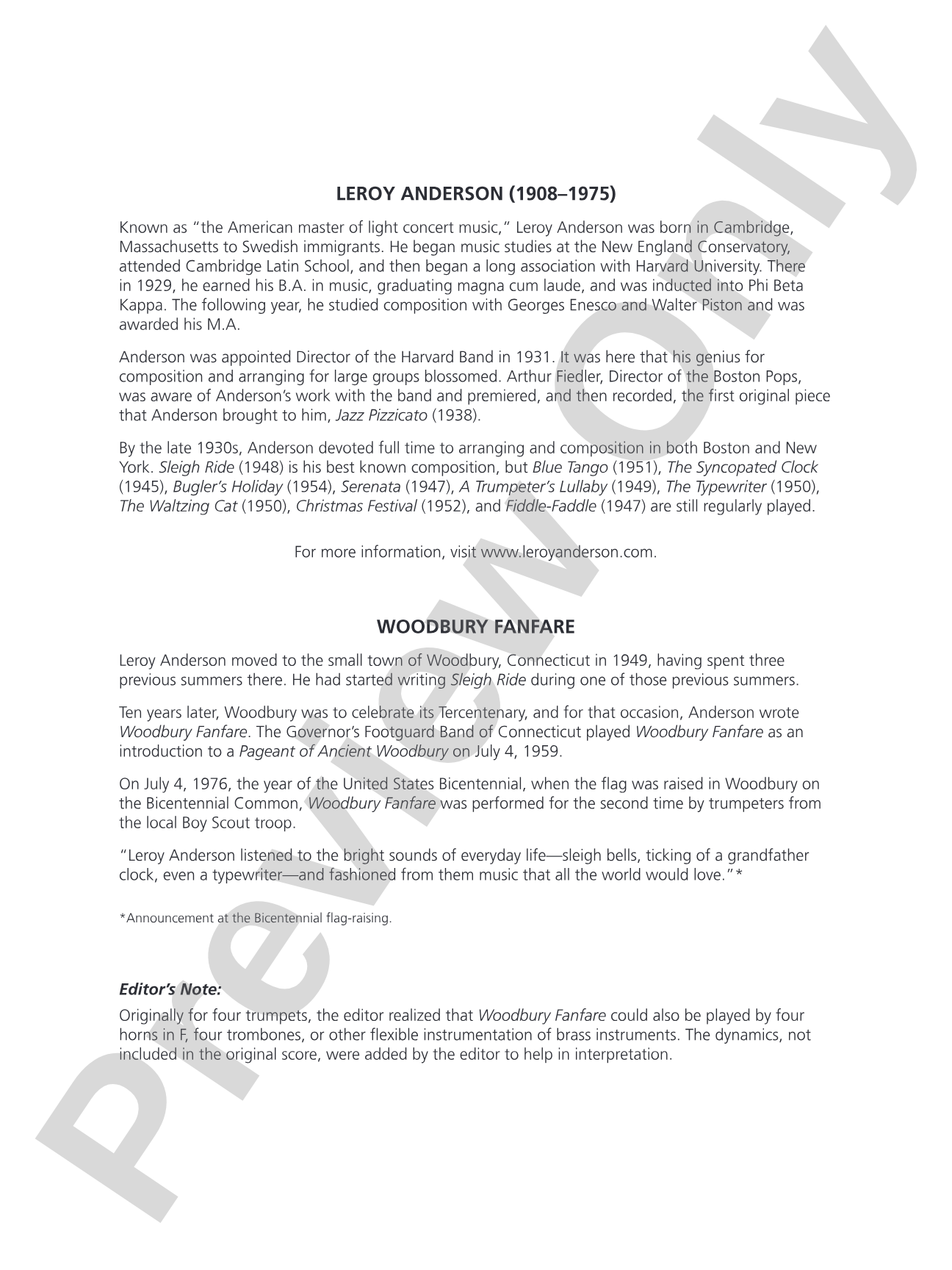
Leroy Anderson (1908-1975) was an American composer and conductor whose gift for melody and orchestration made him one of the most performed composers of light classical music in the twentieth century. His catalog includes over 150 compositions, many of which have become standards in both concert halls and educational settings. Anderson's training at Harvard and his work as an arranger for the Boston Pops gave him a distinctive voice: accessible, rhythmically inventive, and deeply rooted in American vernacular idioms.
Anderson's contributions to music education extend beyond his concert works. His pieces teach musicians how to balance clarity with expression, how to construct memorable phrases, and how to handle ensemble balance in straightforward but elegant ways. Teachers and directors value his music because it challenges students without overwhelming them and rewards careful attention to intonation, blend, and phrasing.
Why we love this
Anderson's gift for writing idiomatic, grateful brass writing shines in this fanfare. The flexibility of the scoring means you can mount this with trumpets, horns, or trombones (or a mixed group with the optional euphonium/tuba part), making it an accessible option for ensembles with different instrumental strengths. The piece has genuine ceremonial presence without demanding virtuosic technique, which makes it perfect for community concerts, patriotic programs, and events where you need something that sounds polished and purposeful.
What to expect
Woodbury Fanfare captures the ceremonial brightness and civic pride of a patriotic opening. Anderson's lean, clear orchestration lets each voice cut through without muddiness, and the writing conveys festive energy without resorting to empty flash. It feels both substantial and joyful, the kind of piece that announces something important.
Who it's for
This piece suits brass quartets of mixed ability from high school through adult community ensembles. The straightforward harmonic language and clear part writing make it accessible to developing players, while the need for balanced ensemble sound and attention to intonation keeps it musically rewarding for more experienced musicians.
How to get the most out of it
- Balance the harmonic parts carefully in the sustained passages; brass quartets can easily obscure the middle voices. Have the third and fourth parts listen actively to maintain clarity.
- Articulation and note length drive the fanfare's character. Be consistent across the quartet with tongue placement and release; if one player's staccatos sit differently, the rhythmic punch dissolves.
- Watch intonation in the unison passages, particularly at the beginning and any sectional returns. Brass quartets show tuning issues immediately, so spend rehearsal time locking these moments in.
- The optional euphonium/tuba part allows flexibility in voicing; if you use it, consider whether it replaces the fourth part or doubles it, as this changes the overall sonority and weight of the sound.
How to use it
Program this as an opening number for Fourth of July concerts, municipal celebrations, or community band performances. It also works as a contest or festival piece where judges appreciate clean, well-balanced brass writing. The piece's commemorative origins make it especially fitting for anniversary celebrations and civic events.
Skills your students will build
- Balancing harmonic parts in a four-voice brass texture
- Achieving consistent articulation and rhythmic precision across an ensemble
- Managing intonation in sustained and unison passages
- Reading and performing brass quartet literature with clear part independence
- Adapting part assignments based on available instrumentation