Wonder Woman: From the Warner Bros. Soundtrack: Piano Accompaniment Sheet Music Preview

Wonder Woman: From the Warner Bros. Soundtrack: Piano Accompaniment

By Rupert Gregson-Williams / arr. Victor López

Grade: 2.5 (Easy to Medium Easy)

Item: 00-PC-0018063_K

Digital Download
$3.00
Description
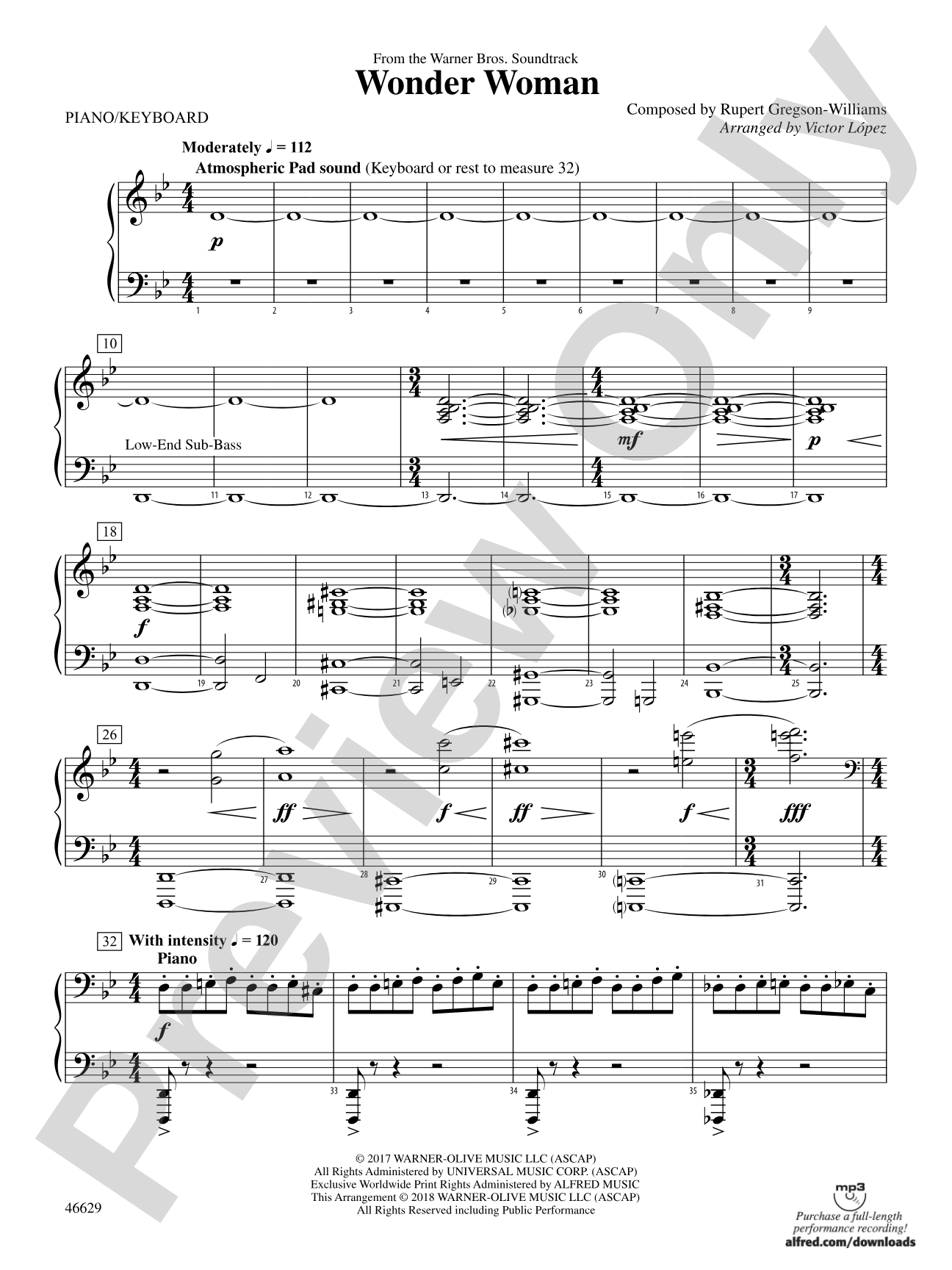
From beginning to end, this music from throughout the hit movie, Wonder Woman, is passionate and driven by strong emotions. Catch the explosive and engaging film action in this intense, yet flowing arrangement by Victor López that captures the melodic contours, explosive dynamics, and time signature changes found in this fabulous music. This piece frequently changes tempo and often requires cueing, making it perfect for working on watching the conductor!

Don't just read it, hear it, play along with it, and watch your students grow with it. In MakeMusic Cloud, Wonder Woman: From the Warner Bros. Soundtrack: Piano Accompaniment comes alive with professional accompaniment, adjustable tempo, and built-in practice tools that turn solo practice into real progress.

Sample Audio
0:00
0:00
Sample Video
Additional Details
Series: Pop Young Band
Publisher: Alfred Music
Page Count: 264
SKU: 00-PC-0018063_K

More about this title

About the Composer: Rupert Gregson-Williams

Rupert Gregson-Williams has composed music for major Hollywood films across genres ranging from action to drama. His work for Wonder Woman showcases his ability to write themes that are both immediately memorable and dramatically powerful, combining orchestral sophistication with accessibility for varied ensemble levels.

Why we love this

Victor López's arrangement preserves the cinematic weight and emotional drive of the original score while keeping the technical demands in the accessible Grade 2.5 range. The frequent tempo shifts and conductor cues transform what could be a straightforward transcription into a genuine rehearsal tool that rewards attentive ensemble listening and keeps everyone engaged through changing musical landscapes.

What to expect

Heroic and kinetic. The music pulses with the forward momentum and emotional intensity of the film itself, moving through moments of lyrical beauty and explosive action without losing its narrative arc. You feel the drama building and releasing throughout, never settling into static territory.

Who it's for

Intermediate concert bands seeking engaging, recognizable repertoire that challenges their musicianship beyond simple execution. Students at the Grade 2.5 level who are ready to work on conductor dependence, dynamic control, and ensemble responsiveness will find real musical substance here.

How to get the most out of it

  • Stay ahead of the tempo changes by marking all conductor cues clearly in your score and parts. This piece demands that sections watch consistently, so establish eye contact patterns during rehearsal before adding the musical intensity.
  • Balance the explosive dynamics against the flowing passages by using full ensemble sound during peaks but maintaining clarity in the supporting voices during transitions. The arrangement's power comes from knowing when to step back as much as when to drive forward.
  • Anchor the rhythm section through meter changes by having percussion and low brass establish the new meter clearly before the ensemble shifts. Many of the time signature changes happen quickly, so predictability from the foundation is essential.

How to use it

Include this in a film music concert that showcases Hollywood scoring or as a centerpiece for a spring concert where you want to demonstrate your band's technical growth and musical maturity. The recognizable themes will draw audience engagement, while the conducting demands signal to listeners that your ensemble has advanced beyond early-level playing.

Skills your students will build

  • Following conductor cues through rapid tempo and time signature changes
  • Playing accurately through mixed meters (including non-traditional time signatures)
  • Balancing explosive dynamics with flowing passages
  • Maintaining rhythmic clarity while watching the conductor rather than relying on counting

You May Also Like