Wonder Woman: From the Warner Bros. Soundtrack: 2nd Trombone Sheet Music Preview

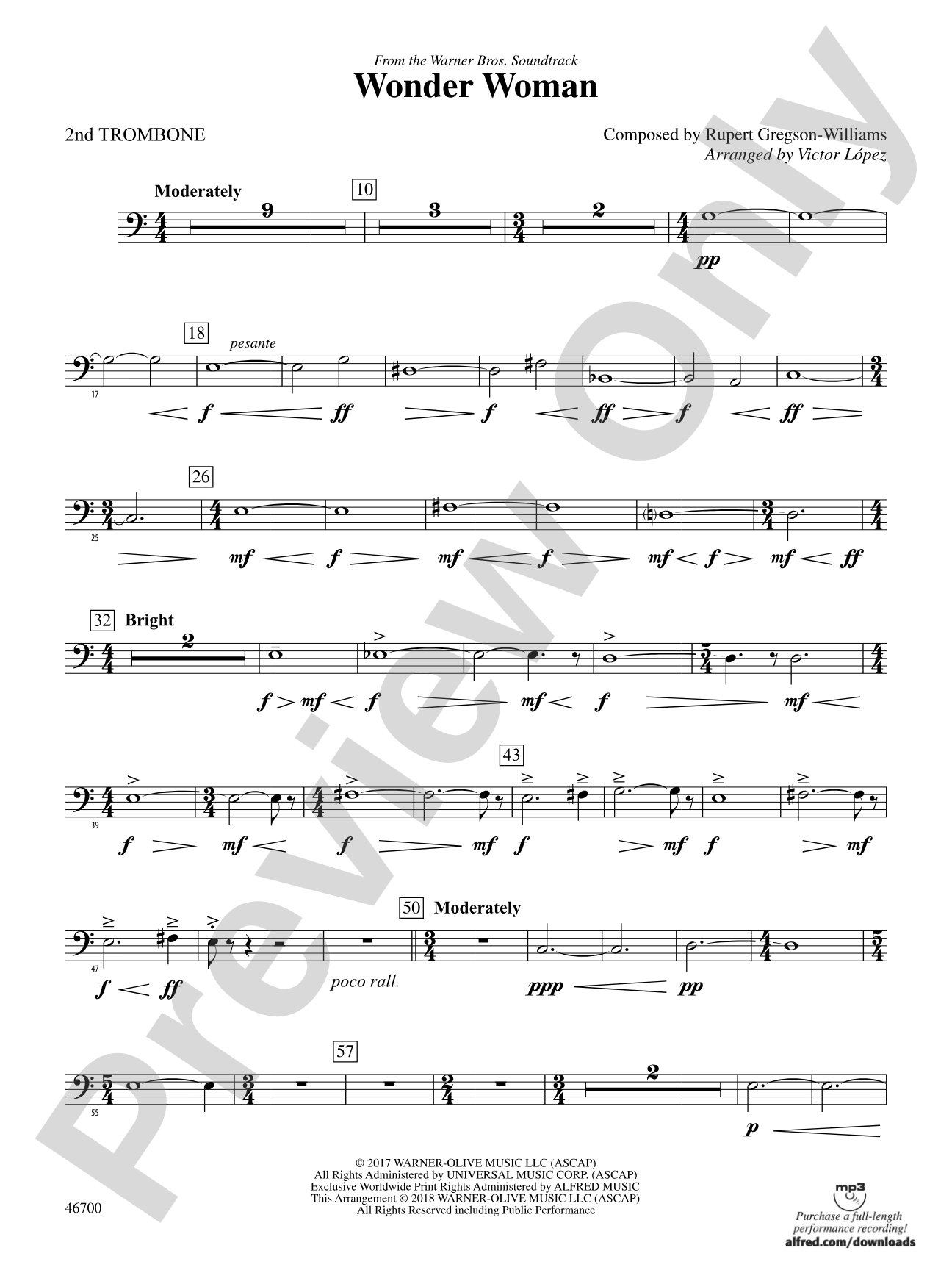
Wonder Woman: From the Warner Bros. Soundtrack: 2nd Trombone

By Rupert Gregson-Williams / arr. Victor López

Grade: 3

Item: 00-PC-0017837_TN2

Digital Download
$3.00
Description
From beginning to end, this music from throughout the hit movie, Wonder Woman, is passionate and driven by strong emotions. Catch the explosive and engaging film action in this intense, yet flowing arrangement by Victor López that captures the melodic contours, explosive dynamics, and time signature changes found in this fabulous music. This piece frequently changes tempo and often requires cueing, making it perfect for working on watching the conductor! This title is available in MakeMusic Cloud.

Don't just read it, hear it, play along with it, and watch your students grow with it. In MakeMusic Cloud, Wonder Woman: From the Warner Bros. Soundtrack: 2nd Trombone comes alive with professional accompaniment, adjustable tempo, and built-in practice tools that turn solo practice into real progress.

Sample Audio
0:00
0:00
Sample Video
Additional Details
Series: Pop Concert Full Orchestra
Publisher: Alfred Music
Page Count: 206
SKU: 00-PC-0017837_TN2

More about this title

About the Composer: Rupert Gregson-Williams

Rupert Gregson-Williams is a British composer whose work spans film, television, and concert music. His scores for major motion pictures have earned him recognition for his ability to craft memorable, emotionally resonant themes that drive narrative action while remaining musically sophisticated.

In the classroom and rehearsal hall, his concert arrangements give student orchestras access to contemporary film music that challenges their musicianship while remaining engaging and performable. His writing demonstrates orchestration clarity and sensitivity to ensemble balance, qualities that make his work especially valuable for developing conductors.

Why we love this

This arrangement sits at the sweet spot between accessibility and sophistication. A Grade 3 piece that demands genuine conducting skill due to constant tempo shifts and frequent cueing creates real stakes for student conductors to engage with the score meaningfully, not passively. The energy and emotional drive of the source material sustains student interest across a substantial work.

What to expect

The music pulses with cinematic drama and propulsive energy. Heroic themes alternate with moments of vulnerability and introspection, held together by Victor López's orchestration that preserves the film's emotional arc while fitting the ensemble's capabilities. The frequent tempo changes create a sense of forward momentum even during quieter moments.

Who it's for

This score suits orchestras that have developed secure ensemble fundamentals and are ready for the conducting and coordination demands of a piece with multiple tempo regions. Directors working with student conductors will find this especially valuable as a teaching score.

How to get the most out of it

  • Mark all tempo changes and cues clearly in the conductor score before rehearsals begin. Give section leaders a marking system so they recognize when to watch you intensely versus playing from memory.
  • Establish a consistent gesture vocabulary for tempo transitions. Since this piece frequently changes pace, your preparatory beat must communicate direction clearly to players who are scanning between their parts and your baton.
  • Balance the explosive dynamics with the flowing passages by asking the orchestra to shape phrase contours rather than treating forte sections as simply loud. The emotional drive depends on contrast between intensity and lyricism.

How to use it

This works as a centerpiece for a pop or film music concert, especially one where you want to show your orchestra's growth in conducting and ensemble awareness. It pairs well alongside other contemporary concert music of similar sophistication, or as a contrast to traditional classical repertoire on a mixed program.

Skills your students will build

  • Following shifting tempi and responding to conductor cues
  • Balancing exposed melodic lines with orchestral accompaniment
  • Interpreting dynamic contrast within fast-moving passages
  • Coordinating ensemble entries across changing meters and time signatures
  • Sustaining emotional narrative across a large-scale work

You May Also Like