
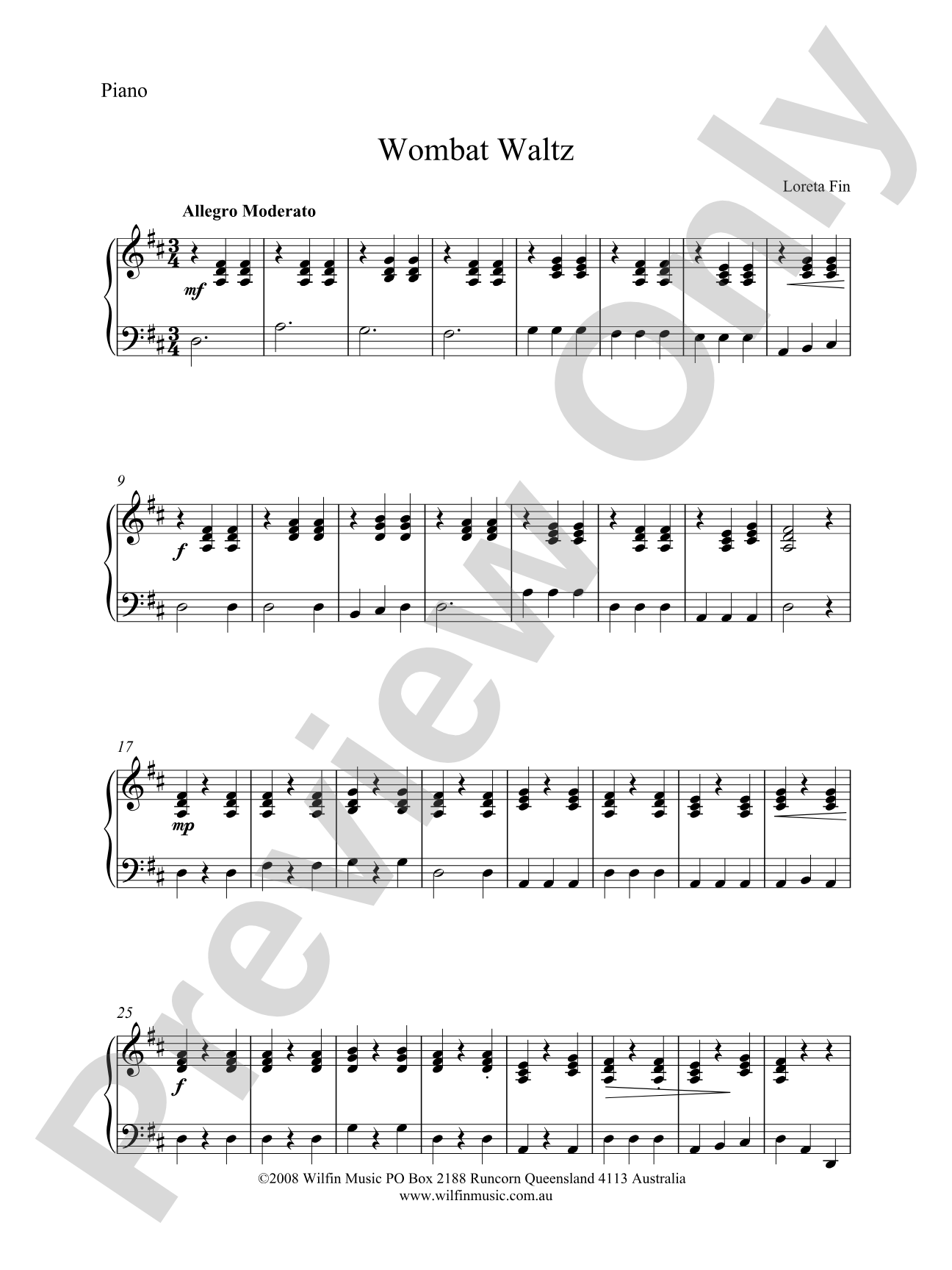

Wombat Waltz: Piano Accompaniment
By Loreta Fin
Grade: 1
Item: 76-PC-0000045_K
$5.99
Pickup currently not available
Description
The ensemble should be encouraged to use whole bows for each note, regardless of whether it is a dotted minim, a minim or a crotchet. Therefore, the students need to "plan" their bow speed, so that it moves faster for the crotchets and slower for the longer notes. Care should be taken not to rush the tempo in the pizzicati. The rhythms are often the same between sections of the orchestra and the harmonies are quite easy. The speed should resemble a big cuddly, waddling wombat going for a walk.


Discover MakeMusic Cloud: thousands of interactive titles your students can play along with today.
Sample Audio
No sample audio found.
Sample Video
No sample videos found.
Additional Details
Series:
Wilfin String Orchestra: Young String Ensemble Series
Publisher:
Wilfin Music
Page Count:
66
SKU:
76-PC-0000045_K
More about this title
About the Composer: Loreta Fin

Loreta Fin AM is an Australian violist, educator, and prolific composer whose deep roots in string pedagogy span decades. She studied at the Sydney Conservatorium of Music, performed as concertmaster with the Sydney Youth Orchestra, and has maintained a career as a chamber and orchestral musician while serving as Principal Viola player with the Queensland Pops Orchestra for over 25 years. Her work as Director of Strings at Somerville House School in Brisbane since 1993 has shaped generations of young string players.
Fin's contributions to music education extend far beyond the classroom. She has presented at multiple Australian National Music Conferences and two American National String Teachers' Conferences, adjudicated major competitions nationwide, and served the Australian Strings Association as both State and National President during a 25-year tenure. She was honoured with the National Award for Services to Music and String Teaching in Australia and received the Queensland State Award for services to AUSTA in 2009. Her catalogue of over 100 published string works, released worldwide by Alfred Music, reflects her deep understanding of what young ensembles need to grow musically. Since 2015, she has regularly conducted the State and National Honours Ensembles Programs in Brisbane.
Why we love this
Fin writes string music that respects young players' technical realities while refusing to shortchange musicality. The rhythmic clarity and doubled harmonies mean your ensemble can focus entirely on the bow control and tonal awareness that Grade 1 students most need to develop, and the charming character of the piece keeps them engaged in the work.
What to expect
Unhurried and good-natured, like watching something large and confident move through the world without fuss. The waltz rhythm and gentle harmonic movement create a sense of playful affection, while the technical demand keeps every player genuinely engaged.
Who it's for
String orchestra directors working with Grade 1 ensembles who want to prioritise foundational bow technique without sacrificing musical character. This score and parts set is essential for conductors building young players' understanding of how bow speed and note duration interact.
How to get the most out of it
- Establish consistent bow speed planning in rehearsal before tackling the piece. Work through a single phrase with whole bows, asking students to demonstrate how speed must change across dotted minims, minims, and crotchets to maintain the same weight on the string.
- Resist the natural tendency to accelerate during the pizzicato sections. Mark a steady pulse in rehearsals and remind violins and violas to count through their rests; the rhythmic integrity depends on absolute tempo stability.
- Shape the tone as a unified waddling motion rather than a series of individual notes. When the orchestra hears the collective bowing moving at different speeds but in synchronised time, the character suddenly clicks into place.
How to use it
Program this as a concert opener or palate-cleanser to establish ensemble unity early in the concert. The piece's charm and accessibility make it effective for family concerts and school assemblies where younger students perform alongside more advanced groups, and its emphasis on fundamental technique makes it ideal for spring concerts celebrating technical growth.
Skills your students will build
- Coordinating bow speed to note duration while maintaining consistent tone
- Maintaining steady tempo through pizzicato passages
- Reading and executing whole-bow techniques across varied note values
- Listening for rhythmic unison across string sections
- Building awareness of how individual bow control contributes to ensemble blend