
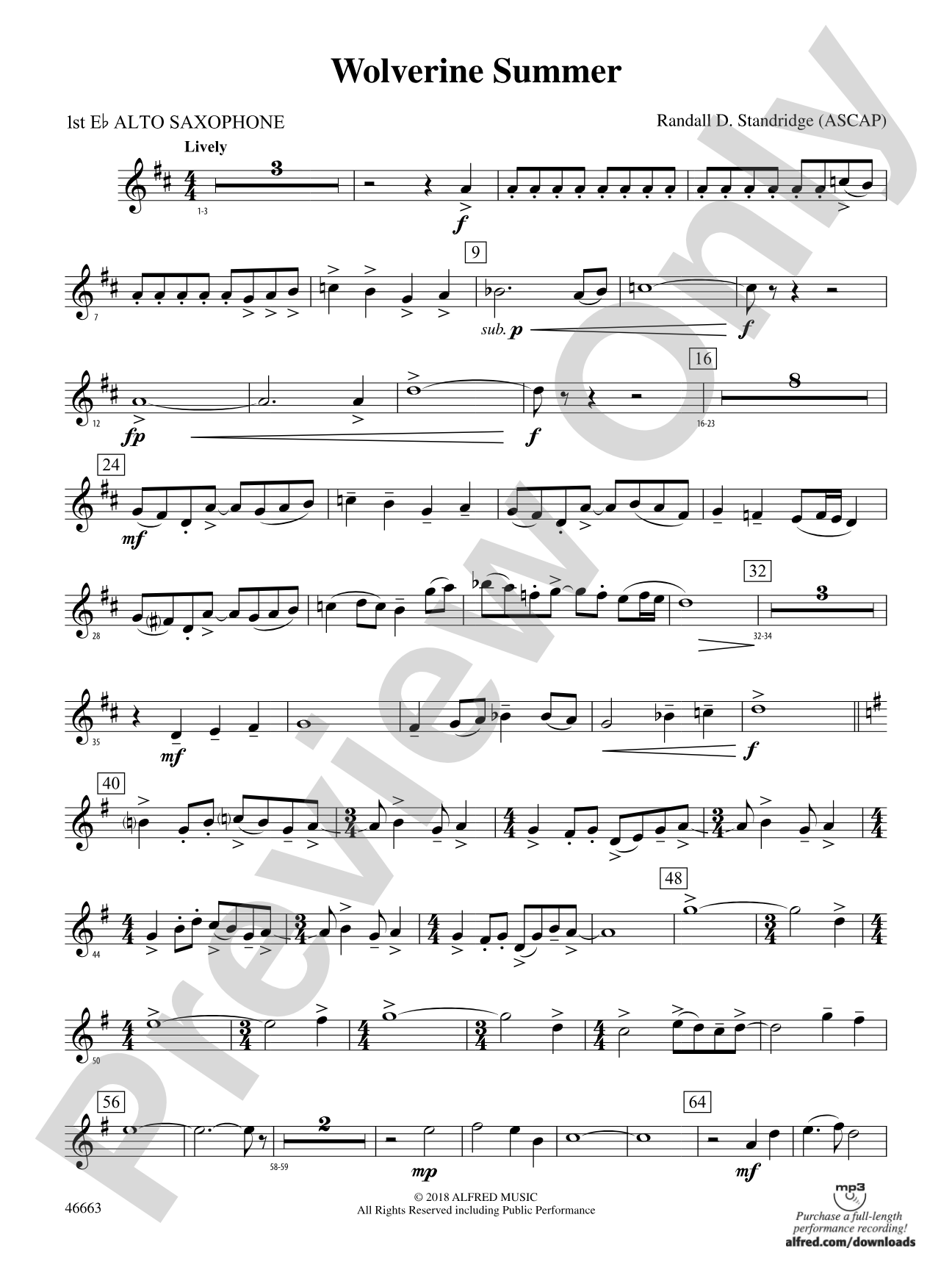

Wolverine Summer: E-flat Alto Saxophone
By Randall D. Standridge
Grade: 3 (Medium)
Item: 00-PC-0018093_AX1
$3.00
Pickup currently not available
Description
Inspired by the spirit of summer camps and the great fun and memories they create for campers, "Wolverine Summer" contains many lively dance elements depicting the youthful energy found at these summer gatherings. Syncopated rhythms and active percussion add to the fun of this delightful work which will work well as a concert opener or closer.


Don't just read it, hear it, play along with it, and watch your students grow with it. In MakeMusic Cloud, Wolverine Summer: E-flat Alto Saxophone comes alive with professional accompaniment, adjustable tempo, and built-in practice tools that turn solo practice into real progress.
Open in the Player
Jump straight in and assign it today.
Start Your Free Trial
Open this title and explore the full library in minutes.
Sample Audio
1
Audio File
--:--
0:00
0:00
Sample Video
Additional Details
Series:
Young Symphonic
Publisher:
Alfred Music
Page Count:
292
SKU:
00-PC-0018093_AX1
More about this title
About the Composer: Randall D. Standridge
Randall D. Standridge is a prolific composer and arranger whose concert band works have become staples in school programs across the United States. His compositional voice combines accessibility with musicality, creating pieces that engage student musicians while maintaining artistic integrity. Standridge has a gift for writing music that captures specific moments and moods—whether celebrating summer traditions or marking other significant occasions in the school calendar.
His output spans multiple ensemble types and grade levels, from beginning band to advanced concert groups. Educators consistently turn to his catalog for pieces that balance fun with substance, allowing students to experience genuine musical satisfaction rather than simply going through the motions.
Why we love this
Standridge nails the balance between infectious energy and musical substance here. The syncopated rhythms and active percussion writing keep students engaged without overwhelming them, while the lively dance elements give your band a genuine showcase piece that audiences remember. Grade 3 ensembles often struggle with pieces that feel either too simple or too demanding; this one sits in that sweet spot where players feel challenged and accomplished simultaneously.
What to expect
Sun-drenched, youthful energy infuses every measure. The syncopated rhythms create a sense of movement and playfulness that recalls the spirit of summer camp friendships and shared experiences. There's a lightness here that never tips into trivial; the music swings with genuine joy and celebratory momentum.
Who it's for
Grade 3 concert bands looking for repertoire with genuine fun factor and strong musical bones. This work suits ensembles with solid fundamentals who are ready to tackle rhythmic syncopation and need a piece that connects with both players and audiences. It's ideal for bands preparing for festival or concert competitions where stamina and engagement matter.
How to get the most out of it
- Lock in the syncopated rhythms by having your rhythm section—especially percussion—rehearse their parts independently first. Once they have confidence, layer in the band section by section rather than trying to balance everything at once.
- Let the percussion shine. The active writing here is integral to the work's character, not decorative. Make sure mallets and sticks are voiced clearly and that your percussionists understand they're driving the energy forward.
- Shape the dance elements with clear articulation and consistent phrasing across sections. These passages feel most effective when the band plays with unified style, especially in passages marked with lighter articulations.
- Consider the overall arc when deciding between using this as an opener or closer. Its celebratory tone works equally well launching a concert or sending audiences out on a high note; choose based on what comes before or after it in your program.
How to use it
Program this as an opener to set an upbeat, positive tone for your concert—it establishes immediate audience connection and gets your ensemble into performance mode. Alternatively, close with it to send listeners out energized and happy. It also works well as a transition piece between heavier repertoire, offering contrast and breathing room in a longer program.
Skills your students will build
- Reading and executing syncopated rhythmic figures across multiple parts simultaneously
- Balancing active percussion writing with full ensemble texture
- Maintaining clarity and precision during dance-style passages with consistent articulation
- Building awareness of rhythmic independence between sections