
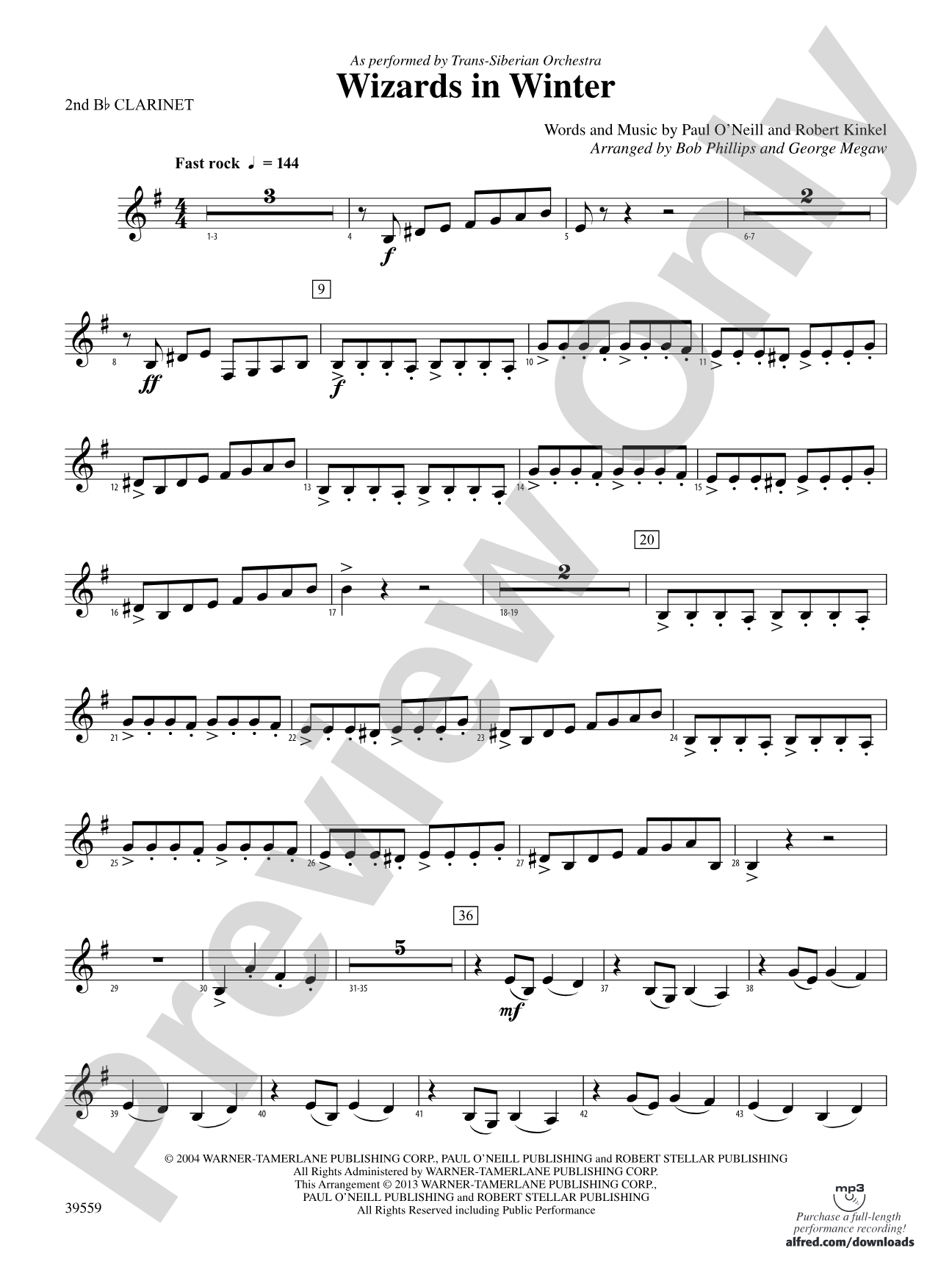

Wizards in Winter: 2nd B-flat Clarinet
As Performed by Trans-Siberian Orchestra
Words and music by Paul O'Neill and Robert Kinkel / arr. Bob Phillips and George Megaw
Grade: 2.5 (Easy to Medium Easy)
Item: 00-PC-0015868_C2
$5.99
Pickup currently not available
Description
As seen in the mind-boggling Trans-Siberian Orchestra stage show! Highlight your young band and even crank up your rhythm section if you like---whatever you do, play it large! With only a few repetitive scale-wise sixteenths, it's suitable for young bands and concert bands alike! A real crowd pleaser guaranteed to energize your holiday program. Fingers will fly! (3:30) This title is available in MakeMusic Cloud.


Don't just read it, hear it, play along with it, and watch your students grow with it. In MakeMusic Cloud, Wizards in Winter: 2nd B-flat Clarinet comes alive with professional accompaniment, adjustable tempo, and built-in practice tools that turn solo practice into real progress.
Open in the Player
Jump straight in and assign it today.
Start Your Free Trial
Open this title and explore the full library in minutes.
Sample Audio
1
Audio File
--:--
0:00
0:00
Sample Video
No sample videos found.
Additional Details
Series:
Pop Young Band
Publisher:
Alfred Music
Page Count:
256
SKU:
00-PC-0015868_C2
More about this title
About the Composer: Paul O'Neill
Paul O'Neill is the creative force behind Trans-Siberian Orchestra, the theatrical rock band known for elaborate stage productions that blend classical music with contemporary rock. His compositions for TSO define the ensemble's signature sound: sweeping melodies, intricate arrangements, and an unrelenting sense of drama that appeals to audiences far beyond traditional rock venues.
O'Neill's work as a composer and producer has introduced millions of listeners to the possibilities of genre fusion. His arrangements prioritize accessibility without sacrificing musicality, making his catalog an invaluable resource for school bands seeking repertoire that excites students and audiences alike.
Why we love this
This arrangement captures the visceral energy of the TSO stage show while remaining genuinely playable by young bands. The Grade 2.5 difficulty and straightforward rhythmic content mean your students can focus on phrasing and ensemble blend rather than wrestling with technical demands, yet the piece never sounds simplified or condescending. Directors consistently report that audiences respond with genuine enthusiasm, and students finish rehearsals energized rather than exhausted.
What to expect
Kinetic and celebratory. The piece sparkles with propulsive energy and crystalline textures, evoking the Trans-Siberian Orchestra's signature blend of orchestral grandeur and rock urgency. From the opening notes, it conveys festivity and spectacle, the musical equivalent of stage lights cutting through winter darkness.
Who it's for
Young concert bands and developing intermediate ensembles seeking holiday repertoire with genuine theatrical appeal. This works equally well for groups still building technical facility and those looking to program something that energizes winter concerts without overshadowing other selections.
How to get the most out of it
- Lean into the rhythmic drive of the accompaniment. The repetitive sixteenth-note figures are meant to propel the piece forward, not sit passively. Lock the rhythm section (percussion and low reeds/brass) into a tight groove.
- Shape the melodic lines with intention. Even though the scale-wise sixteenths are straightforward technically, they can blur together if players don't think about phrase contour and dynamics.
- Balance the showcase moments. Your soloist or featured section needs to cut through the accompaniment, but not overwhelm it. Rehearse against full-ensemble dynamics to find the right weight.
- Keep tempo consistent and energetic. The three-and-a-half-minute runtime rewards a brisk, confident pace. Dragging diminishes the festive punch that makes this piece a crowd pleaser.
How to use it
Program this as an opener or closer to energize your holiday concert. It pairs well alongside more traditional seasonal selections, providing contemporary contrast and audience engagement that keeps the program from feeling static. Consider featuring it early to set a celebratory tone, or save it as a finale to send audiences out on a high note.
Skills your students will build
- Executing rapid scalar passages with clarity and consistent articulation
- Balancing ensemble blend while maintaining rhythmic precision in accompaniment parts
- Playing with stylistic awareness of rock and popular music conventions
- Sustaining energy and focus through repetitive rhythmic figures
- Responding to dynamic contrast and phrasing in a contemporary pop/rock context