Please note: Under U.S. copyright law, you must purchase the exact number of copies needed for your ensemble. Printing, duplicating or sharing additional copies is strictly prohibited.
Pickup currently not available
Description
Discover MakeMusic Cloud: thousands of interactive titles your students can play along with today.
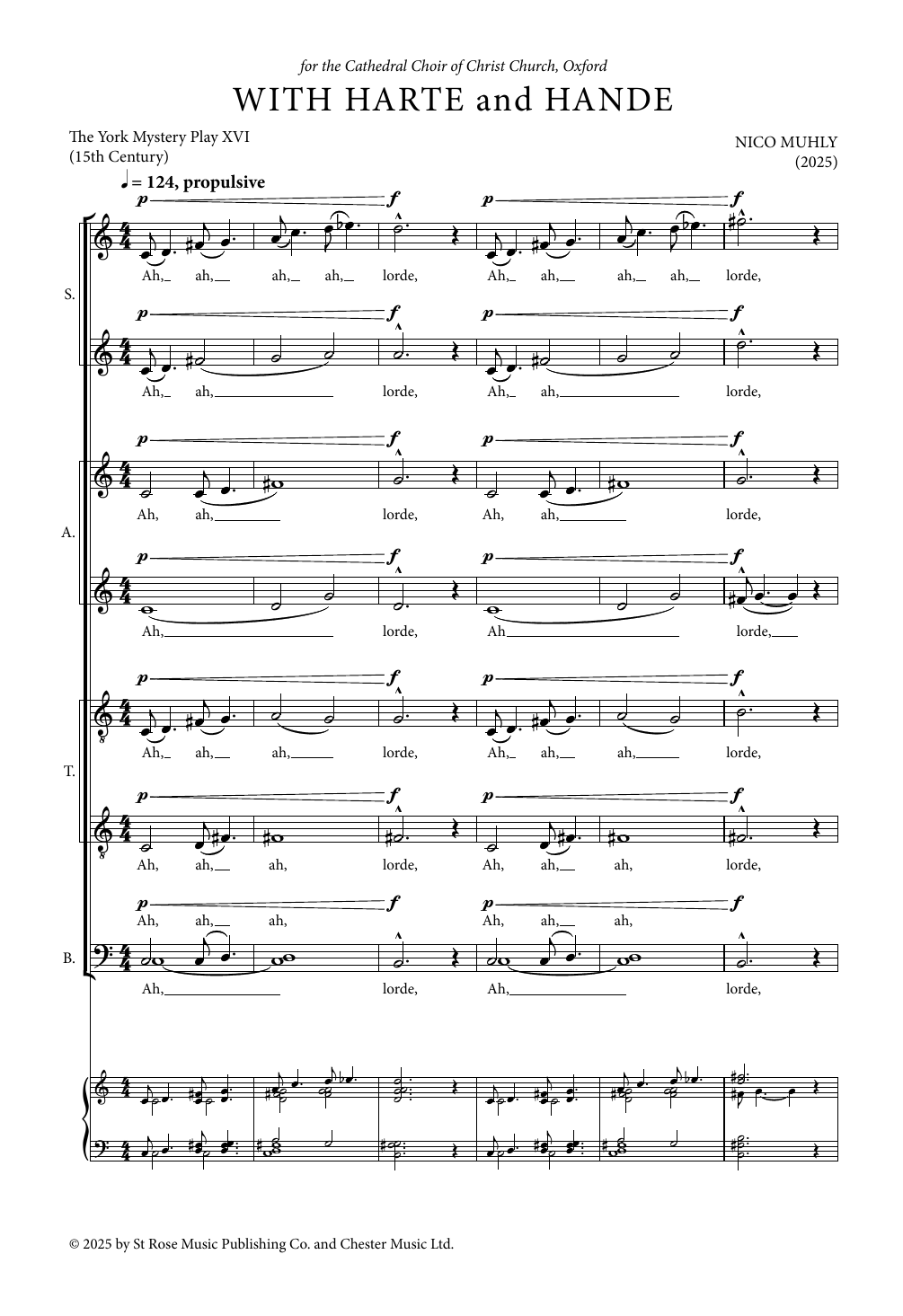
Nico Muhly is an American composer whose work spans opera, orchestral music, and choral writing. He studied at Columbia University and has become known for his ability to blend contemporary harmonic language with deeply singable vocal lines, making his work accessible to both professional ensembles and ambitious amateur choirs.
Why we love this
Muhly writes for the voice in a way that feels natural and idiomatic without sacrificing compositional sophistication. The text setting here is clear enough that singers can focus on ensemble blend and intonation rather than wrestling with awkward vowel placement, and the harmonic language rewards careful listening with genuine depth.
What to expect
The piece carries an intimate quality despite its four-part texture. There's a sense of restraint and reflection in Muhly's writing here; the harmonies shift thoughtfully rather than dramatically, creating a listening experience that rewards attention without demanding virtuosity.
Who it's for
This octavo suits choirs with solid four-part blend and basic music reading skills. It works well for ensembles preparing concert repertoire that moves beyond folk song arrangements but doesn't require advanced sight-reading or extended vocal techniques.
How to get the most out of it
Balance the soprano and alto lines in measures where they carry melodic material; these voices often sit close together and can easily obscure each other if not carefully voiced.
Treat text intelligibly as your first priority. Muhly's writing assumes good diction will naturally support the harmonic language, so articulation and vowel consistency directly affect how the piece lands.
Work the final cadence with attention to voice leading. The resolution benefits from gradual dynamic control in the last few bars rather than a sudden arrival.
How to use it
Pair this with other contemporary choral work for a concert focused on art song and concert music. It sits well between a spiritual and a more structured classical piece, offering a musical palette that appeals to audiences who appreciate modern composition but value singability.
Skills your students will build
Reading close harmonic intervals (seconds and thirds) with secure intonation
Balancing independent vocal lines in dense four-part texture
Responding to contemporary harmonic language and voice leading
Sustaining phrase direction in music without strong melodic contour
You May Also Like
Scan to Complete Your Purchase
Use your phone's camera to scan the code below
You'll log in on your phone and the order will be added to your account