
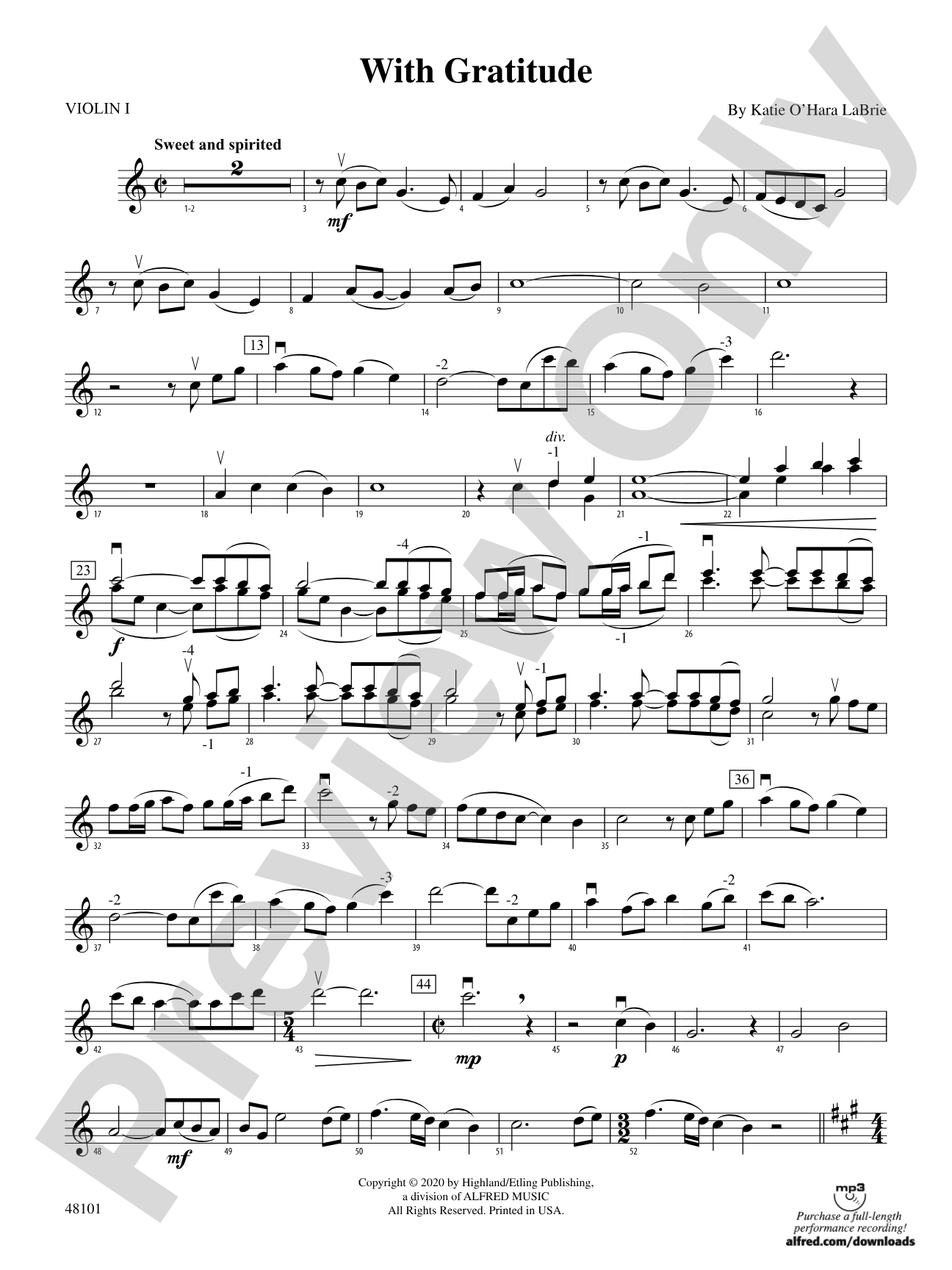

With Gratitude: 1st Violin
By Katie O'Hara LaBrie
Grade: 3
Item: 00-PC-0018536_VN1
$3.00
Pickup currently not available
Description
With Gratitude by Katie O'Hara LaBrie is a flowing yet spirited composition written in memory of a bright youngster who always sought out the good things in life. Perfect for advancing string orchestras, this piece features soaring melodies, rhythmic independence, and higher positions for violin 1 and cello, all while exploring changing modalities in C major and A major. Students will learn to play expressively as they connect to the story behind the piece using the hashtag #yearofgratitude. (4:30) This title is available in MakeMusic Cloud.


Don't just read it, hear it, play along with it, and watch your students grow with it. In MakeMusic Cloud, With Gratitude: 1st Violin comes alive with professional accompaniment, adjustable tempo, and built-in practice tools that turn solo practice into real progress.
Open in the Player
Jump straight in and assign it today.
Start Your Free Trial
Open this title and explore the full library in minutes.
Sample Audio
1
Audio File
--:--
0:00
0:00
Sample Video
Additional Details
Series:
Highland/Etling String Orchestra
Publisher:
Alfred Music
Page Count:
124
SKU:
00-PC-0018536_VN1
More about this title
About the Composer: Katie O'Hara LaBrie

Katie O'Hara LaBrie is a composer, conductor, clinician, and cellist based in Northern Virginia who spent 15 years teaching orchestra in Fairfax County schools before establishing herself as a prolific composer for student ensembles. She earned her Bachelor of Music in Music Education from St. Olaf College and her Master of Music in Instrumental Conducting from George Mason University, studying with Anthony Maiello.
LaBrie's compositions consistently prioritize what she calls purposeful practice and genuine enjoyment at the stand. Her work draws deeply from her background as an orchestra educator; she composes with clear pedagogical intent while refusing to compromise on musicality or audience appeal. Her pieces have earned frequent J.W. Pepper Editor's Choice recognition, performances at the Midwest Band and Orchestra Directors Clinic and American String Teachers Association Conference, and a 2022 honor as one of Yamaha's "40 Under 40" for her leadership in music education. She founded the Fairfax Chamber Players and co-created "the Big IDEA" practice method.
Why we love this
LaBrie writes with an understanding of what motivates young string players to care deeply about the music they make. With Gratitude pairs a meaningful story (a tribute to a young person's spirit) with musical sophistication that respects advancing orchestras; the shifting tonalities and position work challenge players without overwhelming them, while the flowing, spirited character means the story comes through the sound naturally. Programs often need pieces that work equally well in concert and festival contexts, and this one delivers both.
What to expect
Flowing yet energized, with warmth and forward motion that never feels rushed. The piece breathes like someone telling a meaningful story; melodies soar with genuine affection while rhythmic independence keeps the texture alive and present throughout.
Who it's for
Advanced Grade 3 string orchestras ready for technical challenges and musical maturity. This piece engages ensembles that have solid fundamentals in shifting, rhythm reading, and ensemble blend and are prepared to explore expressive playing tied to programmatic meaning.
How to get the most out of it
- Balance the soaring melodies in Violin 1 against the supporting voices so the line sings without drowning out harmonic movement in the middle voices.
- Explore how the shifts between C major and A major create different emotional colors; help the ensemble hear these modalities as part of the piece's narrative arc rather than merely harmonic changes.
- Prepare Violin 1 and cello for higher positions with focused sectional work on intonation and tone consistency; the upper register work should feel secure before full orchestra rehearsals.
- Connect the rhythmic independence across parts to the piece's title by asking students to reflect on what gratitude feels like musically; this transforms technical execution into expressive intent.
How to use it
Ideal for a concert or festival program seeking a piece with emotional resonance that also showcases technical growth. The Thanksgiving connection and #yearofgratitude hashtag make it natural for fall concerts, but the universal theme of seeking good things transcends seasonal programming and works equally well as a spring festival selection.
Skills your students will build
- Playing in higher positions on Violin 1 and cello with secure intonation
- Recognizing and responding to modal shifts between C major and A major
- Maintaining rhythmic independence while listening to ensemble texture
- Expressing character and emotion through tone quality and phrasing
- Connecting musical choices to programmatic intent and narrative meaning