Witches' Brew Sheet Music Preview

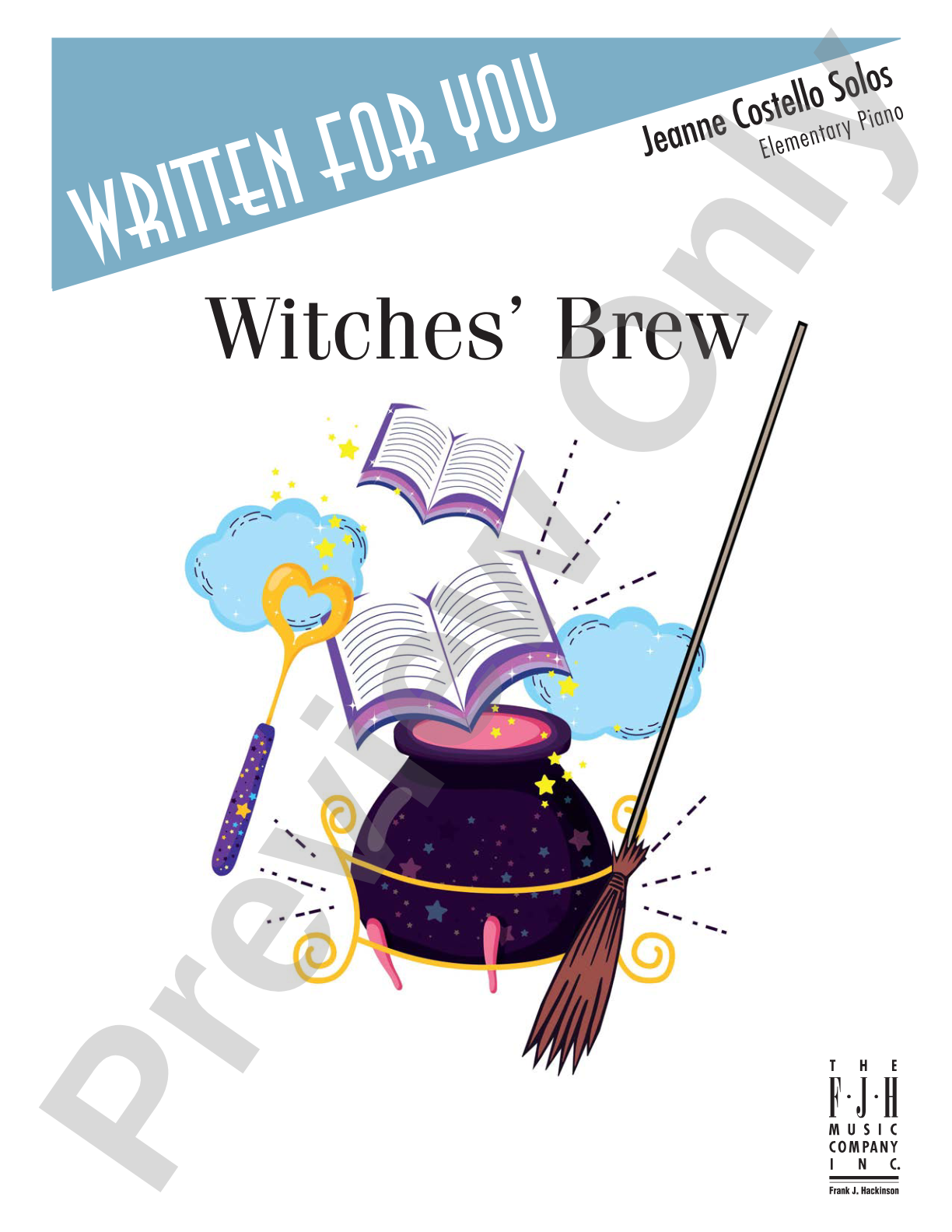
Witches' Brew: Piano

By Jeanne Costello

Item: 98-DW9489

Digital Download
$3.50
Description
A hauntingly beautiful waltz in A minor in “almost” middle C position. Simple yet artistic, the hands remain in a five-finger position with octave shifts at the end. This piece teaches lyricism, the phase gesture, and legato and staccato. Hands play mostly alone except for 12 measures in this three-page sheet.

Witches' Brew: Piano isn't in MakeMusic Cloud just yet...but it could be. Let us know you'd like to see it, and you'll help shape what comes next. In the meantime, start a free trial and dive into thousands of interactive titles your students can play along with today.

Sample Audio
No sample audio found.
Sample Video
Additional Details
Series: Written for You
Publisher: The FJH Music Company, Inc.
SKU: 98-DW9489

More about this title

Why we love this

Costello has crafted a piece that sounds far more sophisticated than its technical demands. The waltz framework combined with minor key tonality creates genuine musical depth, and the sparse two-hand writing gives students room to focus on quality of tone and phrasing rather than coordination challenges. Elementary pianists will play something genuinely artistic.

What to expect

A minor waltz has an inherent melancholy that suits Halloween without being cartoonish or scary. The piece feels wistful and slightly mysterious, with enough space and simplicity that listeners hear the beauty of the melody rather than technical busyness. It's the musical equivalent of an old dance performed in candlelight.

Who it's for

Elementary pianists ready to move beyond simple melody-only pieces and explore how artistic playing happens even in a restricted hand position. This works for students who understand five-finger patterns and basic articulation but need a piece that rewards expressive attention.

How to get the most out of it

  • Shape the melodic line with the phrase gesture. Mark where each phrase begins and ends, then listen for the natural swell and release that makes the melody sing rather than feel mechanical.
  • Distinguish legato and staccato articulations clearly. Legato passages need connected arm weight and sustained tone; staccato notes should lift cleanly with a light wrist. This textural contrast is what gives the piece its sophistication.
  • Approach the octave shifts at the end with confidence. Practice the hand position change separately at a slow tempo until the movement feels natural, then integrate it into the final phrase.
  • Let the waltz rhythm breathe. Resist pushing the tempo; allow slight flexibility in the second beat to honor the lyrical quality over mechanical pulse.

How to use it

This sits perfectly in a Halloween or autumn-themed recital, where it can anchor a set of seasonal pieces without demanding advanced technique. It also works as a gentle transition piece in a student recital, providing a moment of musical substance between more playful selections.

Skills your students will build

  • Phrase shaping and legato phrasing within a restricted hand position
  • Contrasting legato and staccato articulations in the same piece
  • Octave shifts while maintaining musical continuity
  • Reading and performing in A minor with awareness of key signature
  • Waltz rhythm and stylistic phrasing
  • Quality of tone and lyricism at an elementary level

You May Also Like