Wish You Were Here Sheet Music Preview

Wish You Were Here: String Orchestra Conductor Score & Parts

By Nico Muhly

Item: 35-PK00492071

Digital Download
$25.99

Buy Extra Parts (Digital PDF Download)

Product Price Quantity
Wish You Were Here - Full Score $25.99

Parts Added to Cart!

Description
Wish You Were Here

Wish You Were Here: String Orchestra Conductor Score & Parts isn't in MakeMusic Cloud just yet...but it could be. Let us know you'd like to see it, and you'll help shape what comes next. In the meantime, start a free trial and dive into thousands of interactive titles your students can play along with today.

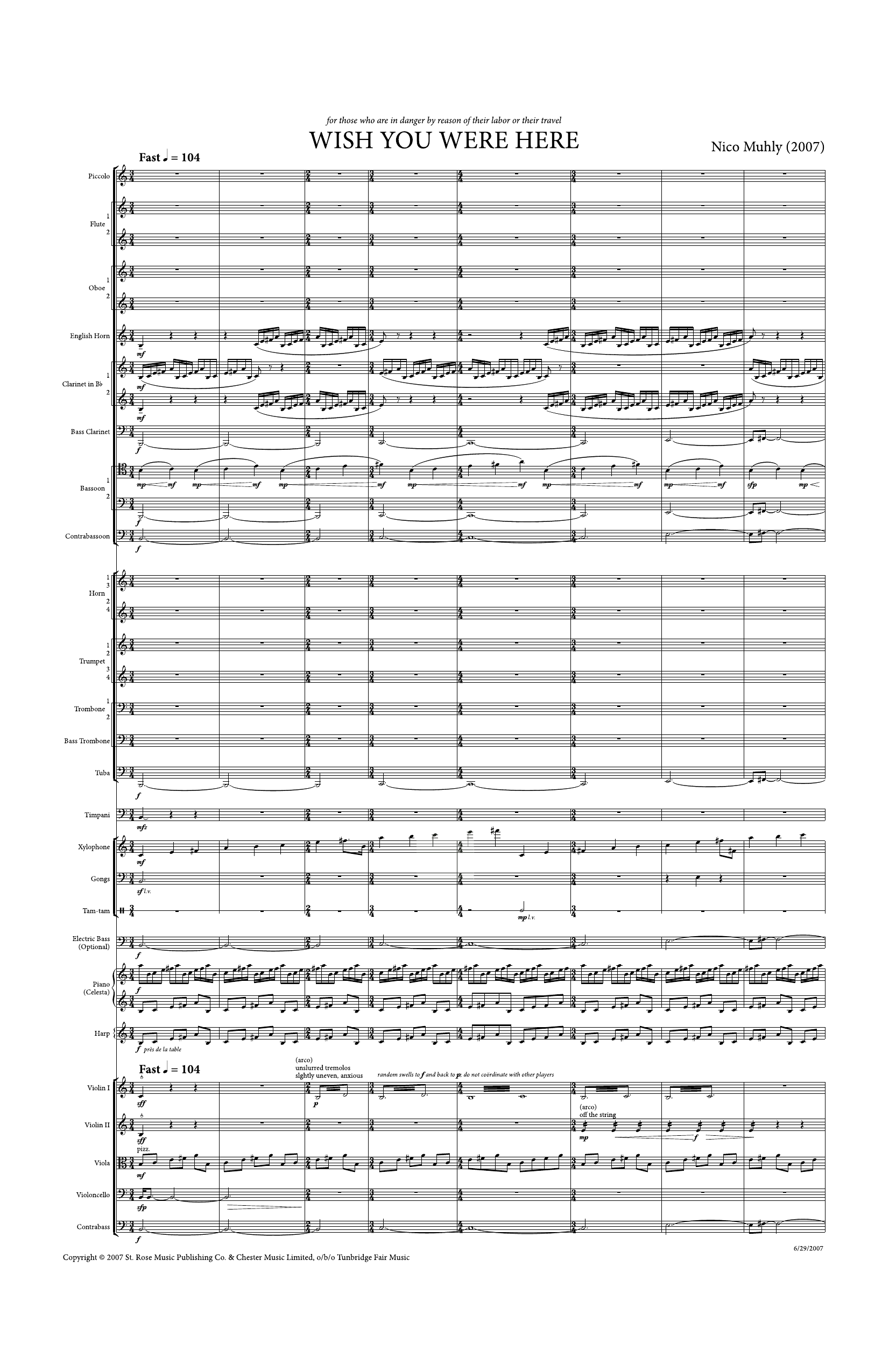
Sample Audio
No sample audio found.
Sample Video
Additional Details
Publisher: Hal Leonard
SKU: 35-PK00492071

More about this title

About the Composer: Nico Muhly

Nico Muhly is an American composer whose music bridges contemporary classical traditions with accessible melodic writing. His work for string ensembles has become central to orchestra curricula at all levels, balancing technical demands with genuine musical substance that engages both young musicians and audiences.

Why we love this

Muhly's arrangement captures the emotional core of the original without sacrificing orchestral color. The string writing sits comfortably across ability levels while preserving the song's haunting quality, making it equally effective as a concert opener or a touching encore.

What to expect

The piece unfolds like a conversation between memory and longing. Muhly's orchestration creates transparency around a deceptively simple melody, allowing the familiar song to take on new depth through its string arrangement.

Who it's for

This works for intermediate to advanced string orchestras seeking contemporary music with emotional resonance. It's ideal for ensembles wanting to program outside the traditional canon while maintaining musical sophistication.

How to get the most out of it

  • Honor the simplicity of the melody line. Resist the urge to over-interpret; let the orchestration breathe and the harmonic shifts do their expressive work.
  • Balance the accompaniment texture carefully. Secondary voices should support rather than compete, especially where divisi writing creates harmonic density.
  • Shape phrases across measures rather than within them. Think in longer arcs to avoid a choppy or sentimental delivery.
  • Pay particular attention to intonation during sustained sonorities. Slow harmonic progressions expose any pitch inconsistencies among the sections.

How to use it

Pair this with Baroque or Romantic string repertoire to show how musical language evolves while emotional directness remains timeless. It works beautifully as a second-half opening or as a bridge between contrasting works in a thematic concert.

Skills your students will build

  • Playing sustained tones with consistent tone color across phrase lengths
  • Reading divisi notation and tracking individual voice lines within the ensemble
  • Balancing melody, countermelody, and harmonic accompaniment simultaneously
  • Responding to subtle dynamic and tempo inflections that shape modern string writing

You May Also Like