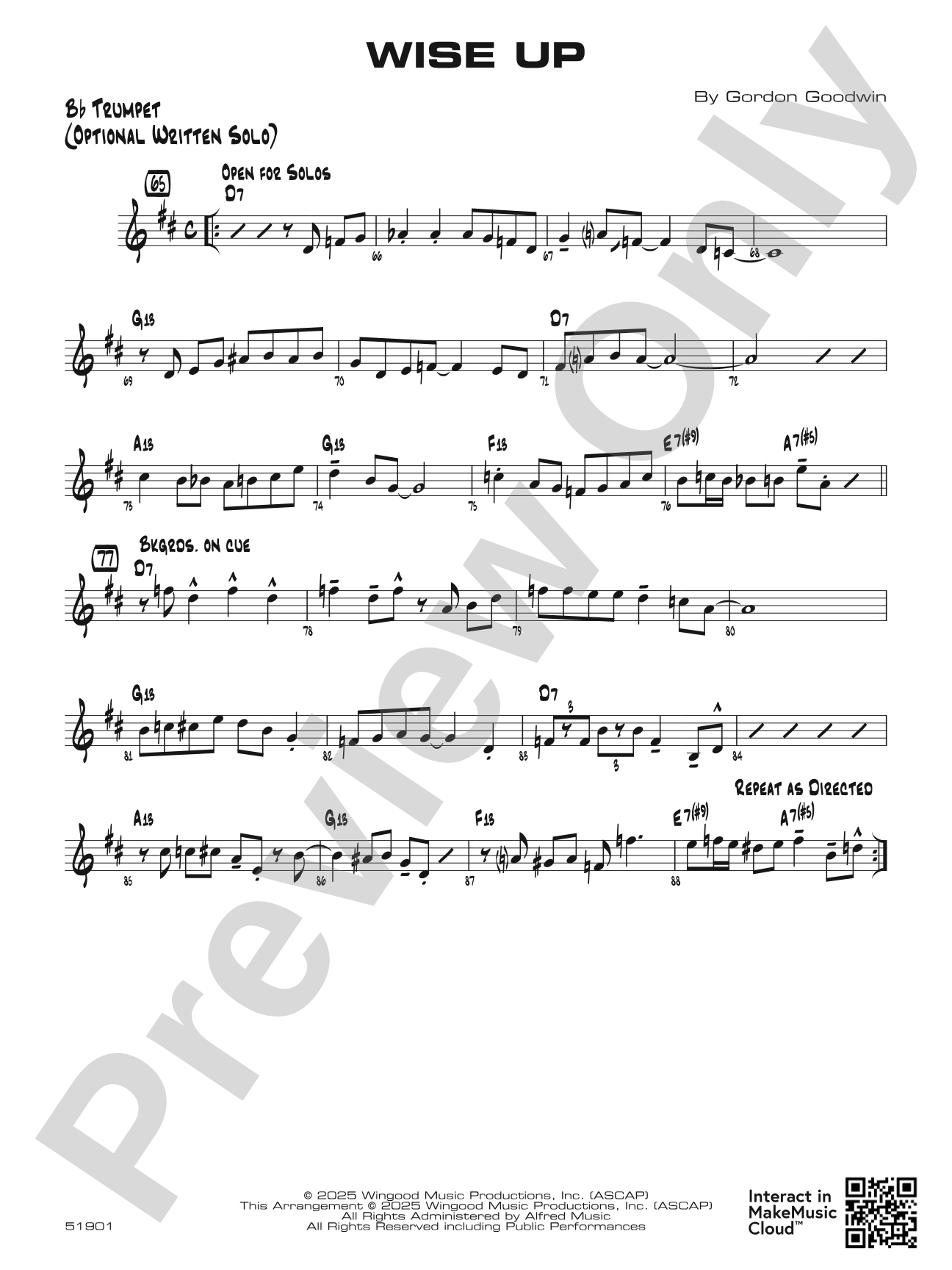
A terrific swing-shuffle grove around 150 BPM. This chart is simply fun and hip. Solo space is provided for alto, tenor, bari, trumpet, and trombone with sample solos provided for E-flat, B-flat, trombone, and C instruments, and very flexible. Each section gets to shine in this superb chart and optional parts include flute, vibes, and percussion. The lead trumpet range is to high D. This is a winner! (5:30)
Discover MakeMusic Cloud: thousands of interactive titles your students can play along with today.
Gordon Goodwin heard complete compositions in his head before he could read music, and by age thirteen he had already written his first big band chart. His gifts for orchestration and composition caught the attention of film and television producers, leading to Emmy wins and Grammy nominations for his work on films including Bad Boys II, Con Air, Remember the Titans, and Star Trek: Nemesis.
Beyond the screen, Goodwin has written for world-class vocalists ranging from Christina Aguilera to Ray Charles, and has conducted major symphony orchestras across North America and Europe. Since 2000, he has led Gordon Goodwin's Big Phat Band, a Los Angeles-based ensemble that has earned multiple Grammy nominations and redefined what contemporary big band jazz can achieve.
Why we love this
Goodwin knows how to write for a section so everyone feels like the star. The groove sits perfectly at 150 BPM—fast enough to feel energetic, slow enough that high school players can articulate cleanly—and the solo spaces are genuinely inviting without requiring virtuosic chops. This is the kind of chart that makes students excited to come to rehearsal.
What to expect
Hip and propulsive. The swing-shuffle grove has a natural bounce that invites movement, and the writing is transparent enough that you hear every voice without sacrificing fullness. Solo sections breathe with personality rather than formality, creating the feeling of musicians jamming together rather than reading charts.
Who it's for
Jazz ensembles at the 3.5 grade level who are ready for genuine swing feel and solo responsibility without getting bogged down in complex harmony or extreme ranges. This works equally well for a first-time jazz director looking for a surefire crowd-pleaser and for an experienced program seeking a high-energy feature.
How to get the most out of it
Lock the swing feel first. The shuffle groove depends on consistent eighth-note interpretation across the entire ensemble; isolate the rhythm section and lock that pocket before layering in the horns.
Showcase the provided sample solos as learning models, but encourage soloists to find their own voice. Goodwin built in flexibility here intentionally, so your alto player doesn't need to copy the written solo verbatim.
Balance the lead trumpet's high D passages with the ensemble texture. At 150 BPM, this sits comfortably, but clarity matters more than volume; have the trumpet player support the line without overshooting.
Use the optional parts strategically. Flute, vibes, and percussion can thicken the sound, but the chart works without them; try running it stripped down first, then add color in the final week of rehearsal.
How to use it
Program this as your spring concert opener or as a festival feature when you want immediate energy and ensemble engagement. The five-and-a-half-minute runtime and accessible difficulty make it an ideal vehicle for showcasing your developing jazz soloists without requiring students to prepare competition-level arrangements.
Skills your students will build
Swing eighth-note articulation and feel
Solo improvisation over chord changes with provided harmonic framework
Section balance and blend in a groove-based texture
Reading and executing jazz notation (swing shuffles, rhythmic hits, and ensemble figures)
Listening across the ensemble to maintain groove integrity while soloing
You May Also Like
Scan to Complete Your Purchase
Use your phone's camera to scan the code below
You'll log in on your phone and the order will be added to your account