
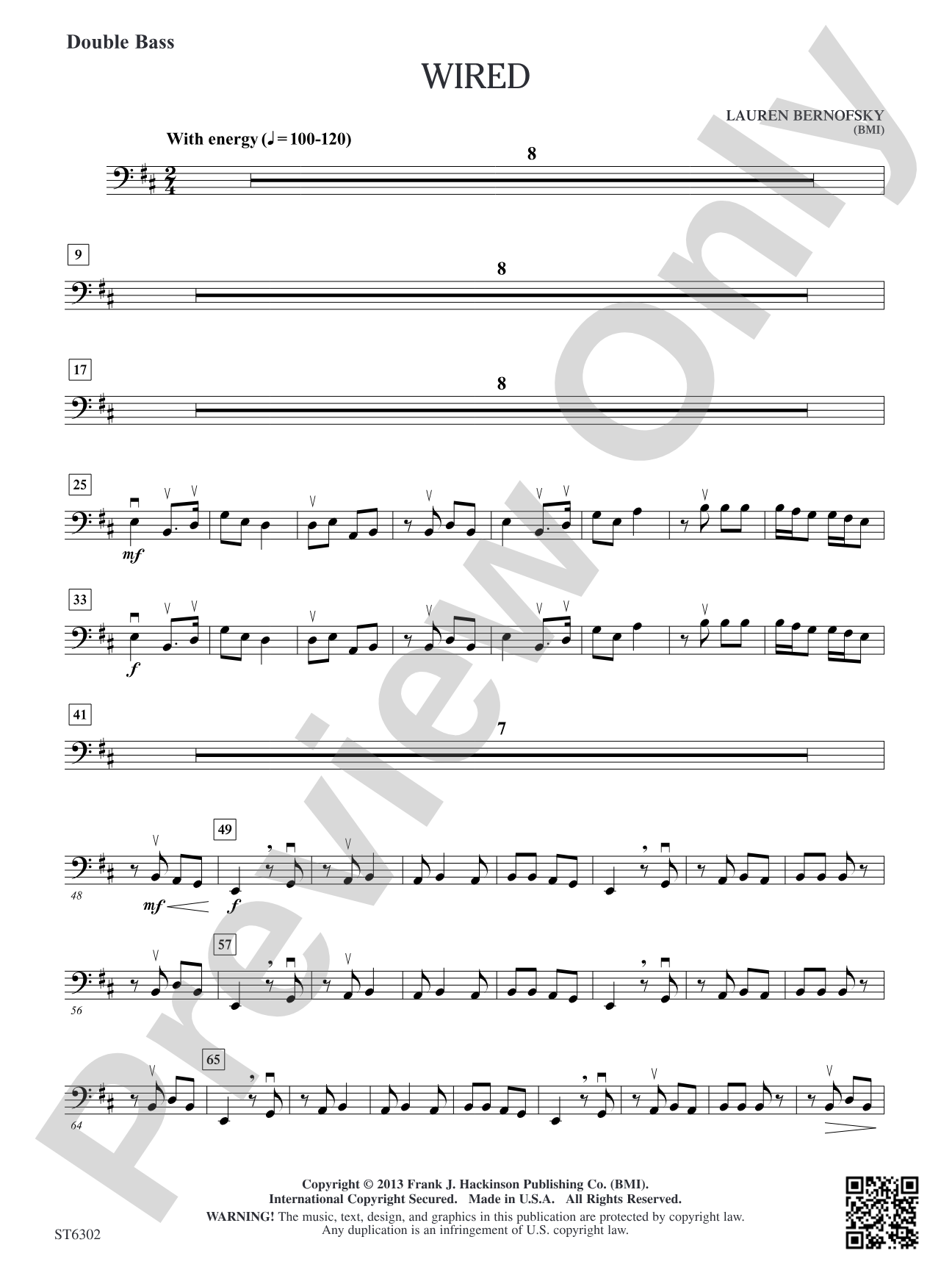

Wired: Double Bass
By Lauren Bernofsky
Grade: 3
Item: 98-PC-DST6302_SB
$7.00
Pickup currently not available
Description
An uncanny combination of rock and classical styles, this piece has an unstoppable energy running through it - pure electricity! Driving eighth notes are slowly layered before an infectious groove in the lower strings takes over with attitude. Engaging for every player in the orchestra, this piece is a guaranteed way to win over your students, audience, and just about anyone within earshot!


Don't just read it, hear it, play along with it, and watch your students grow with it. In MakeMusic Cloud, Wired: Double Bass comes alive with professional accompaniment, adjustable tempo, and built-in practice tools that turn solo practice into real progress.
Open in the Player
Jump straight in and assign it today.
Start Your Free Trial
Open this title and explore the full library in minutes.
Sample Audio
1
Audio File
--:--
0:00
0:00
Sample Video
No sample videos found.
Additional Details
Series:
FJH String Orchestra
Publisher:
The FJH Music Company, Inc.
SKU:
98-PC-DST6302_SB
More about this title
About the Composer: Lauren Bernofsky

Lauren Bernofsky has established herself as a prolific composer across multiple genres, with over a hundred works to her name spanning solo pieces, chamber music, choral works, orchestral scores, and compositions for film, ballet, and opera. Her music consistently balances emotional depth with intellectual rigor, earning recognition from major institutions and competitions: her Sonatine won the National Flute Association's Newly Published Music Competition, her opera Mooch the Magnificent received the Opera Puppets Award at Boston Metro Opera, and her choral work Prayer of Shantideva won the Dalai Lama Composition Contest and was premiered at a prayer service in the Dalai Lama's presence.
Bernofsky holds degrees from The Harrt School (Bachelor's in violin and composition), New England Conservatory (Master's in composition), and Boston University (DMA in composition). Her works have been commissioned by major ensembles including The Del Mar Trio, The Bloomington Symphony, and numerous regional orchestras and soloists. She has received grants from The National Foundation for the Advancement of the Arts, The American Music Center, and The American Composers Forum, and has taught at the Peabody Institute and Interlochen Center for the Arts.
Why we love this
Bernofsky's gift for creating music that feels contemporary without alienating young players shines here. Grade 3 orchestras rarely get rewarded with pieces that sound genuinely cool to modern ears, and Wired delivers that without compromising technical accessibility or musical substance. The rock-classical fusion isn't gimmicky; it's the engine that makes every section of your orchestra feel invested in what they're playing.
What to expect
Wired pulses with kinetic energy from the moment the first layers of eighth notes begin. The classical orchestral palette collides with rock rhythms and attitude, creating something that feels both electric and orchestral; the lower strings drive forward with an infectious groove that pulls the entire ensemble into its momentum.
Who it's for
String orchestras at the Grade 3 level looking for contemporary repertoire with genuine appeal. This piece works equally well for groups eager to explore modern idioms and those seeking festival or contest material that doesn't sacrifice musicality for novelty.
How to get the most out of it
- Establish the groove in the lower strings first. Once your cellos and basses lock the rhythmic foundation, the layered textures above will snap into focus naturally.
- Shape the building energy deliberately during the opening eighth-note sections. Resist the temptation to rush; let the orchestration do the work of creating momentum.
- Keep articulation consistent across sections, especially in the parts that shadow each other. Slight unevenness in tonguing or bowing will muddy the driving pulse.
- Balance the crossing parts in the middle register carefully. With the rock idiom at play, clarity becomes more important than blend.
How to use it
Program this as an opener to grab attention or mid-concert to energize a program mixing classical and contemporary works. It's equally effective as a festival or contest selection, where its contemporary voice and engaging energy will make your orchestra stand out.
Skills your students will build
- Maintaining steady eighth-note rhythmic precision in layered textures
- Balancing driving rhythmic parts with sustained melodic lines
- Executing rock-influenced articulations within a classical string context
- Listening across sections to lock ensemble groove and forward momentum