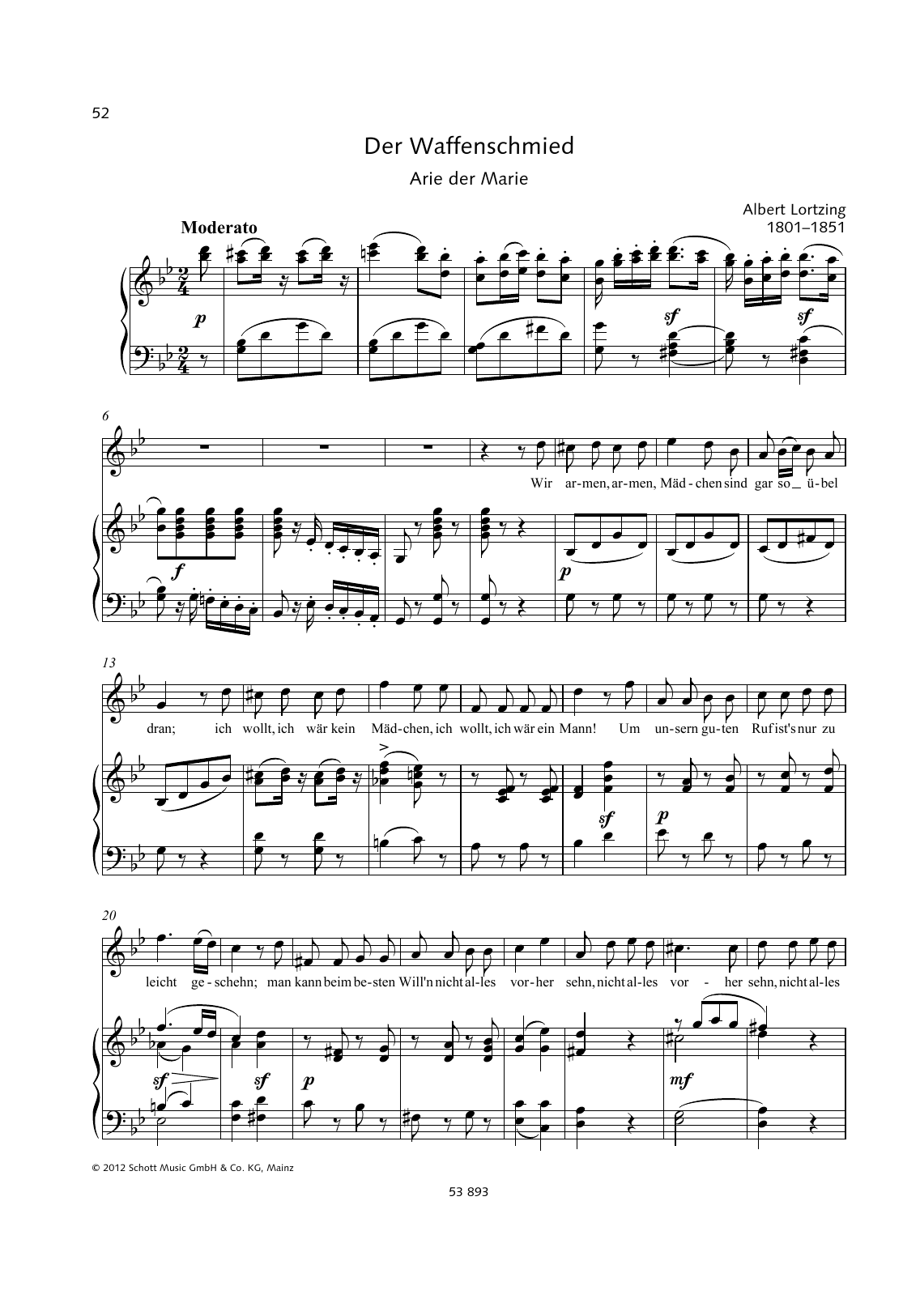
Wir armen, armen Mädchen Sheet Music Preview

Wir armen, armen Mädchen: Piano Vocal

By Albert Lortzing / Arranged by Claudia Eder / Arranged by Wolfgang Birtel

Item: 35-DS00369617

Digital Download
$4.99
Description

Wir armen, armen Mädchen: Piano Vocal isn't in MakeMusic Cloud just yet...but it could be. Let us know you'd like to see it, and you'll help shape what comes next. In the meantime, start a free trial and dive into thousands of interactive titles your students can play along with today.

Sample Audio
No sample audio found.
Sample Video
Additional Details
Publisher: Hal Leonard
Page Count: 8
SKU: 35-DS00369617

More about this title

About the Composer: Albert Lortzing

Albert Lortzing (1801–1851) was a German composer and conductor whose gift for melody and theatrical storytelling made him one of the most performed opera composers of his era. His works dominated German stages throughout the 19th century, and his influence on singspiel and comic opera remains substantial in music education and repertoire study. Lortzing's ability to write vocal lines that sit naturally for singers while supporting dramatic expression makes his arias invaluable teaching material.

Why we love this

This aria captures Lortzing at his most direct and touching. The melodic line unfolds with the kind of natural grace that makes singers sound better than they expect to sound, while the accompaniment provides enough harmonic interest to hold a pianist's attention. For voice teachers pairing classical repertoire with students ready to move beyond art songs, this offers theatrical context without demanding excessive technical fireworks.

What to expect

A moment of quiet melancholy tinged with resignation. The melody sits in a conversational range, inviting intimate connection rather than spectacle. There is gentleness in the harmonic language, a quality that rewards careful listening and patient delivery.

Who it's for

Intermediate to advanced vocalists studying classical German opera repertoire, voice students ready for theatrical context in their lessons, and pianists building proficiency with art song accompaniment. This arrangement offers singers a legitimate opera excerpt without the orchestral forces.

How to get the most out of it

  • Shape the melody in long, connected phrases rather than breaking it into smaller gestures. Let the vocal line breathe as one arc from beginning to end.
  • Balance the voice warmly over the piano part without pushing. Lortzing's writing assumes an intimate acoustic, not a large hall.
  • Pay attention to text rhythm in the German lyrics. The natural prosody of the language should guide your tempo choices and phrase breathing.
  • Coordinate with your pianist on the accompaniment's rhythmic momentum. A slight rubato in the vocal line works only when the piano provides a steady harmonic foundation.

How to use it

Include this in a recital exploring 19th-century German vocal writing, or pair it with other Lortzing selections for a focused study of the composer's gift for melody. It works equally well as a teaching demonstration of how theatrical music differs from pure art song, showing students how context and character deepen musical expression.

Skills your students will build

  • Sustaining long melodic lines through harmonic changes
  • Shaping German text with natural prosody
  • Balancing vocal tone with piano accompaniment in chamber settings
  • Interpreting character through melodic nuance rather than vocal extremes

You May Also Like