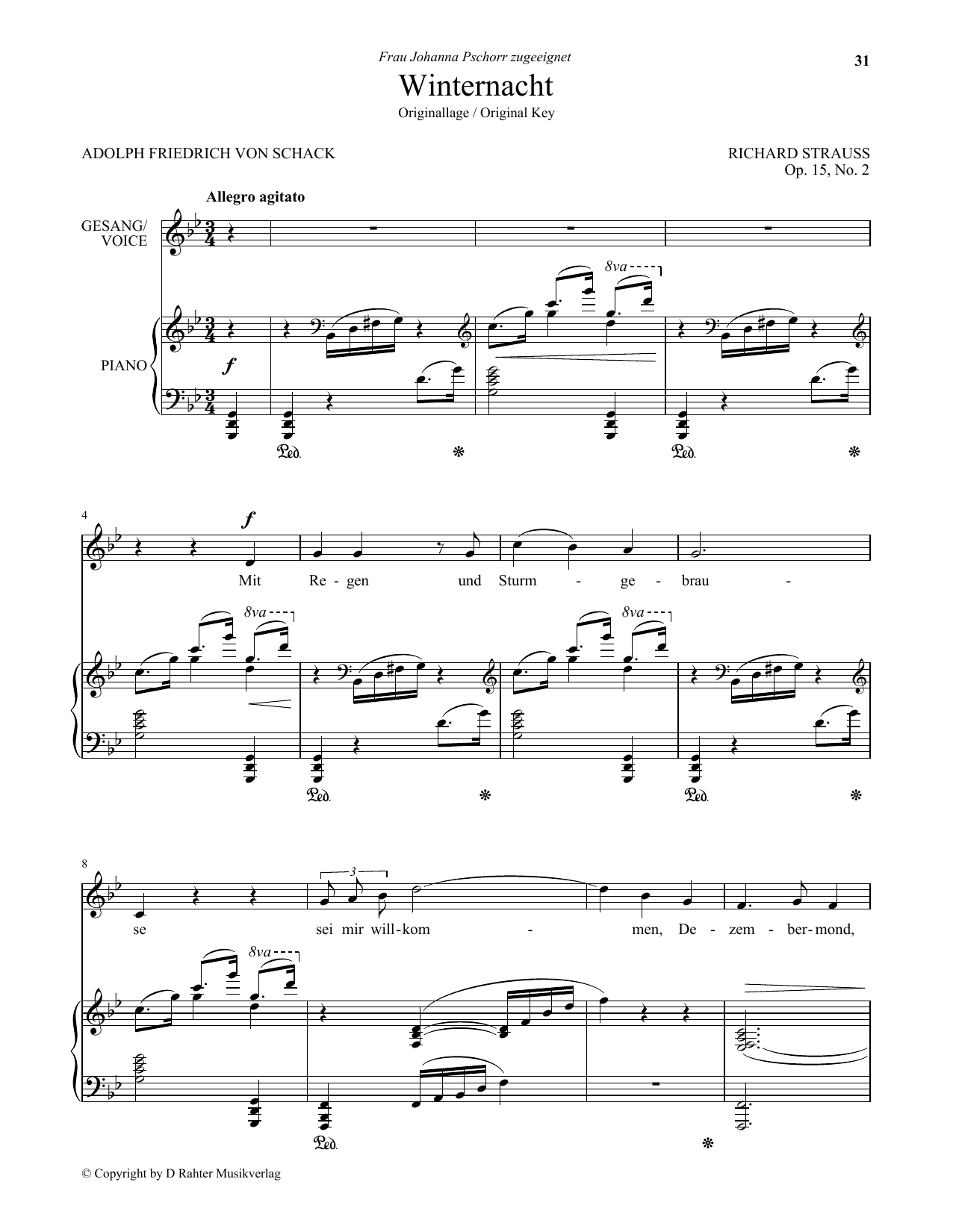
Winternacht (Low Voice) Sheet Music Preview

Winternacht (Low Voice): Piano Vocal

Item: 35-DS00811283

Digital Download
$5.99
Description

Winternacht (Low Voice): Piano Vocal isn't in MakeMusic Cloud just yet...but it could be. Let us know you'd like to see it, and you'll help shape what comes next. In the meantime, start a free trial and dive into thousands of interactive titles your students can play along with today.

Sample Audio
No sample audio found.
Sample Video
Additional Details
Publisher: Hal Leonard
Page Count: 5
SKU: 35-DS00811283

More about this title

Why we love this

Winternacht brings atmospheric intimacy to the art song tradition without demanding a dramatic soprano. The low voice transposition opens this repertoire to baritones, mezzo-sopranos, and bass singers who rarely find German Lieder written in their range. It's a sophisticated choice that rewards singers with genuine interpretive depth.

What to expect

Quiet and introspective, with the chill of winter night captured not through dramatic gesture but through delicate harmonic shifts and sparse textures. The low voice deepens the song's meditative quality, turning it inward.

Who it's for

Baritones, mezzo-sopranos, and bass singers working on song recital repertoire or art song cycles. It's also valuable for classical voice students building familiarity with German Lieder beyond the soprano and tenor standards.

How to get the most out of it

  • Shape the vocal line with sustained legato through the lower register; let the piano's harmonic movement support your phrasing rather than fighting it.
  • Listen closely to the piano introduction and interludes. They establish the mood, so resist rushing into your entrance.
  • Color the text expressively through vowel placement and dynamic control. Winter's quiet weight demands restraint, not volume.

How to use it

Include this in an evening devoted to German song, pairing it with other Lieder in unconventional voicings. It also works as a recital centerpiece for advanced singers specializing in art song, or as a sophisticated encore that showcases comfort with lower tessituras.

Skills your students will build

  • German language diction and poetic interpretation in classical vocal music
  • Legit singing in lower tessituras with sustained tone quality
  • Collaborative listening between voice and piano
  • Emotional restraint and phrasing in slower, introspective material

You May Also Like