
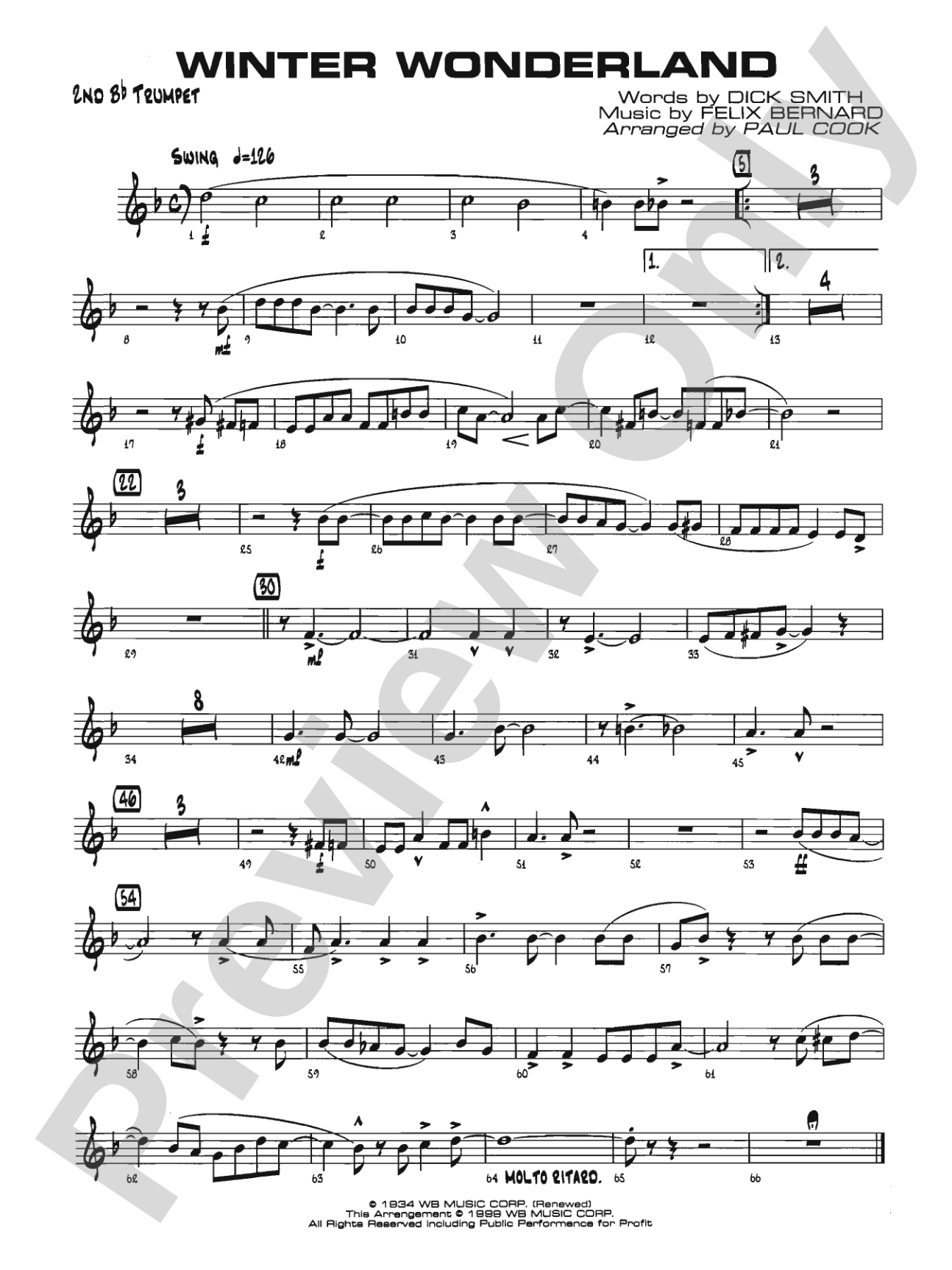

Winter Wonderland: 2nd B-flat Trumpet
Arr. Paul Cook
Grade: 1 (Easy)
Item: 00-PC-0015238_T2
$3.00
Pickup currently not available
Description
Here is wonderful holiday favorite arranged for your young band. Arranger Paul Cook has the ability to score for this level and keep the integrity of the composition. This chart offers your sax section plenty of melody and a fun solo section with the altos and tenors trading fours. You can focus on the swing concept since this one is chock full of ensemble swing sections. But don't worry, easy swing rhythms make it easy to learn, and the band will sound terrific. Flexible instrumentation and optional parts give you all the options you'll need for a successful holiday performance.


Don't just read it, hear it, play along with it, and watch your students grow with it. In MakeMusic Cloud, Winter Wonderland: 2nd B-flat Trumpet comes alive with professional accompaniment, adjustable tempo, and built-in practice tools that turn solo practice into real progress.
Open in the Player
Jump straight in and assign it today.
Start Your Free Trial
Open this title and explore the full library in minutes.
Sample Audio
1
Audio File
--:--
0:00
0:00
Sample Video
Additional Details
Series:
First Year Charts for Jazz Ensemble
Publisher:
Alfred Music
Page Count:
68
SKU:
00-PC-0015238_T2
More about this title
About the Arranger: Paul Cook
Paul Cook has built a reputation for writing accessible jazz charts that don't sacrifice musical integrity for simplicity. His arrangements for young ensembles demonstrate a clear understanding of what beginning jazz musicians can accomplish when given well-crafted material and proper harmonic support.
Why we love this
Cook nails the balance between holiday tradition and genuine jazz pedagogy. By loading the chart with ensemble swing sections and giving the sax section real melodic weight, you're teaching swing feel through a tune your students already know, which removes one barrier and lets them focus entirely on the style. The alto and tenor trading fours is a perfect confidence builder for soloists who need a low-pressure way to learn how to navigate changes.
What to expect
Bright and festive without being gimmicky. The arrangement captures the warmth of the holiday standard while keeping the energy moving with clean, propulsive swing rhythms that build ensemble confidence. There's a real sense of joy in the trading fours section that gives younger soloists permission to play freely within a supportive harmonic framework.
Who it's for
Grade 1 jazz ensembles and young jazz combos ready to explore swing style. This works equally well for a beginning jazz band that already reads fluently and a multi-grade ensemble where you need material that doesn't ask advanced players to sit out.
How to get the most out of it
- Lock in the swing rhythm section first. Have drums and bass establish the shuffle feel and pocket before layering horns, since inexperienced players often rush or flatten the swing articulation when learning it from scratch.
- Feature your best sax soloist during the trading section but also use it as a performance opportunity for an emerging improviser. The four-bar format gives students clear boundaries and time to reset between choruses.
- Emphasize the difference between the ensemble swing sections and any straight rhythms in the arrangement. Young players often swing everything by default, so calling attention to the style changes keeps the arrangement's character sharp.
- Take advantage of the flexible instrumentation to accommodate your roster. If you're light on reeds or low brass, test the optional parts in rehearsal and choose the voicings that best match your section strengths.
How to use it
Perfect for a winter concert as a set closer or mid-set mood brightener that connects with both audiences and players. You could also program it early in the season as a teaching vehicle for swing fundamentals, then reprise it at a holiday performance once the ensemble has internalized the style.
Skills your students will build
- Reading and executing swing articulation and rhythm feel
- Ensemble swing section balance and blend
- Improvisation within structured, four-bar solo phrases
- Trading solos between voice parts (altos and tenors)
- Flexible part reading and optional instrumentation awareness