Winter Nocturne Sheet Music Preview

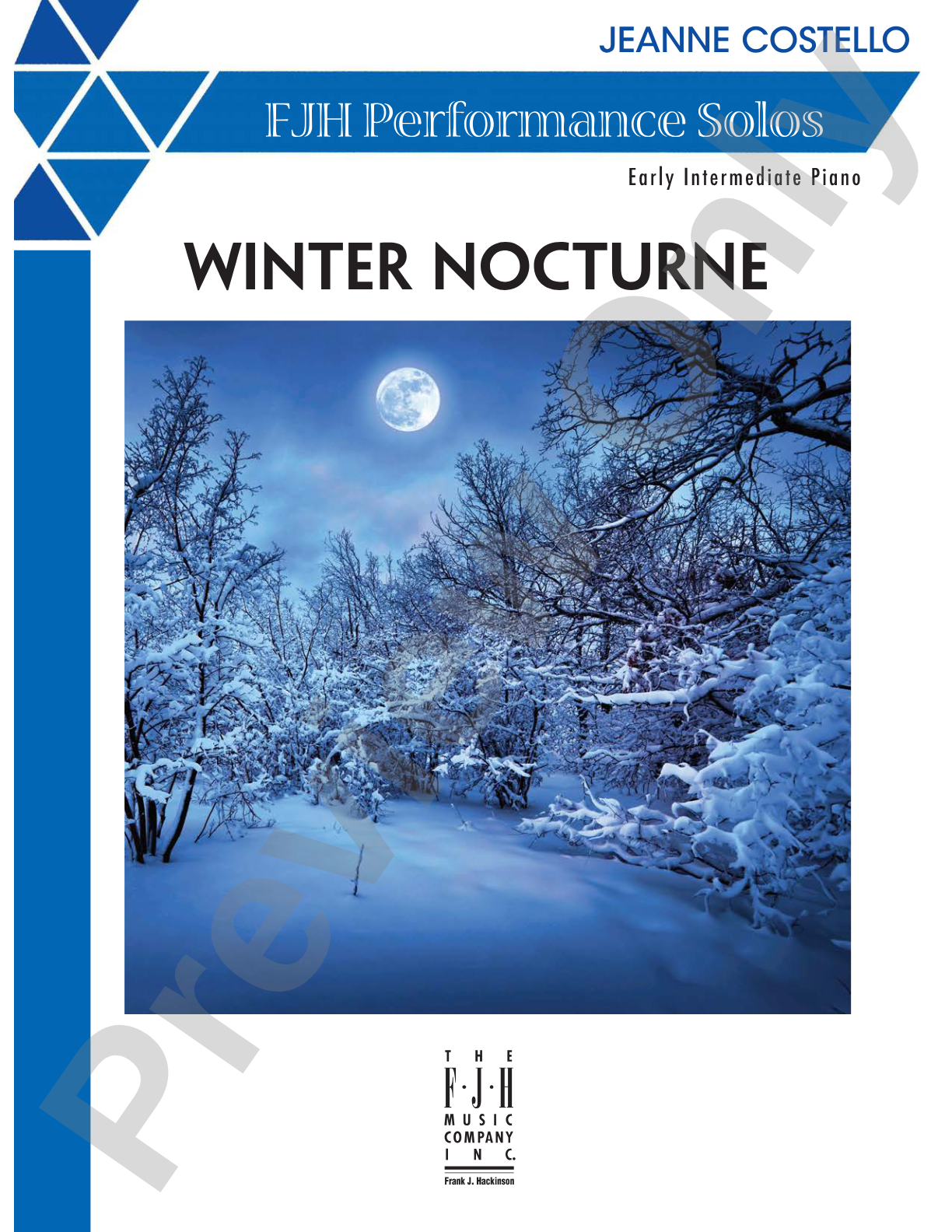
Winter Nocturne: Piano

By Jeanne Costello

Item: 98-DP2016

Digital Download
$2.95
Description
The melody in this G minor piece is so beautiful that you want to play it again when you come to the final double bar! The L.H. has broken chord accompaniment using intervals of 5ths, 6ths and 7ths (no octaves in either hand.) This is a good piece for rubato and clean pedaling; students of any age will enjoy playing it.

Winter Nocturne: Piano isn't in MakeMusic Cloud just yet...but it could be. Let us know you'd like to see it, and you'll help shape what comes next. In the meantime, start a free trial and dive into thousands of interactive titles your students can play along with today.

Sample Audio
No sample audio found.
Sample Video
Additional Details
Series: FJH Performance Solos
Publisher: The FJH Music Company, Inc.
SKU: 98-DP2016

More about this title

Why we love this

The left hand writing here is genuinely inventive. By anchoring the accompaniment in 5ths, 6ths, and 7ths instead of octaves, Costello creates space for the melody to breathe while keeping the texture rich. It's the kind of smart voicing that makes students sound more sophisticated than they might expect.

What to expect

Wintry and introspective without being gloomy. The G minor tonality carries quiet melancholy, while the flowing broken-chord accompaniment keeps the piece moving forward with gentle momentum. There's an intimacy here that invites listeners close.

Who it's for

This piece suits intermediate pianists who have developed basic facility but are ready to work with rubato and sophisticated pedal technique. It's approachable enough for students rebuilding confidence after a break, yet rewarding enough to hold the attention of more advanced players.

How to get the most out of it

  • Shape the melody phrase by phrase rather than measure by measure. G minor's character will deepen if you resist the urge to accent every bar line.
  • Experiment with your rubato by first playing the left hand with a steady pulse, then gradually freeing the right hand within that framework. This gives you control over where flexibility happens.
  • Let the broken chord patterns speak through clean pedaling. Change the pedal at harmonic shifts, not at every chord change, to avoid muddiness while sustaining the warmth.

How to use it

Pair this with other character pieces in a student recital or as a thoughtful opener for a chamber concert. It also works beautifully as a standalone encore when you need something short, polished, and emotionally clear.

Skills your students will build

  • Pedal control in minor tonality
  • Rubato phrasing with independence between hands
  • Voice leading using intervals of 5ths, 6ths, and 7ths
  • Sustaining melodic line over broken chord accompaniment
  • Harmonic listening and pedal placement by ear

You May Also Like