
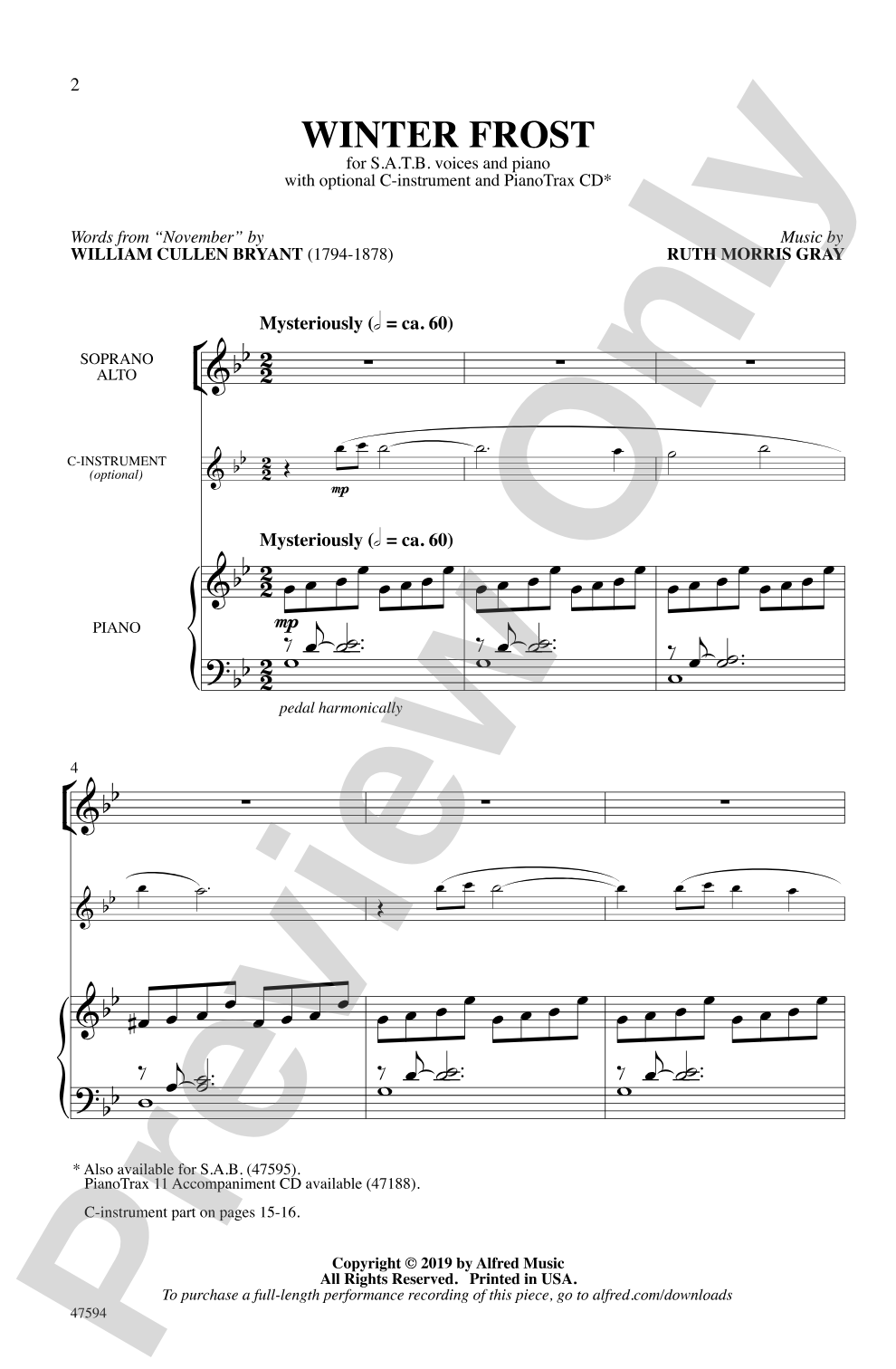

Winter Frost: SATB Choral Octavo
Words by William Cullen Bryant, music by Ruth Morris Gray
Item: 00-PO-0006034
$2.20
Minimum order quantity: 20 copies
Pickup currently not available
Description
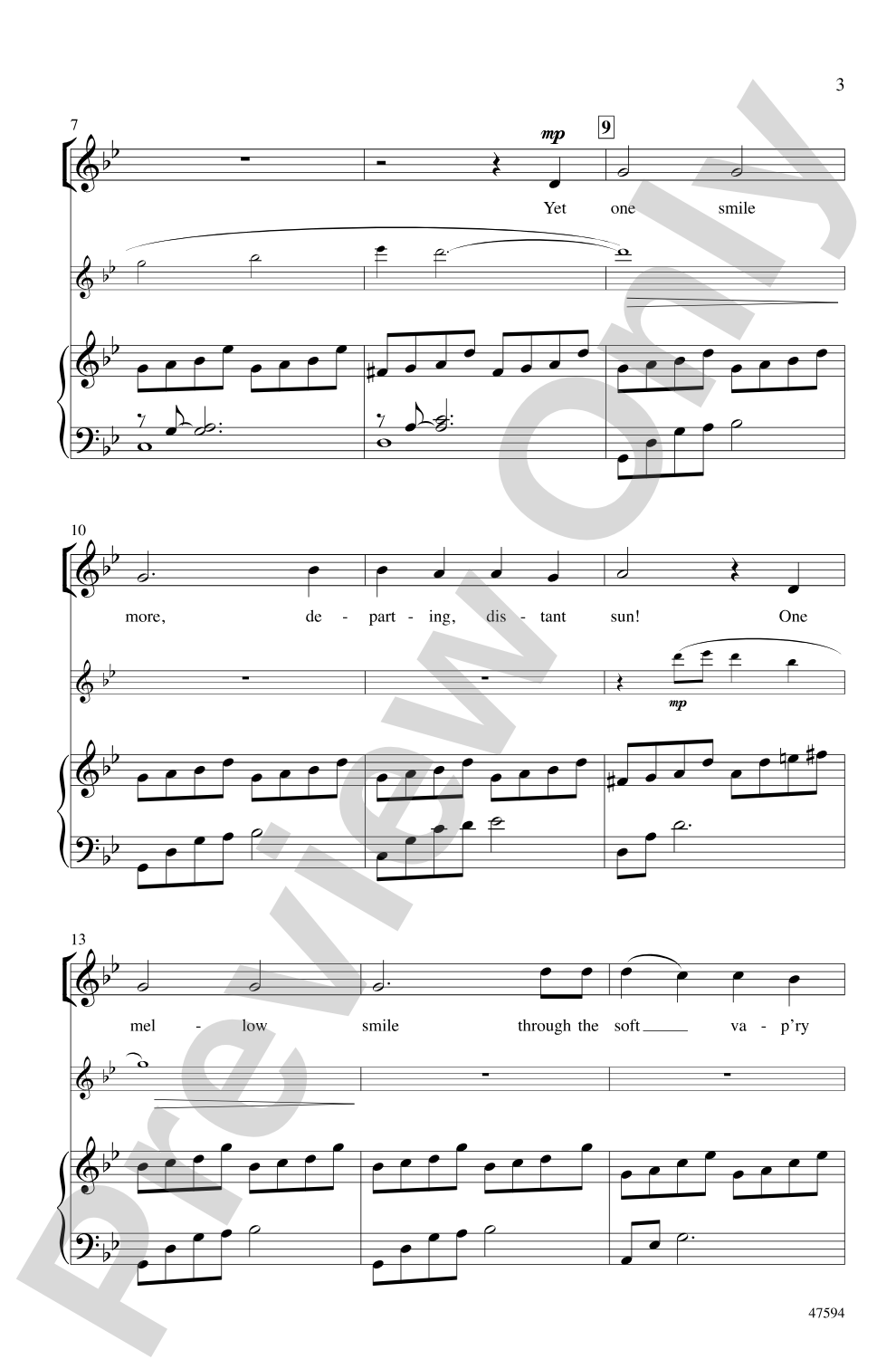
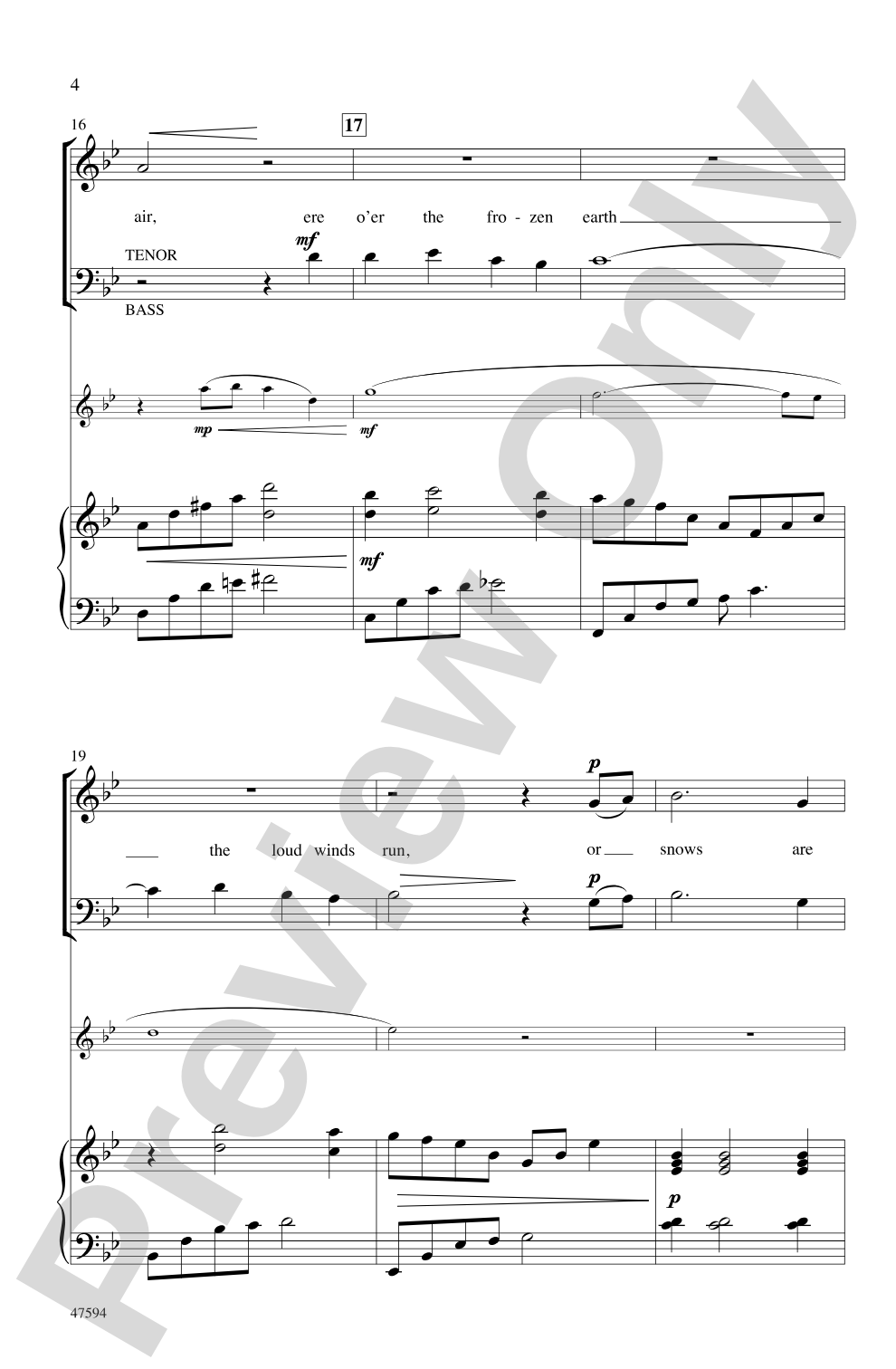
Ruth Morris Gray has a gift for presenting worthy texts in satisfying choral settings, and this piece is no exception. With words from the poem “November” by William Cullen Bryant, former editor of the New York Evening Post, this expressive concert work evokes the stark beauty of coming winter. An optional C-instrument part adds a shimmering layer to the luscious choral/piano texture.


Winter Frost: SATB Choral Octavo isn't in MakeMusic Cloud just yet...but it could be. Let us know you'd like to see it, and you'll help shape what comes next. In the meantime, start a free trial and dive into thousands of interactive titles your students can play along with today.
Request This Title
Tell us you want it.
Start Your Free Trial
Explore everything that's ready to play right now.
Sample Audio
1
Audio File
--:--
0:00
0:00
Sample Video
Additional Details
Series:
Alfred Choral Designs
Publisher:
Alfred Music
Page Count:
16
SKU:
00-PO-0006034
More about this title
About the Composer: Ruth Morris Gray

Ruth Morris Gray has shaped choral music education at Rosemead High School since 2004, where she directs the choir program while maintaining an active teaching studio in piano. Her compositional output exceeds 100 published works, earning her recognition for crafting accessible yet artistically substantial choral literature. Gray holds degrees in Piano Performance and Composition from Biola University, advanced study in Music Composition from UC Santa Barbara, and her California Single Subject Music Credential from Cal State Northridge.
Beyond the music building, Gray is an accomplished traveler, swimmer, and cyclist who shares her passion for active pursuits with her husband Douglas. Her dual focus on pedagogy and composition informs every piece she writes; her choral works emerge from direct experience with the voices and developmental levels of young musicians.
Why we love this
Gray's ear for text setting matches the quiet power of William Cullen Bryant's "November" without overshadowing it. The optional C-instrument part lifts the arrangement into something genuinely distinctive within the concert octavo category, giving directors a tool to shape acoustics or highlight a particular student strength without requiring the part. The balance between accessibility and artistic depth makes this suitable for both community and competitive contexts.
What to expect
The piece inhabits a contemplative landscape where choral warmth meets the brittleness of approaching cold. Gray's harmonic language is lush without becoming sentimental, creating space for Bryant's poetic imagery to resonate. There's a crystalline quality to the texture, especially with the optional C-instrument adding shimmer above the choir's sustained foundation.
Who it's for
This octavo suits SATB choirs ranging from strong high school ensembles through community and semi-professional groups. Singers need secure music-reading skills and comfort sustaining long phrases, but the piece doesn't demand extreme ranges or technical virtuosity. The optional instrumental part makes it versatile for schools with wind or string players who want to expand beyond vocal-only literature.
How to get the most out of it
- Shade the optional C-instrument part (flute, oboe, violin, or clarinet work well) to support the soprano line during the climactic moments rather than doubling it throughout; this preserves harmonic clarity in the lower voices and saves the instrumental color for maximum impact.
- Attend carefully to the piano's rhythmic foundation, especially during transitional passages where the text setting requires precise ensemble alignment; a conductor or pianist who leads rather than merely accompanies keeps the piece cohesive.
- Layer your dynamic arc across the full 16 pages; resist the temptation to peak early, allowing the piece's exploration of winter's starkness to build gradually toward its conclusion.
How to use it
Program this as the anchor of a concert exploring seasonal themes or American poetry in music, pairing it with contrasting selections to showcase tonal range. The 16-page length and literary substance make it ideal for contests or festivals where artistic interpretation matters as much as technical precision. Consider placing it near the end of a concert; its introspective character rewards an audience already settled into listening.
Skills your students will build
- Sustaining lyrical lines across extended phrases
- Blending SATB voicing in lush harmonic contexts
- Interpreting literary text musically and avoiding over-expression
- Balancing choir with optional instrumental color
- Managing dynamic gradation across a longer form