
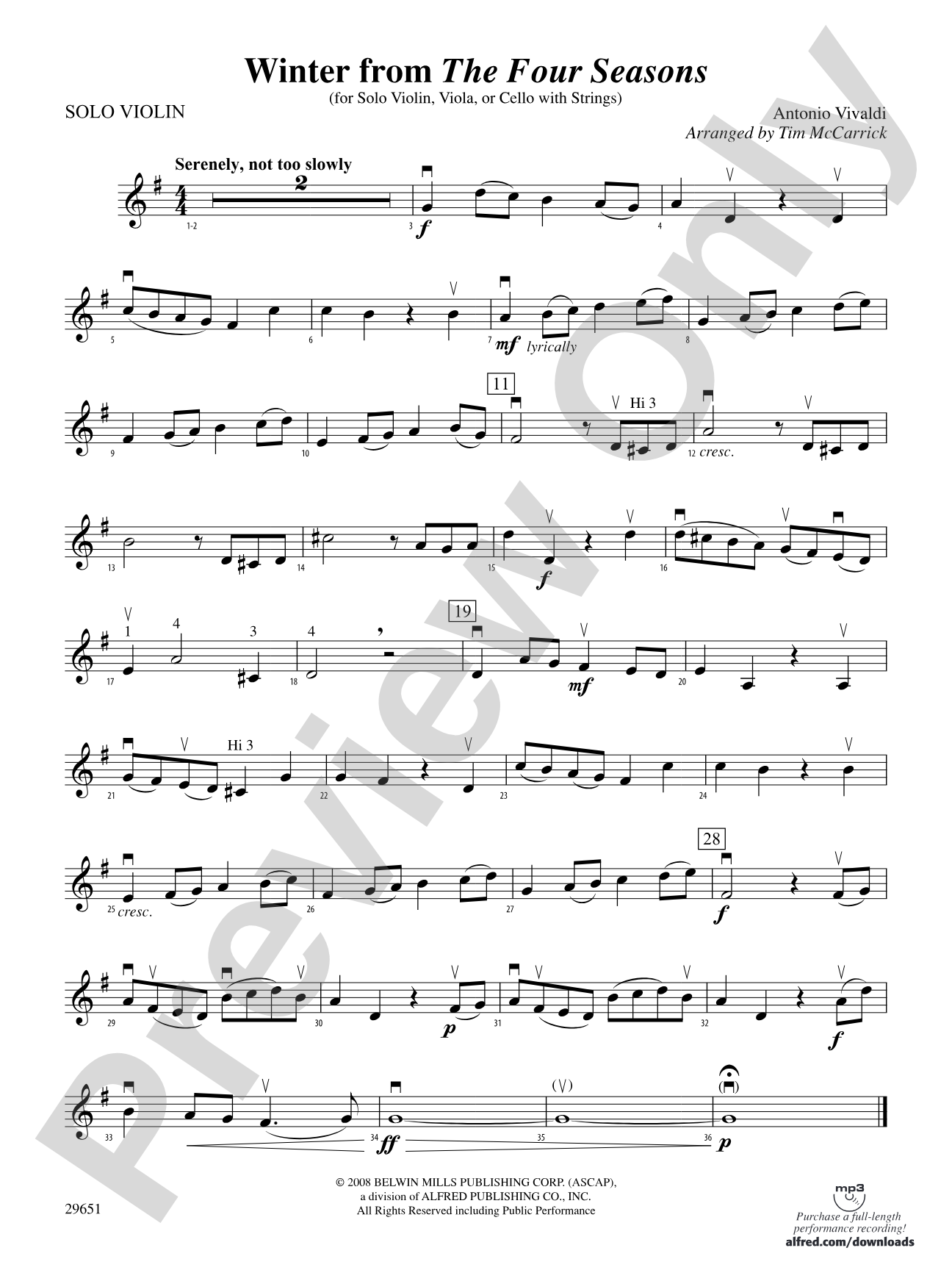

Winter from The Four Seasons: Solo Violin
By Antonio Vivaldi / arr. Tim McCarrick
Grade: 2
Item: 00-PC-0001529_SVN
$5.99
Pickup currently not available
Description
This easy arrangement offers you multiple performance opportunities! Vivaldi's lyrical second movement, now transposed to G major, is simple enough for the violin, viola, or cello soloist of your choice! Perform with one or more soloists! This slow movement is literally the "Calm between Storms." Vivaldi's text to accompany this is: Spending quiet contented days by the fire while the rain outside drenches people by the hundreds. The music presents a lovely lyrical solo melody as the pizzicato accompaniment reflects the raindrops outside. Your students will rise to the challenge and enjoy playing both the solo part and the accompaniment part! This title is available in MakeMusic Cloud. (2:00)


Don't just read it, hear it, play along with it, and watch your students grow with it. In MakeMusic Cloud, Winter from The Four Seasons: Solo Violin comes alive with professional accompaniment, adjustable tempo, and built-in practice tools that turn solo practice into real progress.
Open in the Player
Jump straight in and assign it today.
Start Your Free Trial
Open this title and explore the full library in minutes.
Sample Audio
1
Audio File
--:--
0:00
0:00
Sample Video
No sample videos found.
Additional Details
Series:
Belwin Beginning String Orchestra
Publisher:
Alfred Music
Page Count:
78
SKU:
00-PC-0001529_SVN
More about this title
About the Composer: Antonio Vivaldi
Antonio Vivaldi (1678-1741) was a Venetian priest and virtuoso violinist whose prolific output shaped the Baroque concerto and influenced composers across Europe. His ability to write idiomatic, singable melodies and energetic rhythmic accompaniments made his work immediately appealing to performers and audiences alike, and that accessibility is precisely why his music remains central to string education today.
Vivaldi's Four Seasons stands as one of the most recognizable works in classical music, combining vivid descriptive writing with formally inventive structures. The second movement of Winter, marked by its serene melody and gentle pizzicato figures, demonstrates his gift for translating poetic imagery into sound; educators have long valued this movement for its balance of lyrical beauty and rhythmic clarity.
Why we love this
This arrangement captures the essence of Vivaldi's Winter without the technical demands that often trap advanced students. The transposition to G major, combined with the flexible soloist option (violin, viola, or cello), means you can cast your best young player regardless of their primary instrument, creating a sense of occasion around a beloved masterwork. The pizzicato accompaniment pattern is engaging enough to hold younger players' attention while the solo line offers genuine musical satisfaction.
What to expect
Quiet warmth and introspection. The pizzicato figures shimmer like rainfall against windows while the solo melody unfolds with the unhurried calm of someone watching from inside. There's a gentle contentment in this movement, a musical retreat from the dramatic storms that surround it in Vivaldi's cycle.
Who it's for
Grade 2 string orchestras seeking accessible Baroque repertoire that doesn't sacrifice musicality. This works equally well for ensembles with a developing advanced player and those wanting to feature multiple soloists across different performances.
How to get the most out of it
- Shape the solo melody with gentle phrase breathing at the natural cadence points; resist the urge to play through every note with equal weight.
- Keep the pizzicato accompaniment rhythmically precise and consistent in tone, as the raindrops provide the textural foundation for the soloist's line.
- Balance the soloist prominently enough to hear every melodic contour while maintaining transparency in the accompaniment.
- Consider rehearsing the solo and accompaniment sections separately before combining them, ensuring both parts are secure before dress rehearsal.
How to use it
This pairs beautifully on a winter or holiday concert, or as a contrasting movement in a program built around other Four Seasons excerpts at different levels. You might also program it as a bridge piece between faster works, letting the ensemble and audience settle into a more reflective space mid-concert.
Skills your students will build
- Sustaining long melodic lines with consistent tone and expression
- Maintaining steady pizzicato texture as harmonic and rhythmic accompaniment
- Balancing solo voices with ensemble support
- Playing with control and clarity in slower tempos
- Understanding Baroque style and Vivaldi's compositional voice