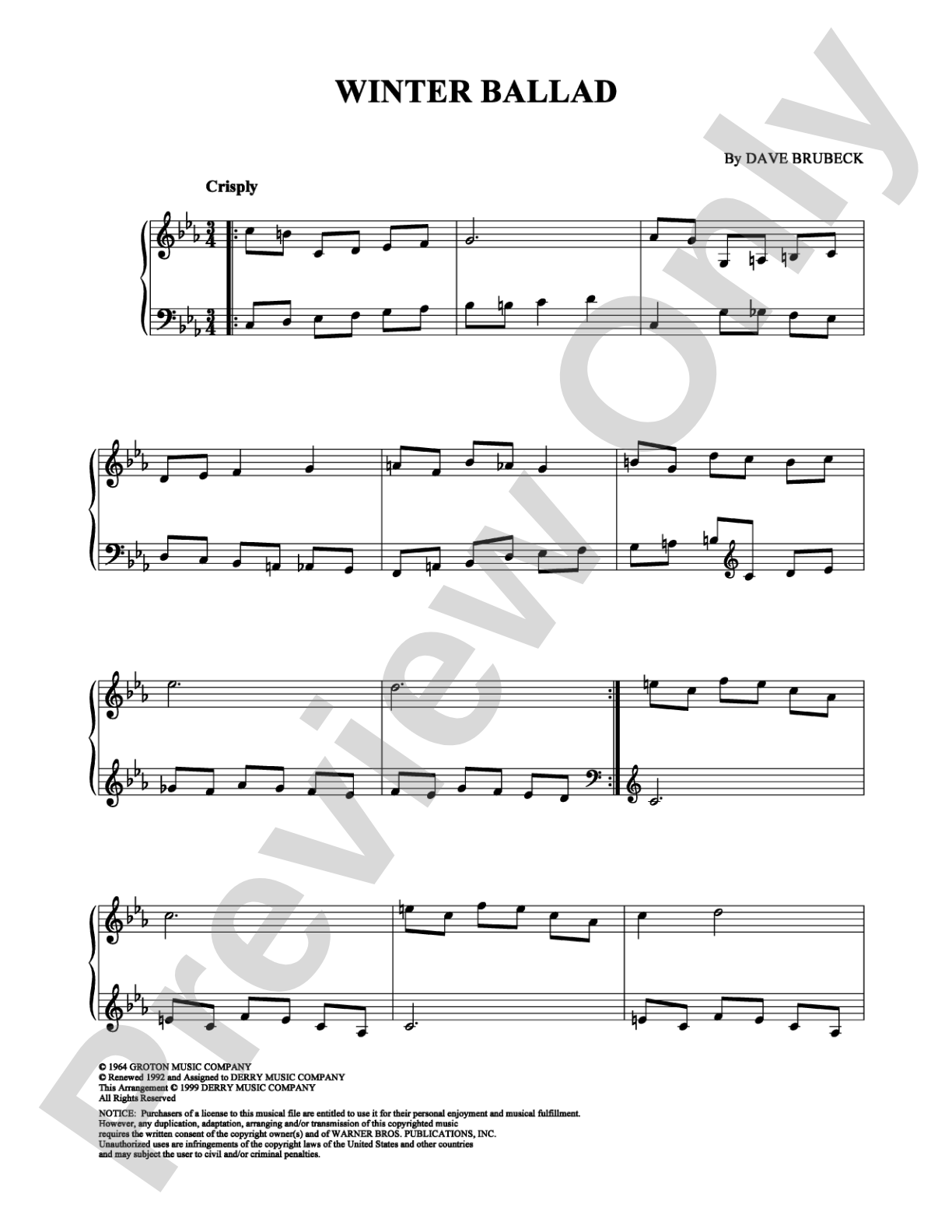
Winter Ballad: Piano Digital Sheet Music

Winter Ballad: Piano Digital Sheet Music

Dave Brubeck

Item: 00-PS-0001594

Digital Download
$3.99
Description

Winter Ballad: Piano Digital Sheet Music isn't in MakeMusic Cloud just yet...but it could be. Let us know you'd like to see it, and you'll help shape what comes next. In the meantime, start a free trial and dive into thousands of interactive titles your students can play along with today.

Sample Audio
No sample audio found.
Sample Video
Additional Details
SKU: 00-PS-0001594

More about this title

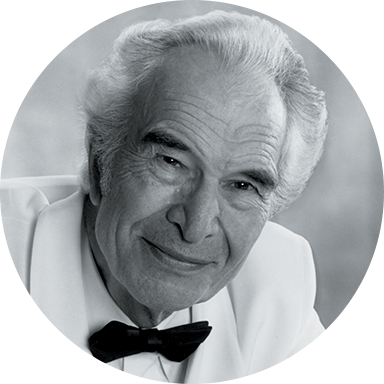
About the Artist: Dave Brubeck

Dave Brubeck

Dave Brubeck stands as one of jazz's most significant voices, equally commanding as improviser and composer. Beyond his role as a performing artist, he created an expansive catalog spanning choral works, hymns, orchestral compositions, chamber music, ballet suites, and solo pieces for piano, violin, and voice. His groundbreaking album Time Out became the first jazz recording to sell over a million copies, anchored by the now-iconic "Take Five." He studied with Darius Milhaud at Mills College following World War II service, an influence that shaped his distinctive fusion of jazz language with classical forms.

Brubeck's impact extended far beyond the bandstand. He was a pioneering force in breaking racial barriers during the mid 20th century, and his sacred music has circled the globe, from performances in Germany and Austria to the National Cathedral in Washington. His works have been recorded by the London Symphony Orchestra and London Voices, while his ballet Elemental Brubeck continues to be performed by the San Francisco Ballet and other companies. His honors include the Presidential Medal of the Arts, Grammy Lifetime Achievement Award, and election to the American Classical Music Hall of Fame in 2003.

Why we love this

Winter Ballad gives pianists access to Brubeck's compositional voice in an intimate solo setting. This piece captures the lyrical side of a composer best known for rhythmic innovation, offering performers the chance to explore how he balanced jazz sensibility with song-like melodic writing. It's the kind of work that reveals why Brubeck was taken seriously as a classical composer, not just a jazz icon.

What to expect

Winter Ballad carries the quiet introspection of its season. The piece unfolds like a gentle meditation, with Brubeck's characteristic harmonic sophistication creating depth beneath a lyrical surface. There's a wistful quality here, a conversational intimacy that feels both personal and universal.

Who it's for

Advanced pianists seeking repertoire that honors both jazz tradition and classical form will find Winter Ballad rewarding. It works equally well for recital programs, student competitions, or private study where a performer wants to deepen their understanding of how Brubeck synthesized his multiple musical worlds. Jazz pianists exploring classical contexts will find this piece a natural bridge.

How to get the most out of it

  • Let the ballad's introspective mood dictate your tempo; resist the urge to rush. Winter Ballad benefits from space and reflection rather than forward momentum.
  • Attend to Brubeck's harmonic language carefully. His jazz-influenced voicings reward clear voice leading and sensitive pedal work to let harmonies bloom without muddying.
  • Explore the interplay between melody and accompaniment. In Brubeck's work, even supporting figures often carry melodic weight; bring them into focus selectively.
  • Consider the overall arc of the piece. Build gradually toward any climactic moments, and return to intimacy with intention rather than accident.

How to use it

This solo works beautifully in a recital exploring Brubeck's compositional range, especially alongside his chamber works or larger-scale pieces. It can also anchor a program theme around seasonal or introspective music, or serve as a bridge piece between jazz and classical contexts in concert programming.

Skills your students will build

  • Voicing jazz harmonies with classical sensitivity and clarity
  • Balancing lyrical melody with sophisticated harmonic accompaniment
  • Using pedal effectively to enhance without obscuring
  • Shaping a ballad-form phrase arc over longer spans
  • Interpreting Brubeck's distinctive harmonic language and compositional voice

You May Also Like