
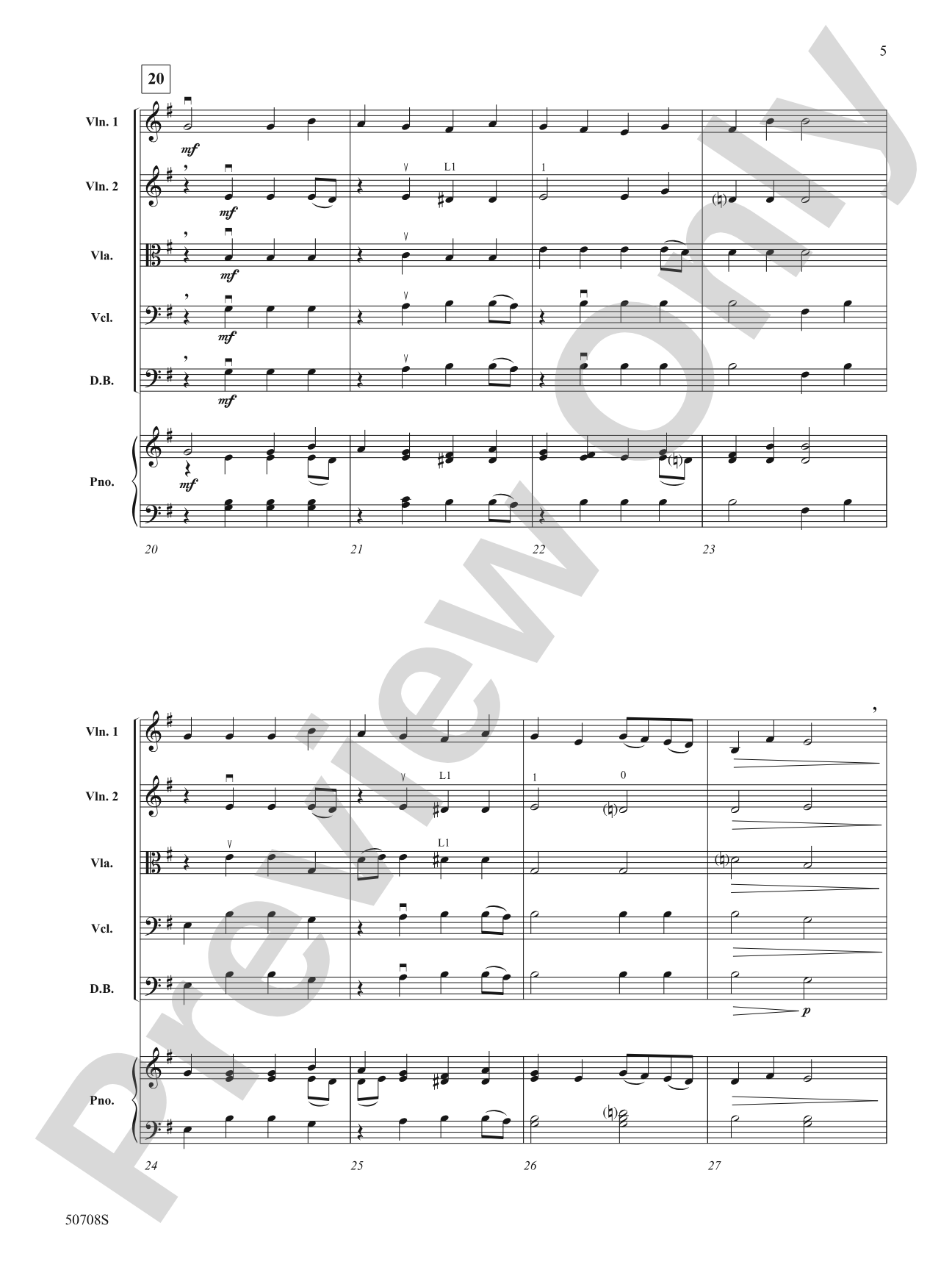
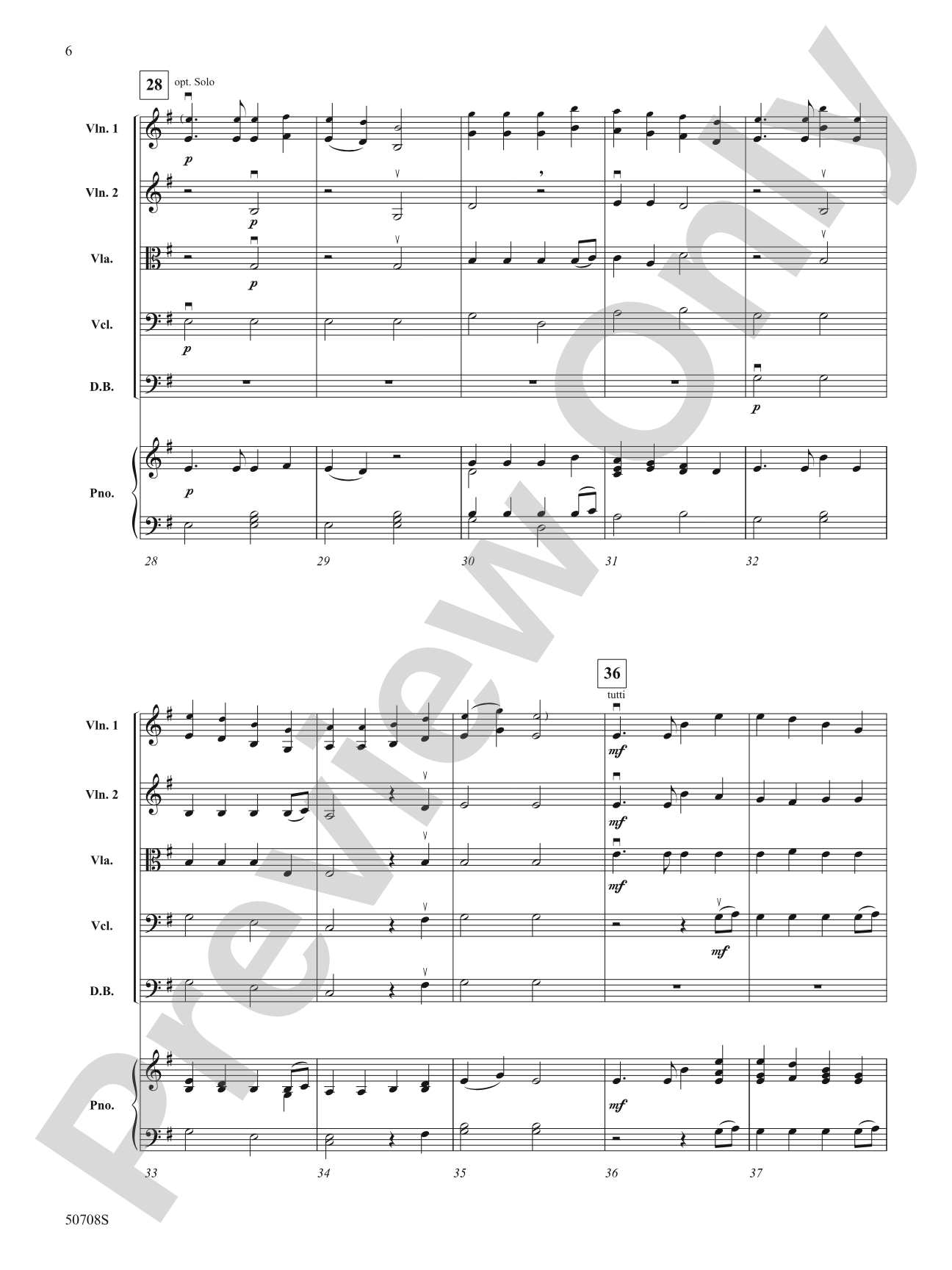
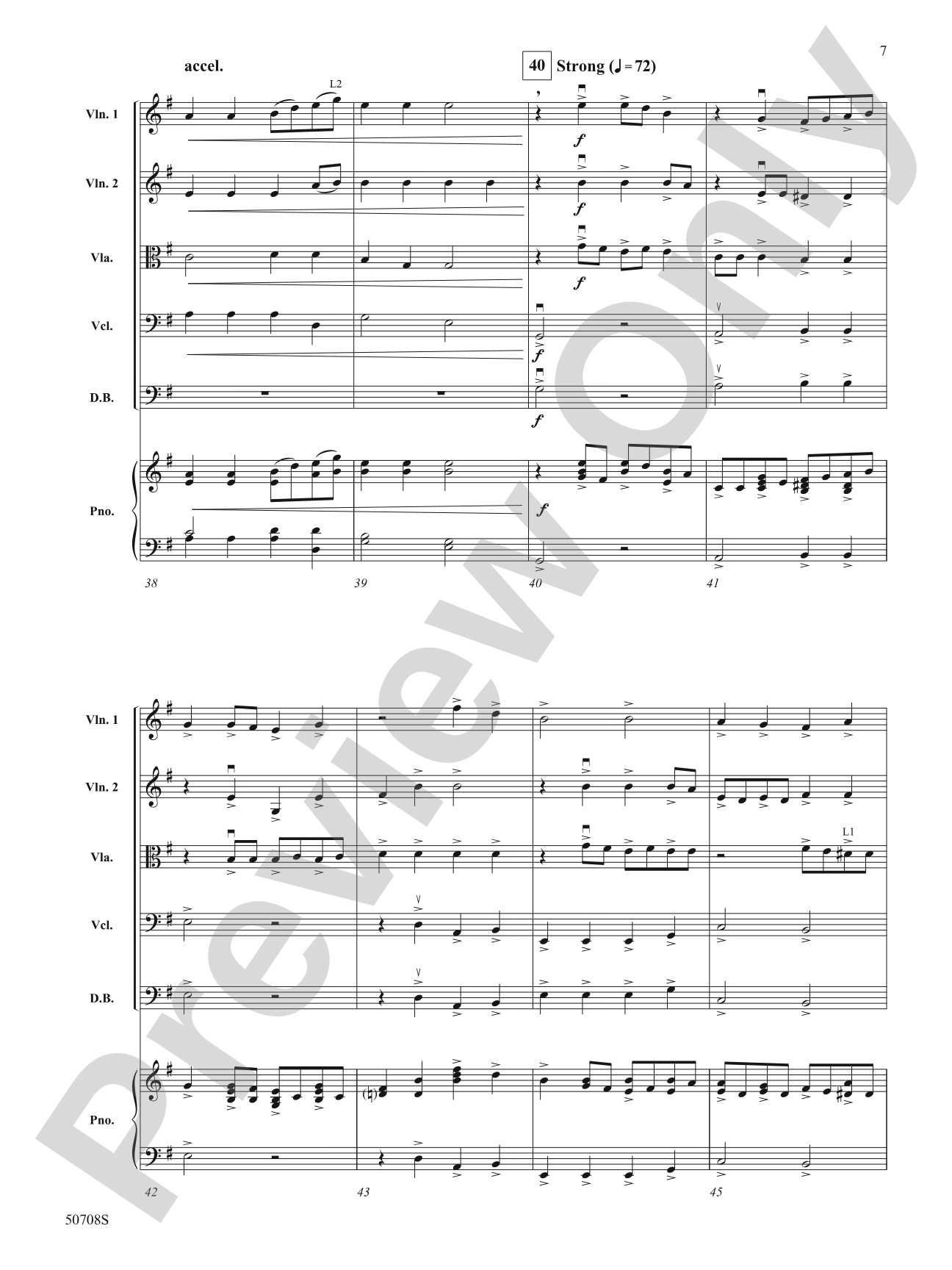
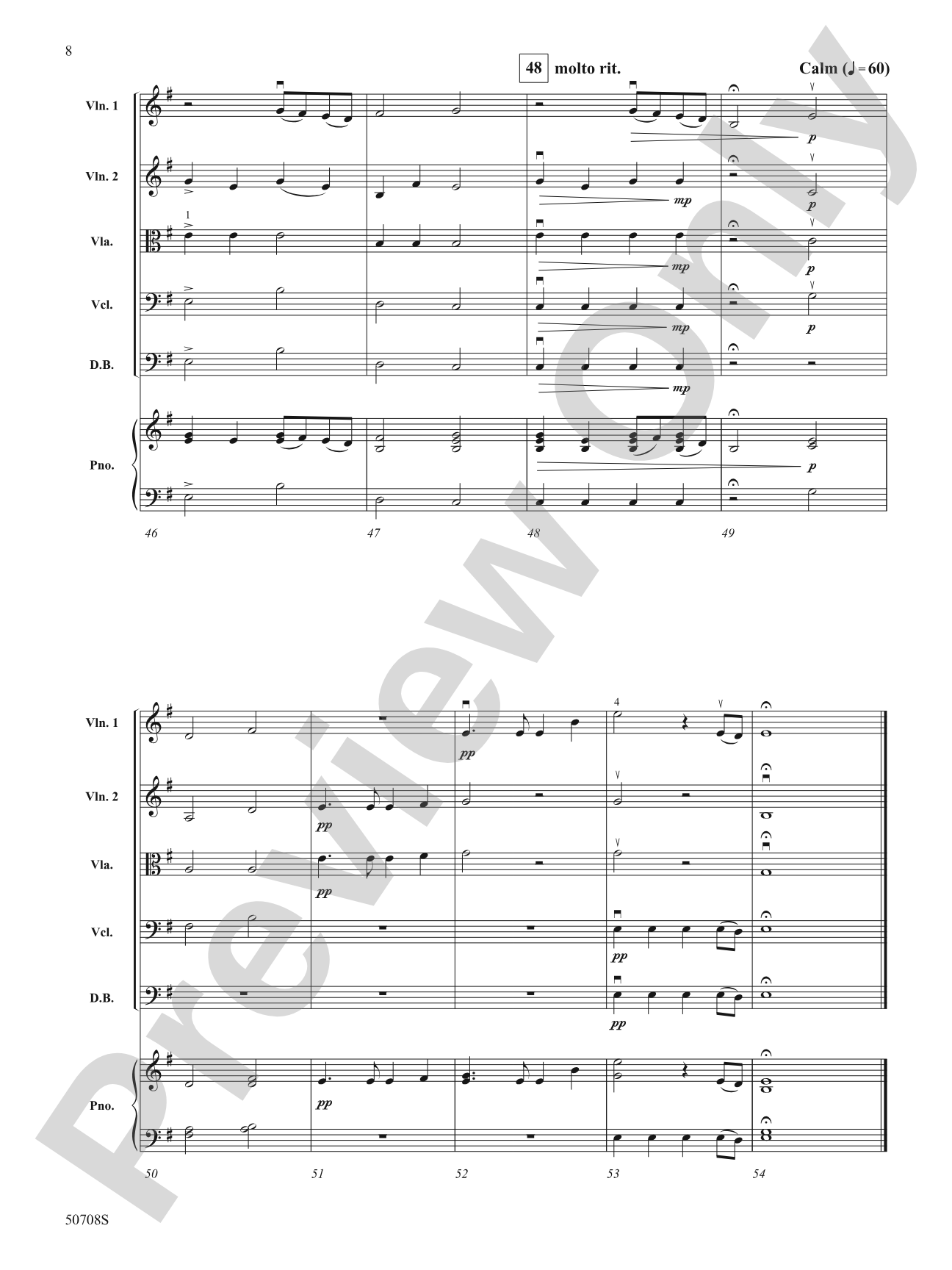

Winter Aire: String Orchestra Conductor Score & Parts
(Gloomy Winter's Noo Awa')
Traditional Scottish / arr. Morgan Denney
Grade: 1.5-2
Item: 00-PK-0008718

$55.00
One moment…
Description
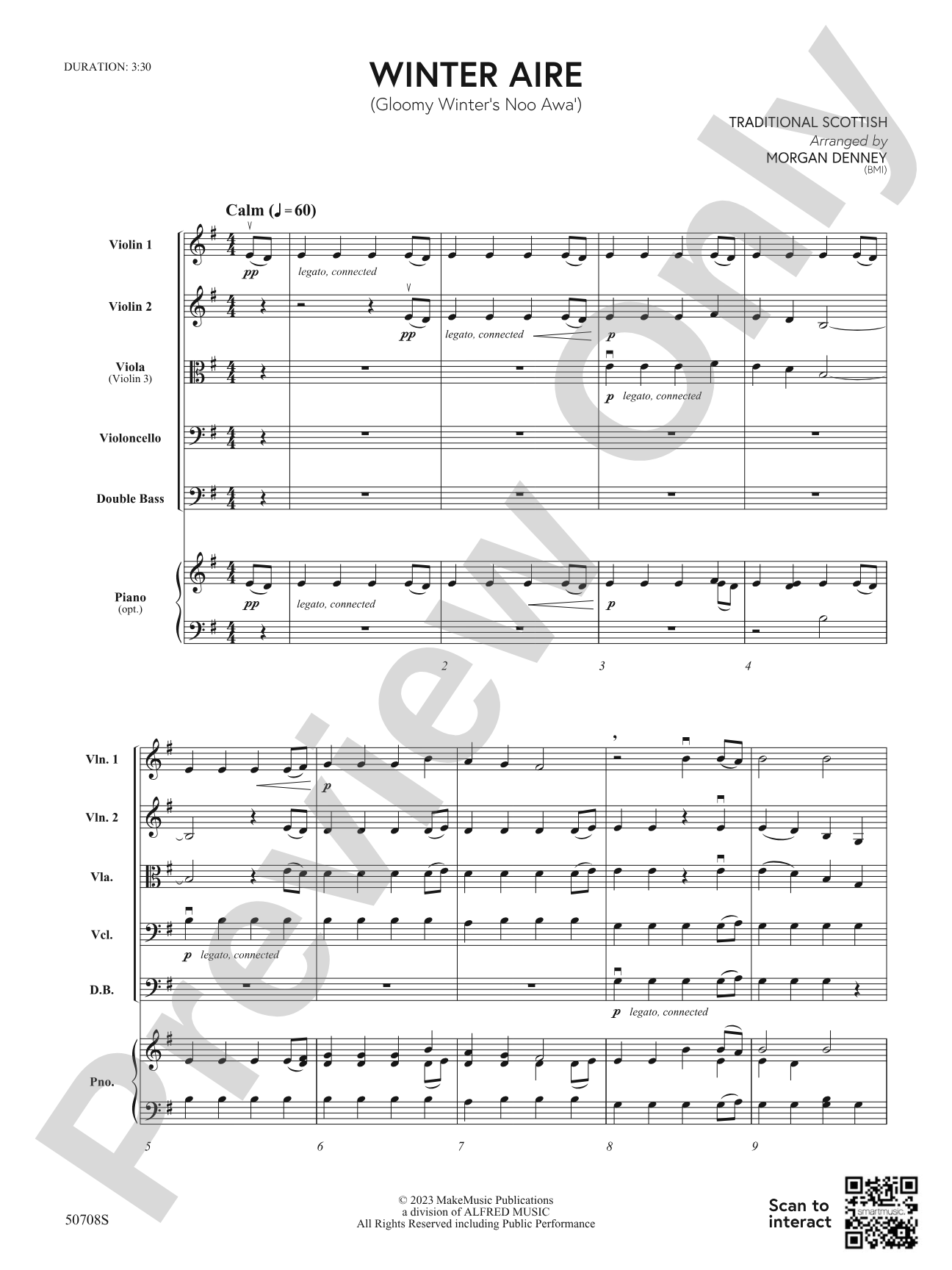
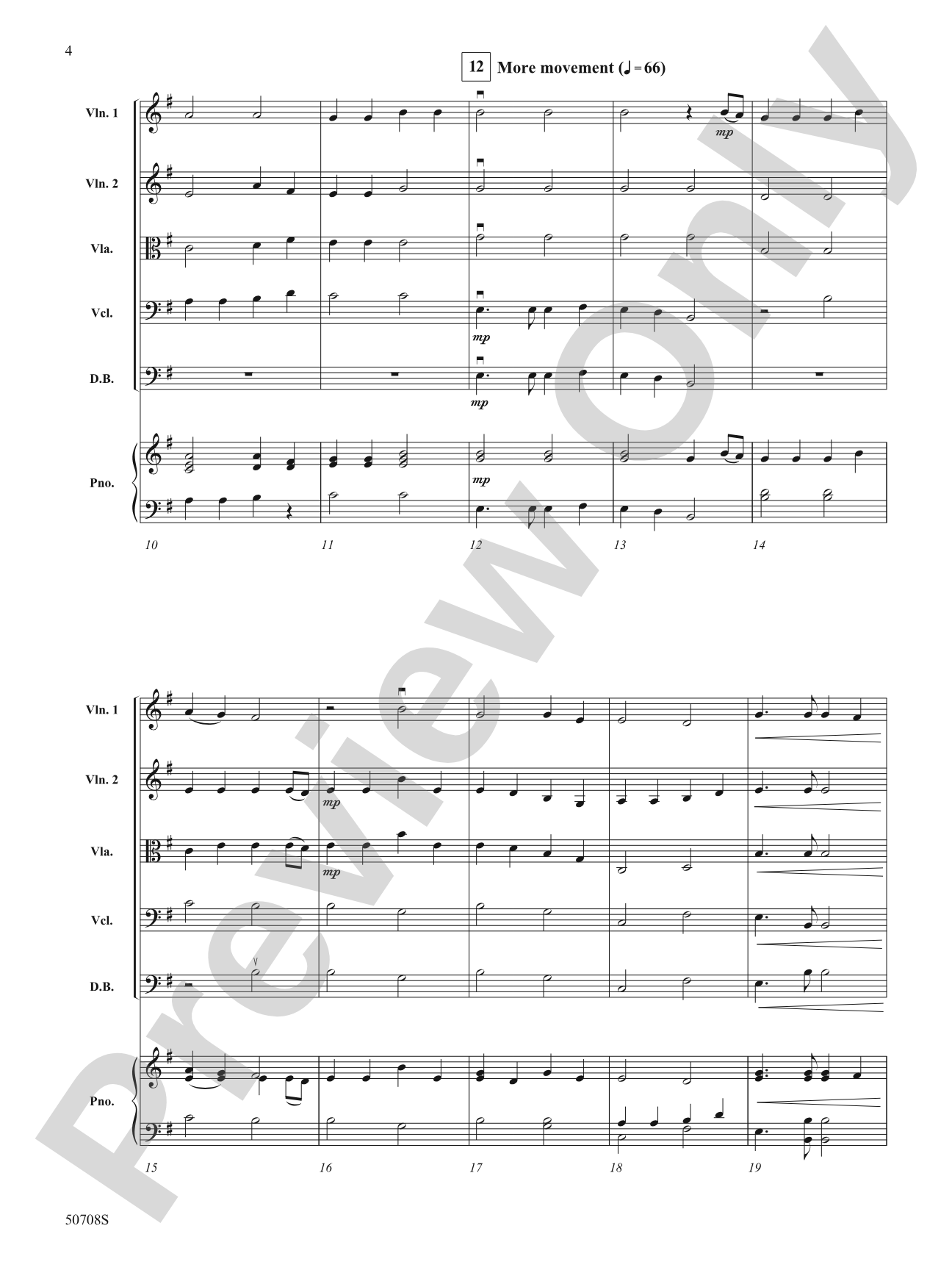
This arrangement of the traditional Scottish song "Gloomy Winter's Noo Awa'" is a perfect change of pace for a winter program. Winter Aire has beautiful melodic lines, which develop slowly and intertwine seamlessly, bringing expressive energy to your ensemble. Violinist and composer Morgan Denney has written highly accessible parts in first position that allow students to work on smooth bow strokes, legato melodic lines, and dotted quarter-eighth note rhythms in E minor. A poignant addition to your winter-themed concert! (3:30)


Don't just read it, hear it, play along with it, and watch your students grow with it. In MakeMusic Cloud, Winter Aire: String Orchestra Conductor Score & Parts comes alive with professional accompaniment, adjustable tempo, and built-in practice tools that turn solo practice into real progress.
Open in the Player
Jump straight in and assign it today.
Start Your Free Trial
Open this title and explore the full library in minutes.
Sample Audio
1
Audio File
--:--
0:00
0:00
Sample Video
Additional Details
Series:
MakeMusic Developing Strings
Publisher:
MakeMusic Publications
SKU:
00-PK-0008718
More about this title
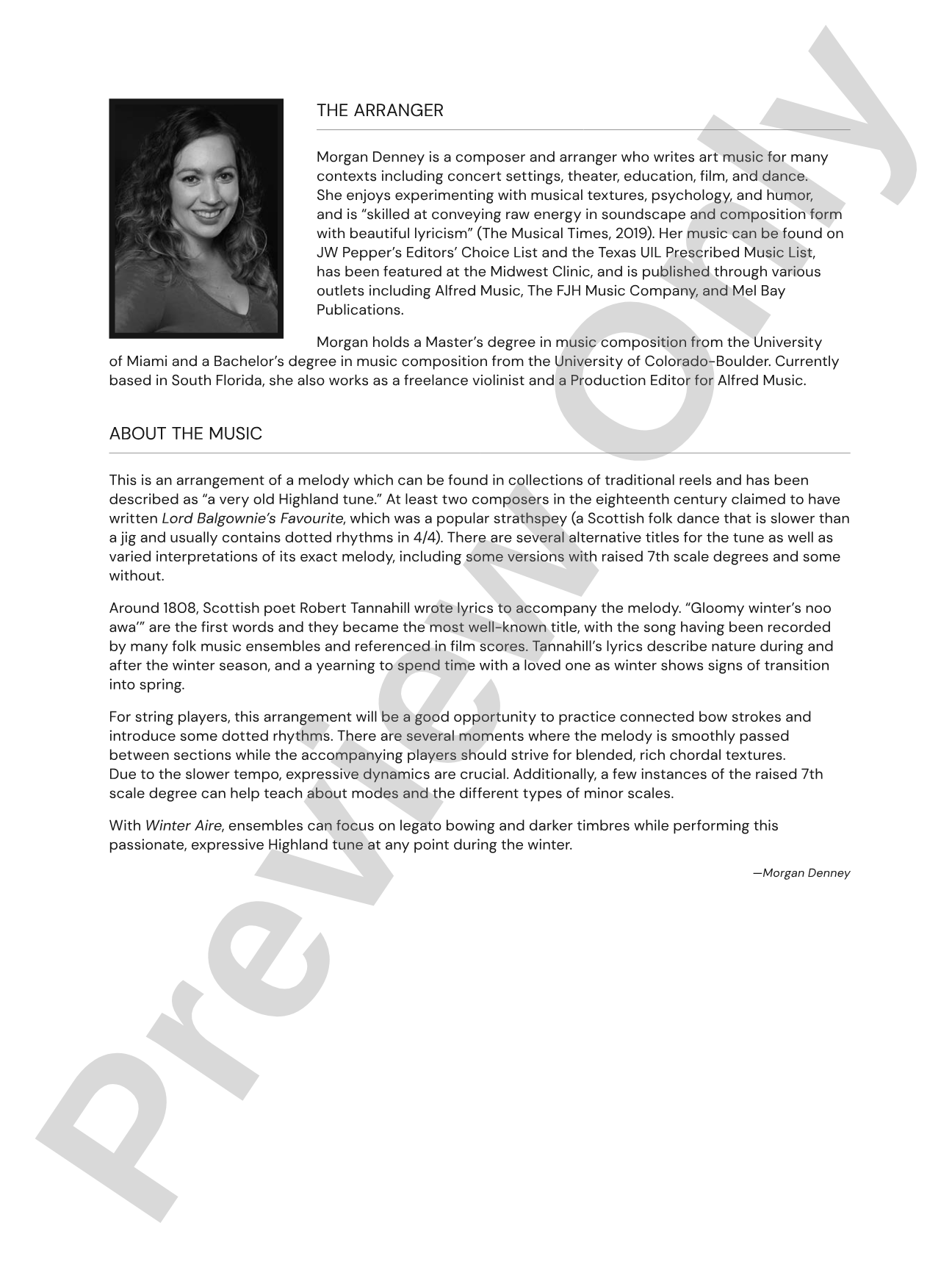
About the Arranger: Morgan Denney

Morgan Denney composes and arranges across film, theater, dance, education, and concert settings. Her work balances textural experimentation with lyrical clarity; critics have noted her ability to capture "raw energy in soundscape and composition form with beautiful lyricism" (The Musical Times, 2019). Her compositions appear on JW Pepper's Editors' Choice List and the Texas UIL Prescribed Music List, and have been featured at the Midwest Clinic.
Denney holds a Master's degree in music composition from the University of Miami and a Bachelor's degree from the University of Colorado-Boulder. Based in South Florida, she maintains an active career as a freelance violinist and serves as a Production Editor for Alfred Music.
Why we love this
Denney's arrangement honors the Scottish melody while building fundamental bow and intonation skills in accessible first position writing. The interweaving melodic lines create genuine musical texture without overcomplicating the parts, giving conductors a piece that sounds sophisticated in performance while remaining pedagogically sound for younger ensembles.
What to expect
A gentle but purposeful reflection on winter's passage. The melody unfolds with quiet dignity, the interweaving parts creating warmth and depth despite the modest technical demands. There is an elegiac quality to the arrangement that invites careful, expressive playing.
Who it's for
String orchestras in grades 1.5-2 looking for repertoire that combines accessible technical writing with genuine musical substance. This arrangement suits ensembles ready to move beyond unison melodies but still building foundational skills in bow control and intonation.
How to get the most out of it
- Shape the phrasing across the flowing melodic lines rather than stopping at bar lines; these lines are meant to breathe as a single arc.
- Establish consistent rhythm in the dotted quarter-eighth figures during sectional rehearsals; subdividing the eighth note will solidify ensemble cohesion.
- Balance the intertwining melodies so no single voice dominates; adjust bow weight and vibrato intensity to bring themes in and out of focus.
- Work legato with the full bow length, especially in slower passages; this develops the sustained bow control needed for expressive string playing at this level.
How to use it
Program this on a winter concert to provide tonal and stylistic contrast with faster or more rhythmically driven pieces. Its moderate length (3 minutes 30 seconds) and Scottish roots make it an ideal bridge between pieces of different character or as a thoughtful opening that sets a contemplative mood for the concert.
Skills your students will build
- Smooth, sustained bow strokes in first position
- Legato phrasing across longer melodic lines
- Dotted quarter-eighth note rhythmic accuracy
- Intonation in E minor
- Voice independence while maintaining ensemble blend
- Expressive tone control and vibrato application