
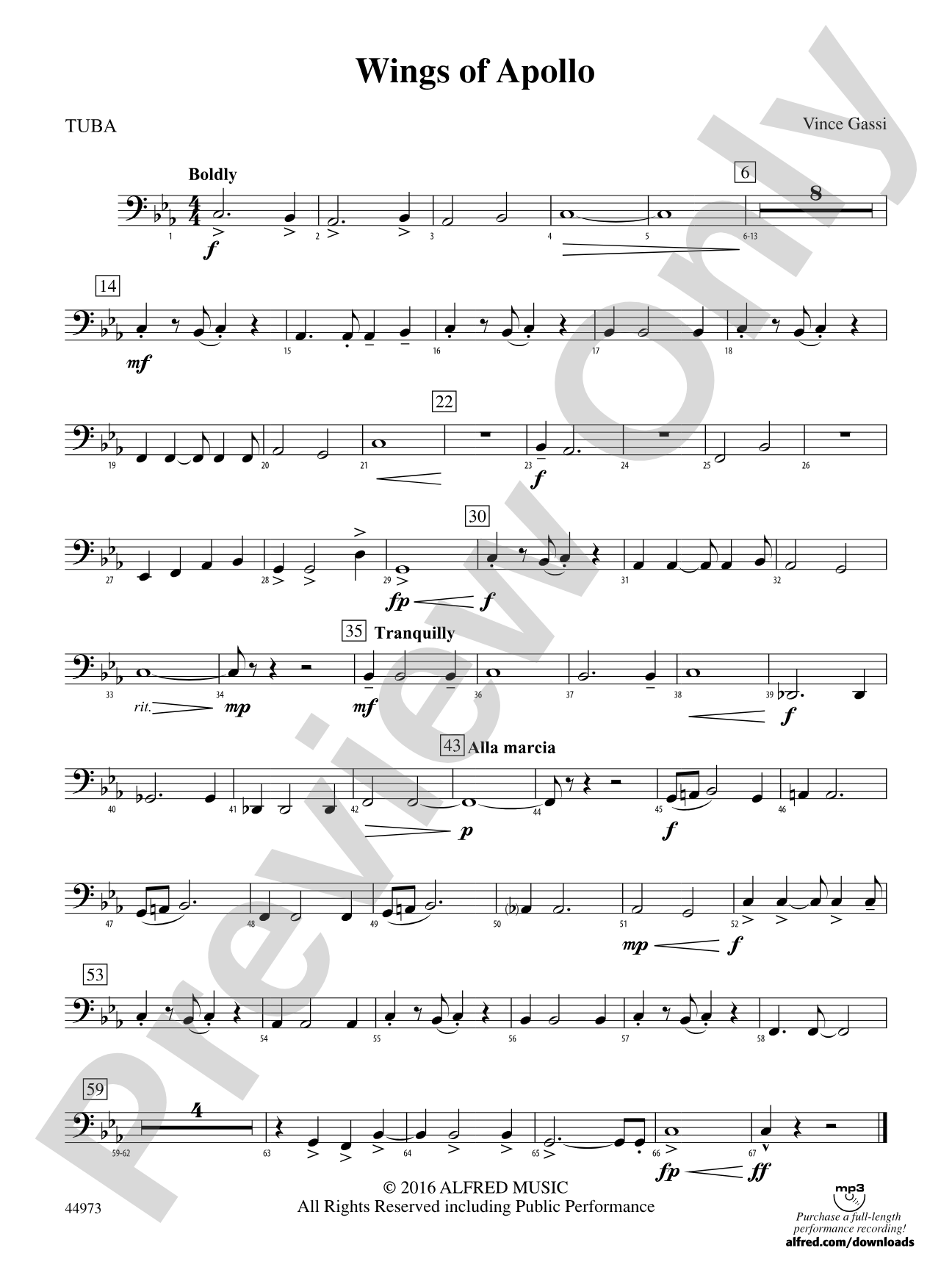

Wings of Apollo: Tuba
By Vince Gassi
Grade: 1.5 (Easy)
Item: 00-PC-0017438_TB1
$3.00
Pickup currently not available
Description
NASA's Apollo program is known for landing the first humans on the moon in 1969. In this composition, your dauntless adventure begins with a powerful lift off. Once achieved, the main theme is presented by flutes, oboe, and then trumpets, with stabilizers provided by baritone, tenor sax, and eventually the remainder of the crew. Stage 1 boosters (a strong, rhythmic accompaniment) provide the propulsion needed to voyage through to a sea of tranquility (lyrical section). From there we journey to an adventurous transition and a final re-entry of the main theme. (2:35) This title is available in MakeMusic Cloud.


Don't just read it, hear it, play along with it, and watch your students grow with it. In MakeMusic Cloud, Wings of Apollo: Tuba comes alive with professional accompaniment, adjustable tempo, and built-in practice tools that turn solo practice into real progress.
Open in the Player
Jump straight in and assign it today.
Start Your Free Trial
Open this title and explore the full library in minutes.
Sample Audio
1
Audio File
--:--
0:00
0:00
Sample Video
Additional Details
Series:
Challenger Band Series
Publisher:
Alfred Music
Page Count:
120
SKU:
00-PC-0017438_TB1
More about this title
About the Composer: Vince Gassi
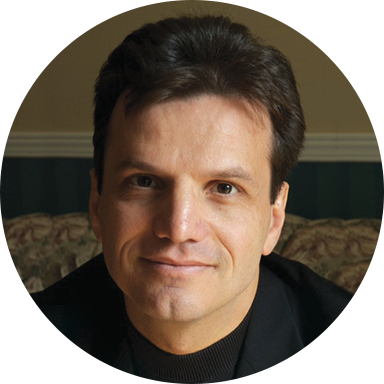
Vince Gassi has been composing for young musicians since 2006, establishing himself as one of the most prolific voices in contemporary band music with over 100 published works. His training spans formal composition study at the Dick Grove School of Music in Los Angeles and advanced degree work at York University in Toronto, where he completed his Ph.D. He holds a Bachelor of Music from the University of Western Ontario.
For a quarter century, Gassi has taught instrumental music at the elementary and secondary levels while maintaining an active career as a guest conductor, clinician, and adjudicator across North America. His compositions consistently appear on festival and contest programs internationally, and his workshops on creative engagement and digital workflows for music directors have become fixtures at major conferences. His work has been performed and recorded throughout North America, Europe, and Japan, with frequent performances at prestigious venues including the Midwest Clinic in Chicago.
Why we love this
Gassi brings genuine narrative momentum to the Grade 1.5 level without sacrificing musical substance. The Apollo metaphor gives young musicians an immediate visual anchor for the musical journey, making the structural arc of lift-off, flight, and re-entry feel purposeful rather than abstract. Bands at this level rarely encounter programmatic writing this thoughtfully proportioned.
What to expect
The piece captures the exhilaration and precision of space exploration, unfolding from the raw power of ignition through moments of weightless calm and back again. Young musicians experience the satisfaction of executing a complete musical journey with clear dramatic stakes, moving from driving rhythmic propulsion into lyrical flight and home again.
Who it's for
Beginning to early intermediate concert bands ready for accessible repertoire that still delivers musical drama and clear structural purpose. The programmatic framing makes it engaging for young ensembles while the straightforward Grade 1.5 voicing ensures accessibility across developing sections.
How to get the most out of it
- Shape the opening ascent by gradually increasing dynamic intensity from the initial lift-off through the entrance of the main theme; resist the urge to play the powerful opening at full volume from the first note.
- Balance the main theme between flutes and oboe in the early expositions so each color registers distinctly before trumpets take over; this clarity will make the transition to the full ensemble feel earned.
- Find a gentle, floating quality during the lyrical sea of tranquility section by using a lighter articulation and allowing the harmonic movement to breathe naturally.
- Lock the Stage 1 booster rhythm section (saxophones and baritone) as a unified pulse that propels the transitions and final re-entry without rushing; this rhythmic foundation carries the entire piece.
How to use it
Program this as the centerpiece of a concert celebrating American achievement or innovation, pairing it with other patriotic or contemporary works. It also functions beautifully as a festival or contest selection that showcases a band's musicianship while remaining within accessible technical limits.
Skills your students will build
- Phrasing and shaping within a large-form composition with contrasting sections
- Balancing melody and accompaniment across woodwind and brass voices
- Sustaining dynamic control during rhythmically driven passages without sacrificing tone quality
- Interpreting programmatic intent through musical expression and articulation
- Ensemble unity during rapid textural changes and section entries