
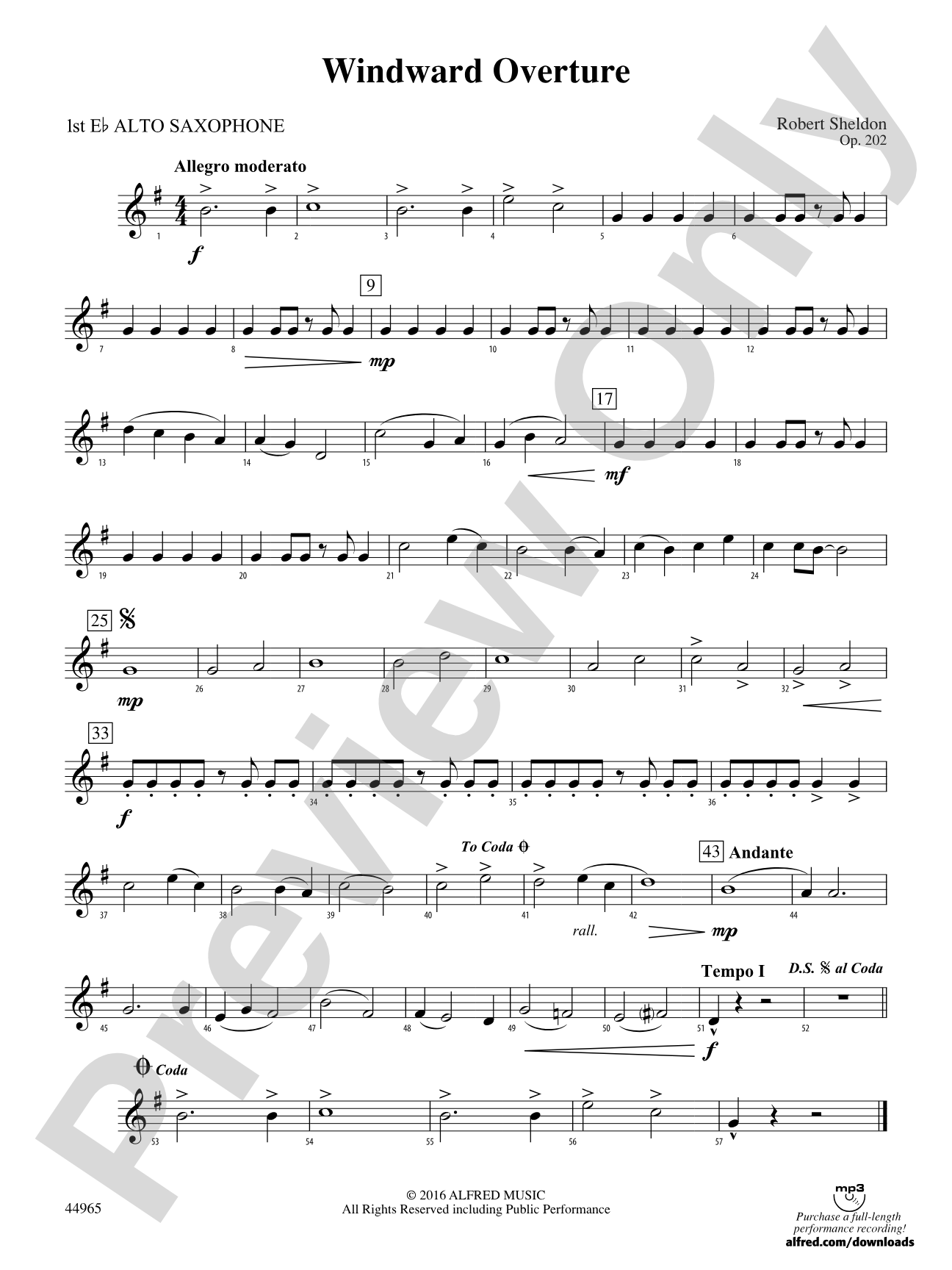

Windward Overture: E-flat Alto Saxophone
By Robert Sheldon
Grade: 1 (Very Easy)
Item: 00-PC-0017430_AX1
$3.00
Pickup currently not available
Description
This original concert overture is manageable by young musicians, yet it has elements that are relevant to much more challenging literature. Written in a standard overture form, the catchy melodies and rhythms will be sure to delight audiences while keeping the players fully engaged. A brief lyrical interlude adds variety and a moment of repose before returning to the more energized main theme. This is an outstanding choice for a spring concert or a first band festival/contest experience.(2:40)


Don't just read it, hear it, play along with it, and watch your students grow with it. In MakeMusic Cloud, Windward Overture: E-flat Alto Saxophone comes alive with professional accompaniment, adjustable tempo, and built-in practice tools that turn solo practice into real progress.
Open in the Player
Jump straight in and assign it today.
Start Your Free Trial
Open this title and explore the full library in minutes.
Sample Audio
1
Audio File
--:--
0:00
0:00
Sample Video
Additional Details
Series:
Sound Innovations for Concert Band
Publisher:
Alfred Music
Page Count:
132
SKU:
00-PC-0017430_AX1
More about this title
About the Composer: Robert Sheldon

Robert Sheldon stands among the most prolific and frequently performed composers for wind band in the world. His works appear regularly on state and national contest lists, and ensembles from the United States to Australia, Japan, and Europe perform his music in concert halls ranging from Carnegie Hall to the Sydney Opera House. Beyond composition, Sheldon has shaped wind band pedagogy as the lead author of Sound Innovations for Concert Band and serves frequently as a guest conductor for All-State and Regional Honor Bands.
His contributions to music education have earned recognition from the American School Band Director's Association, Phi Beta Mu, and the American Society of Composers, Authors and Publishers. Sheldon regularly accepts commissions for new works and maintains an active schedule as a clinician and presenter at universities and state music education conferences across multiple continents. In 2020, VanderCook College of Music awarded him an honorary doctorate in recognition of his impact on the field.
Why we love this
Windward Overture proves that Grade 1 repertoire need not sacrifice musical substance for accessibility. Sheldon constructs a piece that teaches ensemble fundamentals while delivering genuine concert appeal: clear formal architecture, memorable thematic material, and enough textural variety to keep young musicians invested from start to finish. The lyrical section provides an opportunity to develop expressive playing in a context that feels musically purposeful rather than remedial.
What to expect
Windward Overture opens with infectious energy and a melody that lodges in the ear. The rhythmic vitality propels the ensemble forward with confidence before a graceful lyrical section offers breathing room and textural relief. The return to the main theme feels like a natural conclusion to a well-paced musical journey.
Who it's for
Young concert bands preparing for their first festival or spring concert experience will find an ideal vehicle in Windward Overture. Sheldon's Grade 1 scoring manages accessibility without sacrificing craftsmanship, making this suitable for groups building their foundational ensemble skills. Directors seeking a piece that engages players and audiences equally will appreciate how much musical substance fits within such approachable technical demands.
How to get the most out of it
- Shape the main theme with clear dynamic architecture across the ensemble; the catchy melody deserves musical profile, not just rhythmic accuracy.
- Use the lyrical interlude to establish a genuine shift in character and tempo; this repose makes the return to the energized opening feel earned and impactful.
- Balance transparency in the early sections so younger players can hear their individual parts working together; this builds confidence and sectional cohesion.
- Lock the brass and woodwind rhythmic figures together in the opening theme; precision here establishes the overture's forward momentum.
How to use it
This piece works beautifully as the opening selection on a spring concert, establishing energy and confidence for both ensemble and audience. For a first festival or contest, Windward Overture balances the confidence-building aspects of simpler repertoire with enough musical depth to feel substantial in a competitive context. Consider pairing it with a slower lyrical selection to create programming contrast.
Skills your students will build
- Phrasing and shaping a principal melody across an ensemble
- Balancing dynamic contrast between thematic and accompaniment material
- Executing clean sectional entries and cutoffs in overture form
- Sustaining a smooth dynamic transition between energized and lyrical sections
- Developing rhythmic precision in a moderate-tempo main theme