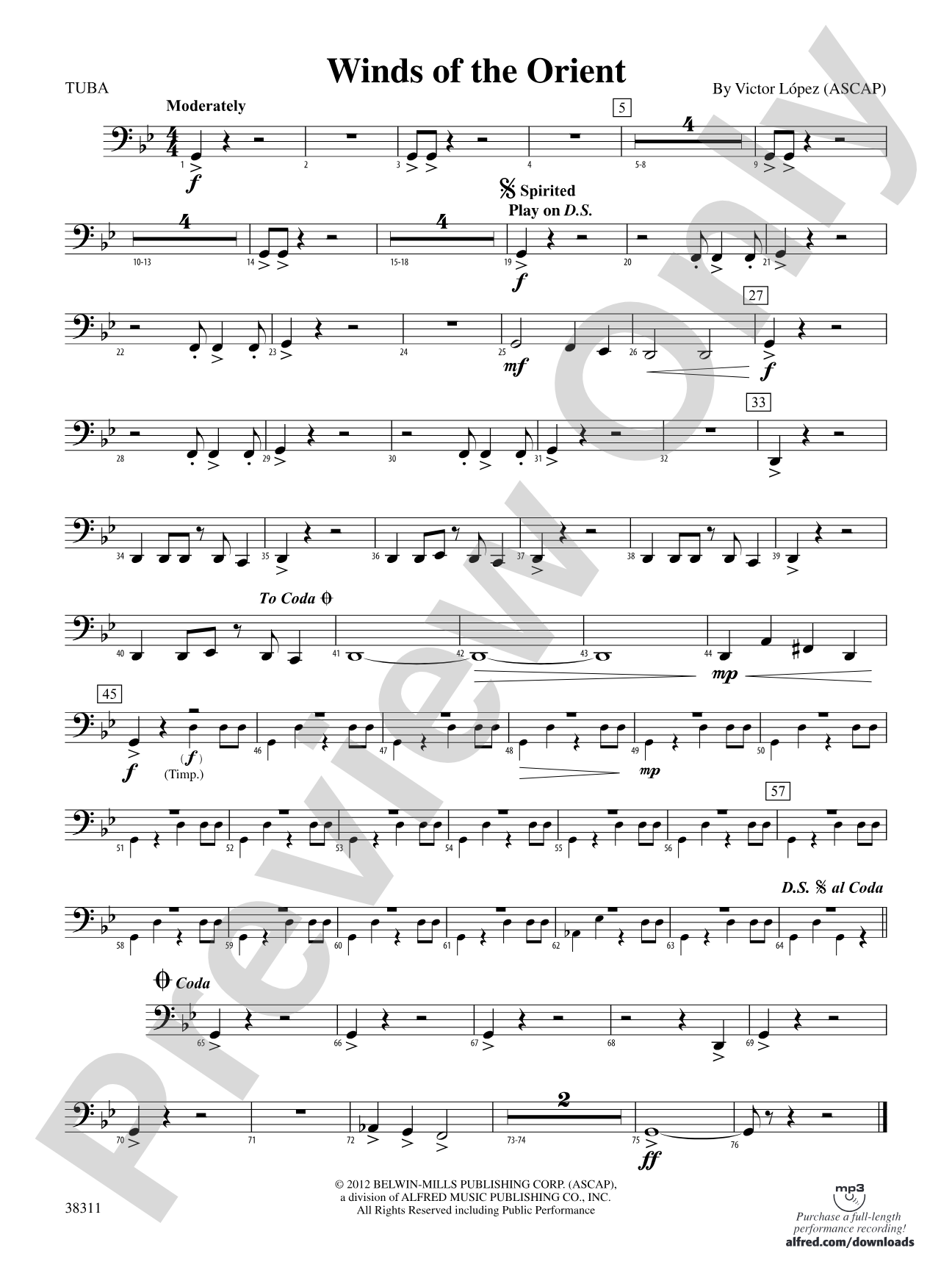
Winds of the Orient: Tuba Sheet Music Preview

Winds of the Orient: Tuba

By Victor López

Grade: 1 (Very Easy)

Item: 00-PC-0015413_TB1

Digital Download
$3.00
Description
Inspired by the fading east-west boundaries, this exciting concert band work will make the beginning ensemble sound as if they have been playing for a while. Underneath the modal melodies, lively rhythmic ostinatos drive this piece from beginning to end. Whether it is used as an opener or closer in the program, this composition will set the mood for your next musical journey. (3:45)

Don't just read it, hear it, play along with it, and watch your students grow with it. In MakeMusic Cloud, Winds of the Orient: Tuba comes alive with professional accompaniment, adjustable tempo, and built-in practice tools that turn solo practice into real progress.

Sample Audio
0:00
0:00
Sample Video
Additional Details
Series: Belwin Beginning Band
Publisher: Alfred Music
Page Count: 214
SKU: 00-PC-0015413_TB1

More about this title

About the Composer: Victor López

Victor López is a prolific composer and arranger whose works span concert band, orchestral, and educational music. His compositions are known for their accessibility without sacrificing musical substance, making him a trusted voice in beginning and intermediate band literature.

Why we love this

Grade 1 music rarely sounds this polished and purposeful. López writes for young ensembles with genuine respect for what they can accomplish, layering modal melodies and rhythmic drive in a way that feels sophisticated rather than simple. Your band will sound like they're playing something that matters.

What to expect

East-West fusion meets American concert band energy. Modal melodies float over propulsive rhythmic figures, creating an exotic but accessible soundscape. The piece has momentum and color without leaning on complex harmonies or technical showmanship.

Who it's for

Beginning concert bands ready to move beyond choppy, disconnected rhythms into something more cohesive and programmatic. This works equally well for young ensembles that have solid fundamentals but need a piece that sounds more mature than their technical level suggests.

How to get the most out of it

  • Keep the rhythmic ostinatos tight and precise throughout. These repetitive figures are the engine of the piece, so lock them in early and maintain consistency to propel the modal melodies above.
  • Shape the modal melodies with clear phrasing despite their static harmonic environment. The pitch vocabulary may not change, but the line still needs to breathe and arc.
  • Balance the melody against the supporting parts carefully. Young ensembles often over-project the top line; dial it back slightly so the modal character comes through without drowning out the textural detail underneath.
  • Tempo should feel energetic but not rushed. The ostinatos will drive naturally; your job is to keep the ensemble from losing focus during sustained passages.

How to use it

The composition is equally at home opening a concert to set an intriguing mood or closing one with energy and harmonic freshness. Consider pairing it with contrasting works in different harmonic languages to highlight its distinctive modal character.

Skills your students will build

  • Reading and sustaining modal melodies with minimal harmonic support
  • Maintaining tight rhythmic ostinatos as accompaniment to moving lines
  • Balance and blend across different textural layers
  • Ensemble precision and confidence at Grade 1 level

You May Also Like