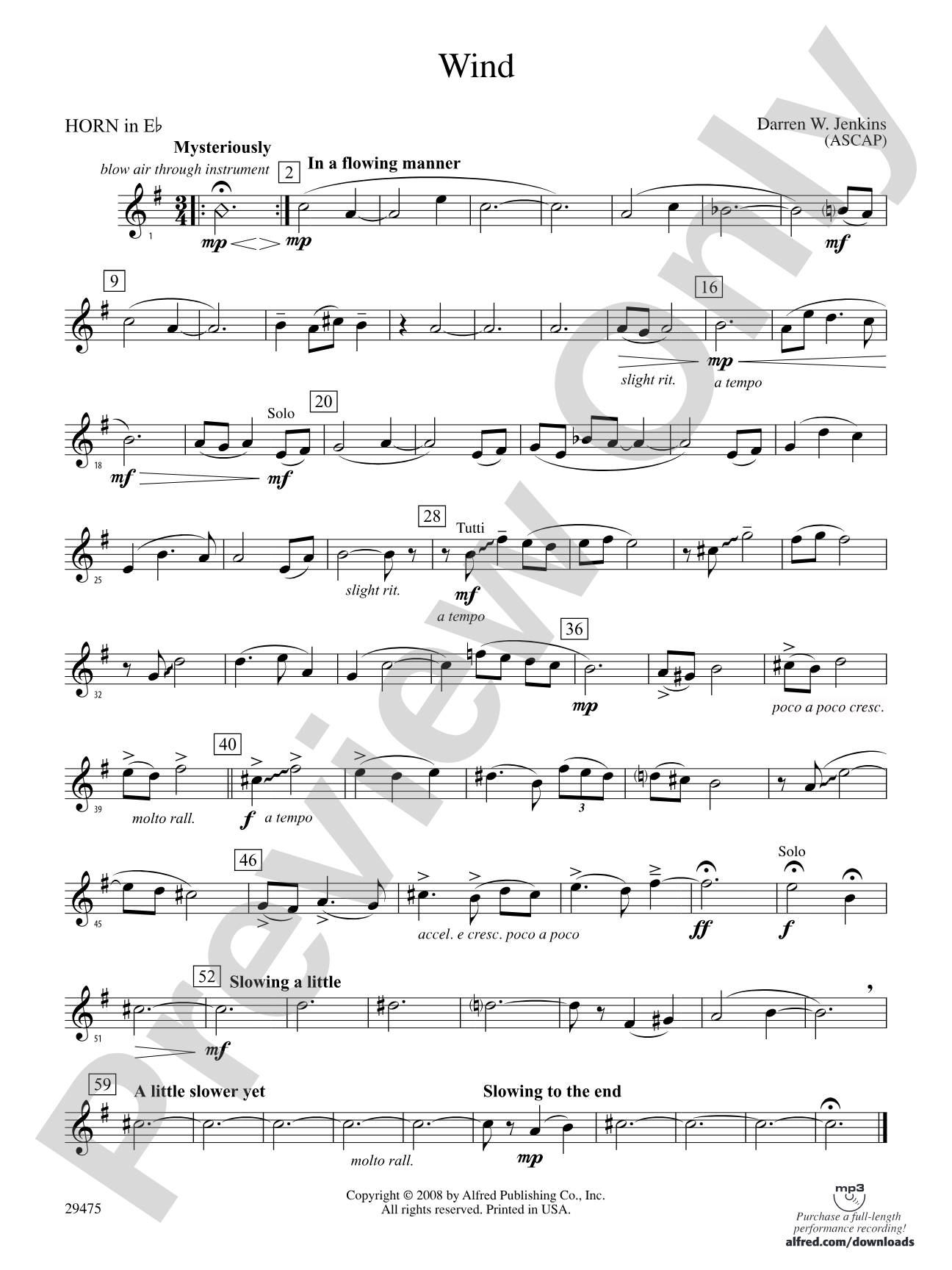
Wind: (wp) 1st Horn in E-flat Sheet Music Preview

Wind: (wp) 1st Horn in E-flat

By Darren W. Jenkins

Grade: 2.5 (Medium Easy)

Item: 00-PC-0001431_wpEH1

Digital Download
$3.00
Description
Wind was originally a part of a multi-movement work based on the elements of the universe. It has been re-scored and edited for symphonic band. Through this piece, the composer has tried to musically represent the many facets of wind -- quiet and gentle . . . a wistful and mysterious breeze . . . the flurry of a gusting wind . . . and the calm, somewhat eerie feeling after a storm. (3:05)

Don't just read it, hear it, play along with it, and watch your students grow with it. In MakeMusic Cloud, Wind: (wp) 1st Horn in E-flat comes alive with professional accompaniment, adjustable tempo, and built-in practice tools that turn solo practice into real progress.

Sample Audio
0:00
0:00
Sample Video
Additional Details
Series: Young Symphonic
Publisher: Alfred Music
Page Count: 130
SKU: 00-PC-0001431_wpEH1

More about this title

About the Composer: Darren W. Jenkins

Darren W. Jenkins

Darren W. Jenkins holds a Master of Music in Composition from the University of Kansas, where he studied under composer James Barnes, and a Bachelor of Music in Music Education from Washburn University. His career spans elementary, high school, and university settings across Kansas, including positions at Lawrence Public Schools, Hayden High School in Topeka, and currently as Assistant Director of Bands at Olathe South High School.

An accomplished composer and clinician, Jenkins has established a reputation for writing accessible yet musically substantive works for young ensembles. His compositions have earned recognition through performances and recordings by groups throughout the United States and internationally, blending pedagogical clarity with genuine artistic vision.

Why we love this

Wind captures the full emotional arc of its subject without requiring advanced technical demands from your students. Jenkins uses orchestration and dynamic contrast to create distinct musical imagery—from delicate pianissimo passages to dramatic crescendos—giving your band the opportunity to develop interpretive maturity at an accessible level. The programmatic framework gives young musicians a narrative anchor, making rehearsals focused and purposeful.

What to expect

Wind moves through contrasting emotional landscapes with poetic clarity. You'll experience moments of stillness and introspection alongside passages of swirling energy and turbulence, all bound together by Jenkins' sophisticated orchestration that respects the limitations of young ensembles while never condescending to them.

Who it's for

Concert bands at the Grade 2.5 level will find Wind both rewarding and manageable. The work suits bands with developing ensemble cohesion and students still building foundational technique, as the writing prioritizes musical storytelling over virtuosic demands.

How to get the most out of it

  • Balance the quiet opening passages carefully; the first section's effectiveness depends on ensemble restraint and unified soft dynamics rather than technical complexity.
  • Shape the transitions between sections as distinct mood shifts. Each facet of wind should feel like a new character entering the story, not a seamless continuation.
  • Let the mysterious sections breathe. Resist the urge to rush passages marked with rubato or exposed solo moments; allow time for the imagery to register.
  • Emphasize rhythmic precision in the faster, gusty sections to create the illusion of wind turbulence without sacrificing musicality.

How to use it

Program Wind as an effective opener or closer for a concert, since its evocative nature and moderate length (just over three minutes) provide strong contrast with more technically demanding works. It also serves well in festival or contest settings where judges appreciate compositional craft paired with pedagogical appropriateness.

Skills your students will build

  • Sustaining soft dynamics and ensemble blend in exposed passages
  • Interpreting programmatic intent through musical phrasing and balance
  • Responding to rapid changes in tempo and texture
  • Reading and executing dynamic and expressive markings across all parts

You May Also Like