Wind On The Hill Sheet Music Preview

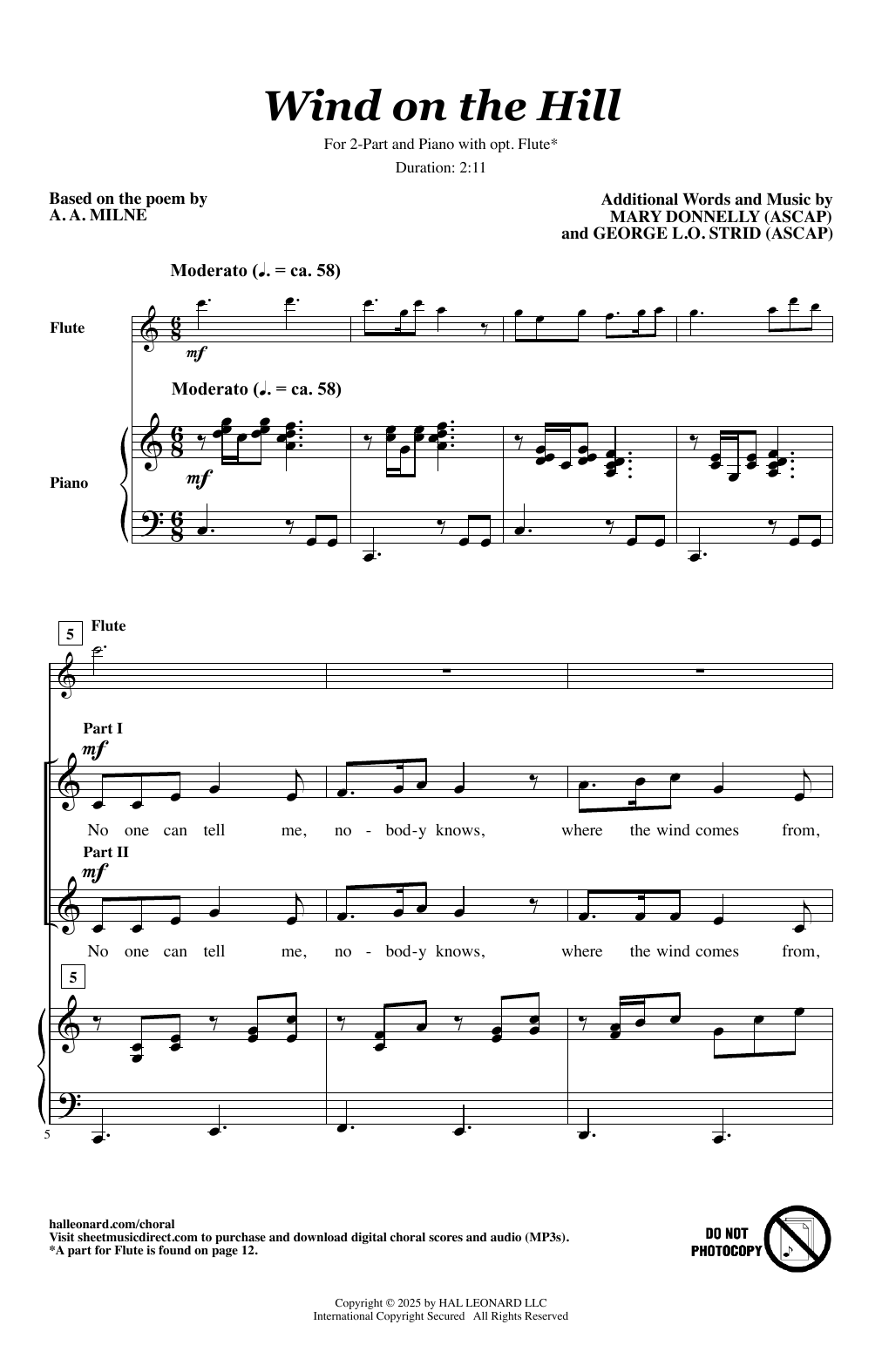
Wind On The Hill: 2-Part Choral Octavo

By A.A. Milne

Item: 35-DS01710597

Digital Download
$2.50
Description

Wind On The Hill: 2-Part Choral Octavo isn't in MakeMusic Cloud just yet...but it could be. Let us know you'd like to see it, and you'll help shape what comes next. In the meantime, start a free trial and dive into thousands of interactive titles your students can play along with today.

Sample Audio
No sample audio found.
Sample Video
Additional Details
Publisher: Hal Leonard
Page Count: 11
SKU: 35-DS01710597

More about this title

About the Author: A.A. Milne

A.A. Milne (1882-1956) was a British author best known for creating Winnie-the-Pooh and Christopher Robin, characters that emerged from stories told to his young son. Beyond children's literature, Milne was a skilled writer across multiple genres, including poetry that captures childhood wonder with remarkable clarity and emotional depth.

Millions of students have encountered Milne's verse through school curricula, making him a natural choice for choral settings. His ability to blend whimsy with genuine feeling gives texts like "Wind On The Hill" lasting appeal for young singers exploring how poetry and music interact.

Why we love this

Milne's poetry has an unforced charm that works beautifully at the 2-part level without feeling juvenile. The text carries real sentiment about nature and observation, giving singers something meaningful to express rather than simply execute.

What to expect

The piece evokes a moment of quiet observation, as if watching wind move through trees. There's movement within stillness, lightness paired with thoughtfulness, and a sense of discovery that feels earned rather than forced.

Who it's for

Middle school and early high school choirs building confidence in part singing will find this accessible and musically rewarding. Directors seeking literature with poetic substance rather than novelty texts should consider this a core addition.

How to get the most out of it

  • Shape the melody to follow the natural speech patterns of the text; avoid over-singing words that deserve a lighter touch.
  • Balance the two parts so neither dominates; this piece benefits from blend over blend.
  • Pay attention to how the music reflects the poem's imagery; let that guide your phrasing rather than relying on dynamic markings alone.

How to use it

Pair this alongside other poetry-based choral works in a concert celebrating the marriage of verse and voice. It also works well in spring or outdoor concert programs where the nature imagery feels seasonally appropriate.

Skills your students will build

  • Maintaining independent melodic lines in 2-part texture
  • Connecting text meaning to musical phrasing
  • Balancing blend while preserving individuality of parts
  • Reading and interpreting poetry-based song texts

You May Also Like