Wind Mountain Overture: Bassoon Sheet Music Preview

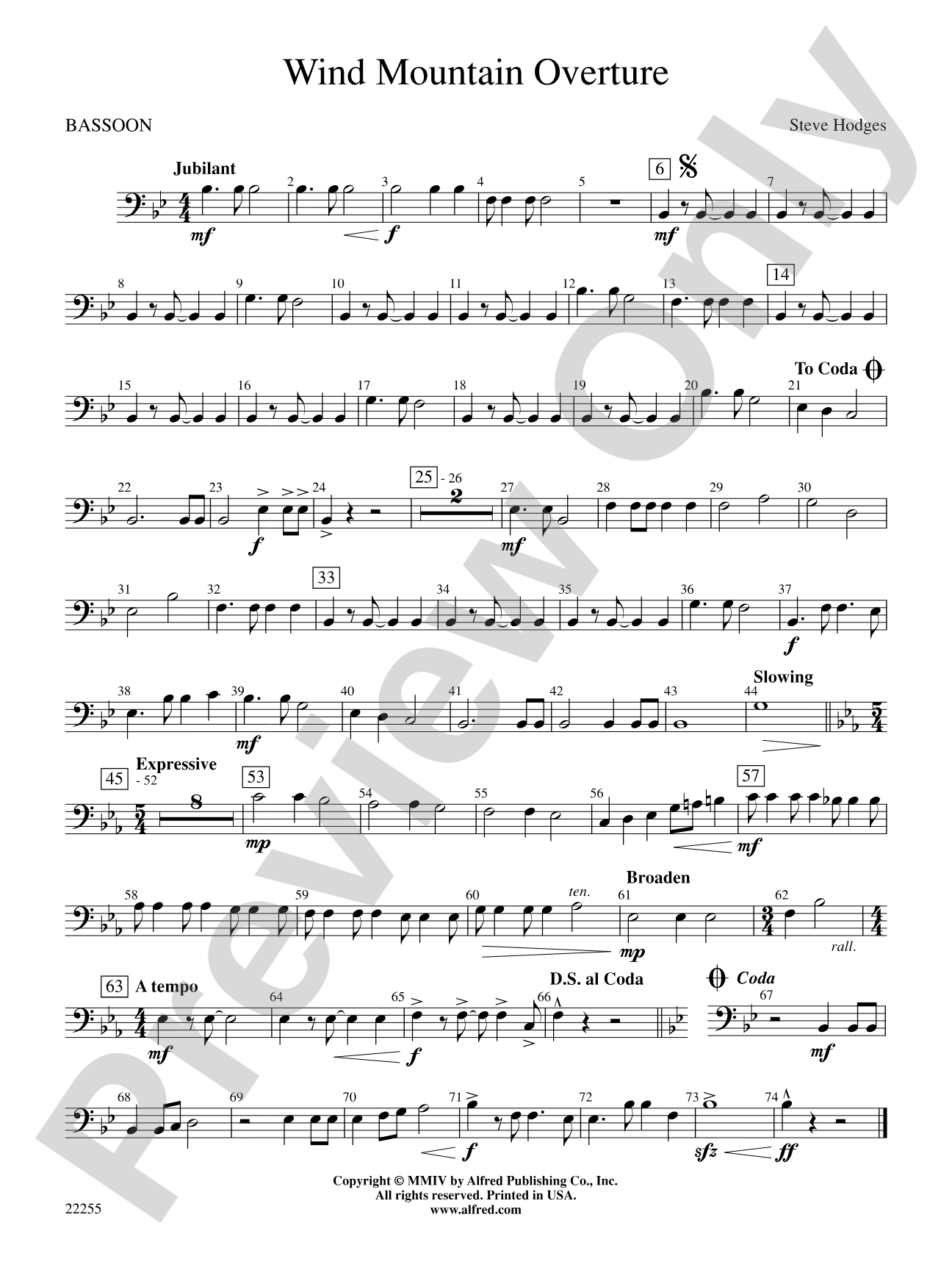
Wind Mountain Overture: Bassoon

By Steve Hodges

Grade: 1.5 (Easy)

Item: 00-PC-0000509_B1

Digital Download
$3.00
Description
A strong, jubilant melody and a reflective middle section in 5/4 time highlight this exciting new overture. An active percussion part drives the piece forward before settling into the minor section, where the lyrical melody is supported by an equally expressive countermelody. This section moves smoothly in 5/4, building to an effective climax before returning to the recapitulation and dynamic conclusion.

Don't just read it, hear it, play along with it, and watch your students grow with it. In MakeMusic Cloud, Wind Mountain Overture: Bassoon comes alive with professional accompaniment, adjustable tempo, and built-in practice tools that turn solo practice into real progress.

Sample Audio
0:00
0:00
Sample Video
Additional Details
Series: Challenger Band Series
Publisher: Alfred Music
Page Count: 130
SKU: 00-PC-0000509_B1

More about this title

About the Composer: Steve Hodges

Steve Hodges

Steve Hodges holds degrees from Western Oregon University (Bachelor of Science) and Central Washington University (Master of Music Education). He spent four decades directing bands, choirs, and small ensembles across public school levels before retiring from full-time teaching.

Since 1986, Hodges has composed over 120 concert band works published by Alfred Music, along with choral arrangements released through Staff Music and Shawnee Press. His music has appeared at festivals and state conventions internationally, with commissions from honor bands and schools in Virginia, Iowa, Winnipeg, British Columbia, Oregon, Washington, and North Carolina. His compositions have also been featured on TBS and ESPN programming. Hodges serves as an ASCAP member and currently lives in The Dalles, Oregon, where he remains active in community music alongside his wife, Teddie.

Why we love this

Hodges crafts a piece that feels substantive without overwhelming young ensembles. The shift into 5/4 time gives students a genuine rhythmic challenge that remains musically purposeful, and the contrast between the jubilant opening and the introspective minor section keeps both players and audiences engaged. Strong enough to hold a concert program, accessible enough to build confidence in developing bands.

What to expect

Wind Mountain opens with infectious forward momentum, then invites listeners into a thoughtful landscape where time feels suspended in 5/4. The piece balances jubilation with introspection, building from quiet reflection to a satisfying, confident finish.

Who it's for

Grade 1.5 bands moving beyond unison writing and ready to tackle mixed meters in a musically rewarding context. Directors seeking a contest or festival selection that showcases ensemble growth without requiring advanced technical demands.

How to get the most out of it

  • Let the active percussion section set the pulse in early rehearsals; the brass and woodwind lines will lock in more easily once the rhythmic foundation is secure.
  • Shape the 5/4 middle section carefully during sectional rehearsals. The countermelody needs to breathe alongside the main melody rather than compete for attention.
  • Build the climax with gradual dynamic layering starting several measures before the peak. Avoid jumping to full volume too early, which diminishes the sense of arrival.
  • Return to the recapitulation with clarity and energy. The dynamic conclusion works best when the band feels the contrast between the reflective interlude and the final statement.

How to use it

This overture works well as an opener or early-program selection that demonstrates your ensemble's range and growing sophistication. The concert and festival designation makes it ideal for spring competitions, or program it alongside a contemporary chorale or lyrical work to showcase stylistic contrast within your concert.

Skills your students will build

  • Reading and performing in 5/4 time
  • Balancing melody and countermelody within the same section
  • Dynamic shaping and building toward climax
  • Ensemble precision in mixed meter contexts
  • Responding to percussion-driven rhythmic leadership

You May Also Like