Willow Weep for Me: 2nd Trombone Sheet Music Preview

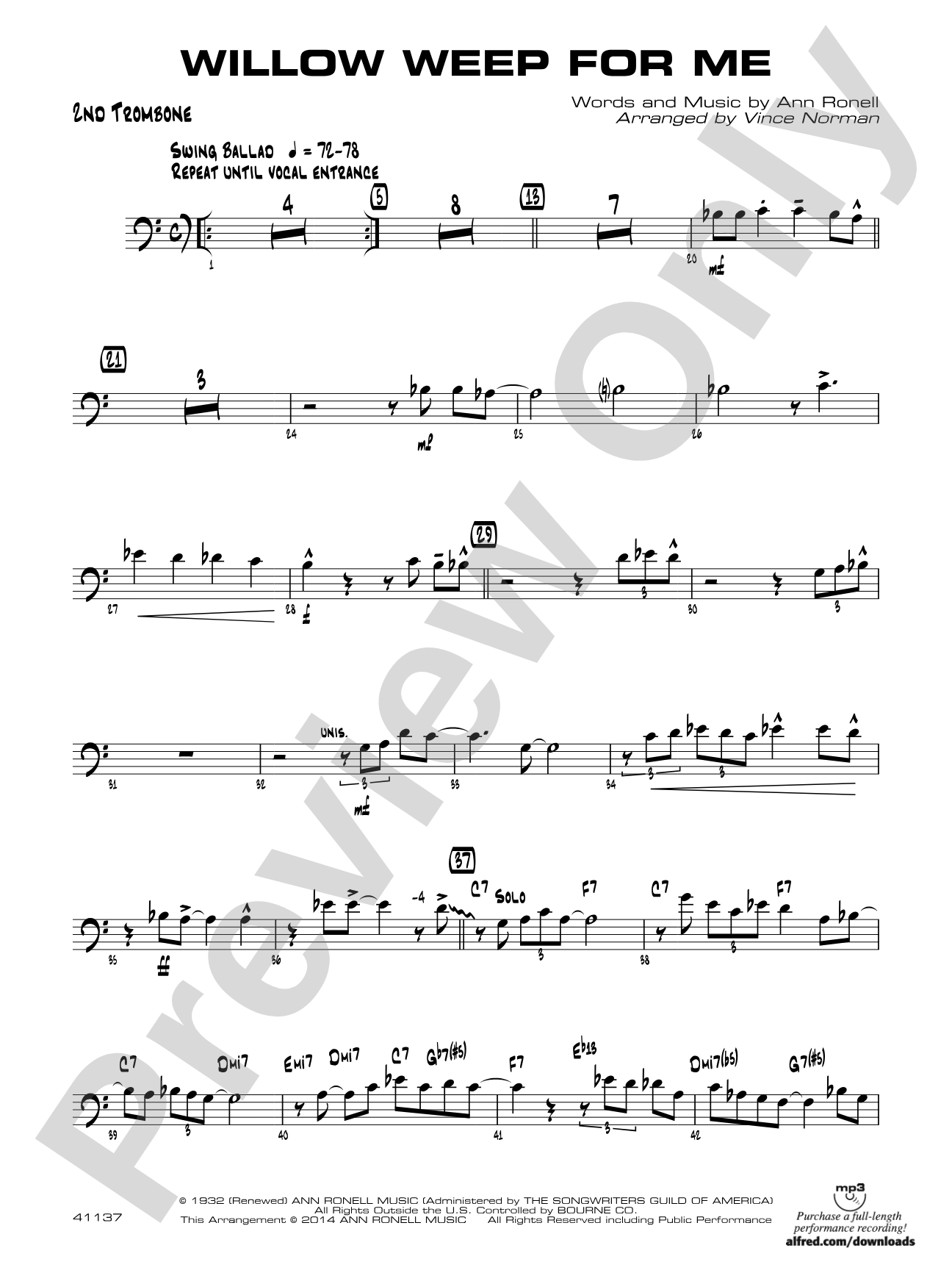
Willow Weep for Me: 2nd Trombone

Words and music by Ann Ronell / arr. Vince Norman

Grade: 3 (Medium)

Item: 00-PC-0016274_TN2

Digital Download
$3.00
Description
A vocal chart and slow swing ballad at 70 BPM. The vocal range is G below middle C to A-flat second space. Lead trumpet range is to written A and includes a written-out solo for trombone 2 and optional lead parts for B-flat, E-flat, and bass clef instruments. Great tune, fine chart. (4:44)

Don't just read it, hear it, play along with it, and watch your students grow with it. In MakeMusic Cloud, Willow Weep for Me: 2nd Trombone comes alive with professional accompaniment, adjustable tempo, and built-in practice tools that turn solo practice into real progress.

Sample Audio
0:00
0:00
Sample Video
Additional Details
Series: Jazz Vocal Series
Publisher: Alfred Music
Page Count: 62
SKU: 00-PC-0016274_TN2

More about this title

About the Composer: Ann Ronell

Ann Ronell (1905-1993) was a composer, lyricist, and pianist who bridged popular song and jazz idioms during the Golden Age of American songwriting. She wrote "Willow Weep for Me" in 1932, and the song became a standard recorded by countless jazz artists. Ronell's ability to craft memorable melodies with sophisticated harmonic movement made her work enduring material for jazz vocalists and ensemble arrangers.

Why we love this

Vince Norman's arrangement captures the bittersweet elegance of this standard while keeping the chart accessible for Grade 3 ensembles. The written-out trombone 2 solo and optional lead parts give you flexibility in instrumentation, and the slow swing ballad tempo (70 BPM) allows your vocalist and ensemble to really breathe with the tune.

What to expect

A slow, introspective ballad that lives in the melancholy and resignation of its lyric. The ensemble provides warm harmonic support while the vocalist tells a story of longing, and the trombone solo offers a moment of gentle reflection that mirrors the vocal mood.

Who it's for

Jazz ensemble directors looking for a standard vocal ballad that works for contest or festival programming. Vocalists who have developed solid jazz phrasing and can handle a medium range (G below middle C to A-flat second space) with interpretive control.

How to get the most out of it

  • Balance the vocal line against the ensemble; the vocalist should sit comfortably over the harmony without the band dominating. Use dynamic control in the sax section and rhythm section to support rather than overshadow.
  • Lock the rhythm section (bass and drums) into a relaxed swing feel at 70 BPM. A laid-back pocket here will let the vocalist phrase freely and will prevent the ballad from dragging.
  • Shape the trombone 2 solo with clear phrasing and intentional space. This is a feature moment that benefits from tasteful articulation and vibrato control.
  • Blend the optional lead parts (trumpet, E-flat, and bass clef instruments) carefully if you use them; these should complement rather than compete with the vocal melody.

How to use it

This works beautifully in a contest or festival set as a showcase for your vocalist alongside up-tempo jazz selections. The Grade 3 difficulty keeps it achievable for developing ensembles while maintaining artistic credibility, and the ballad tempo provides dynamic contrast if you're programming multiple charts.

Skills your students will build

  • Jazz ballad phrasing and lyric interpretation
  • Ensemble balance when accompanying a vocalist
  • Slow swing rhythm section pocket at 70 BPM
  • Listening to and supporting a featured soloist (trombone 2)
  • Dynamic control and blend in the sax section

You May Also Like