
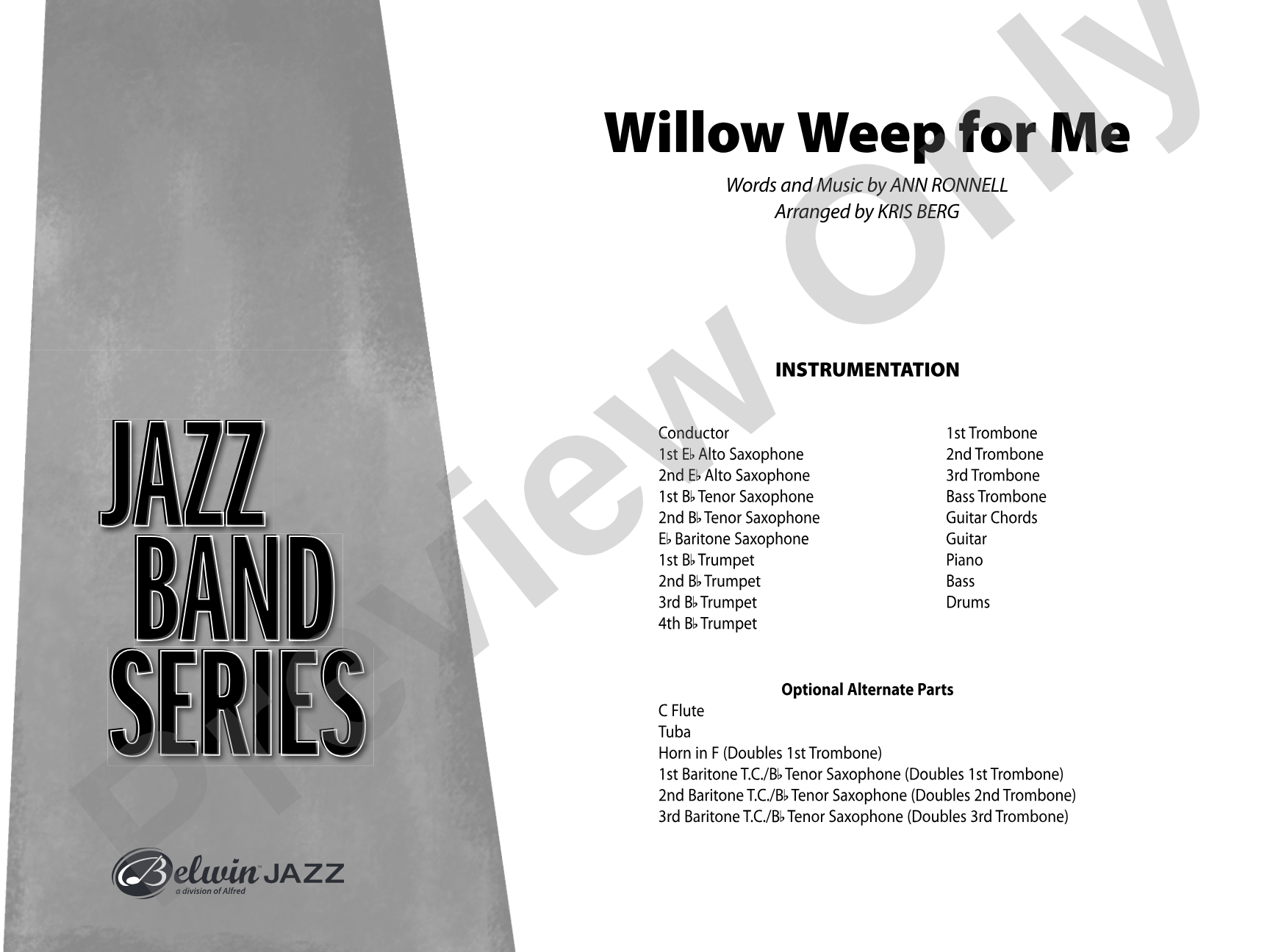
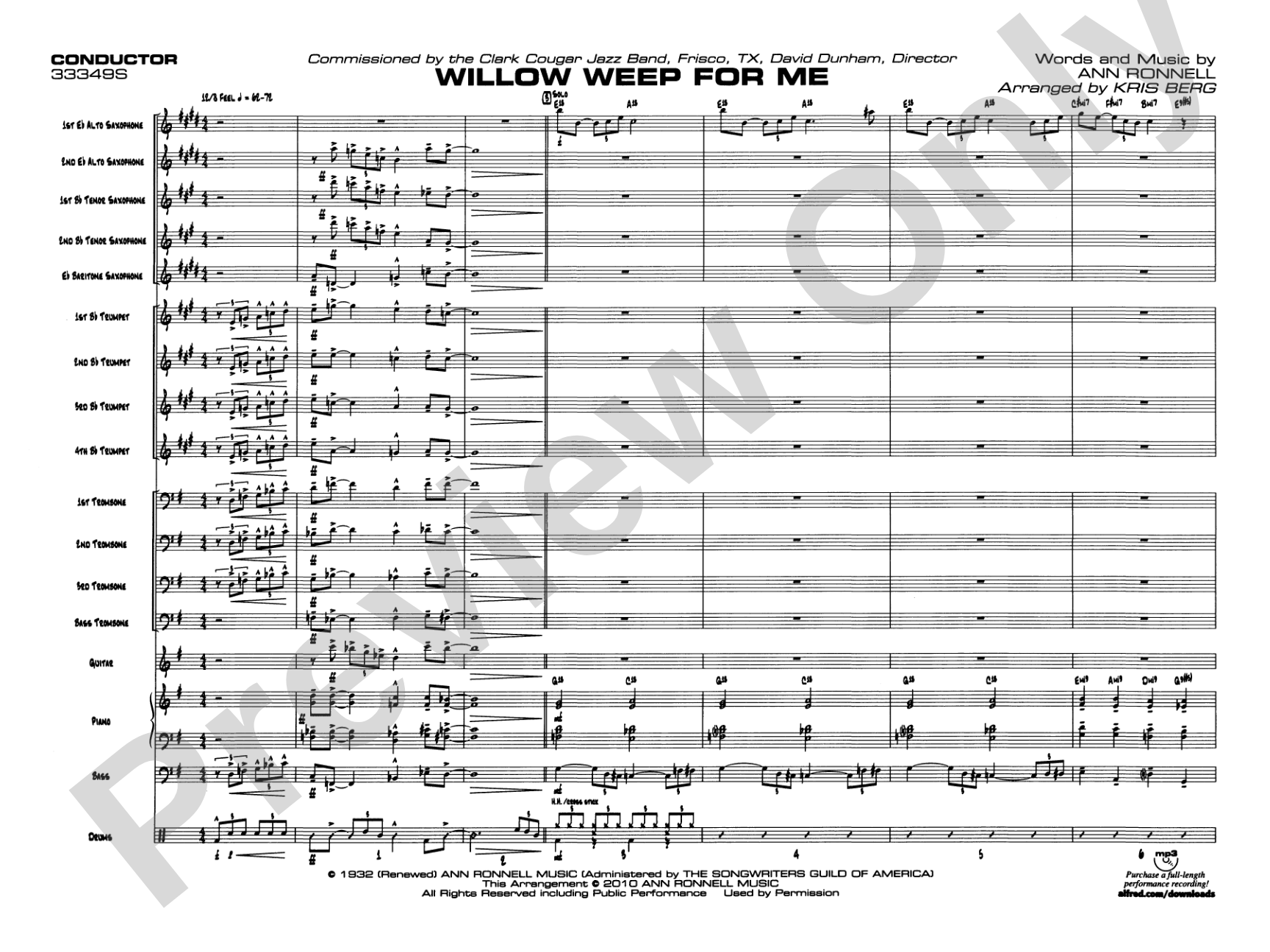
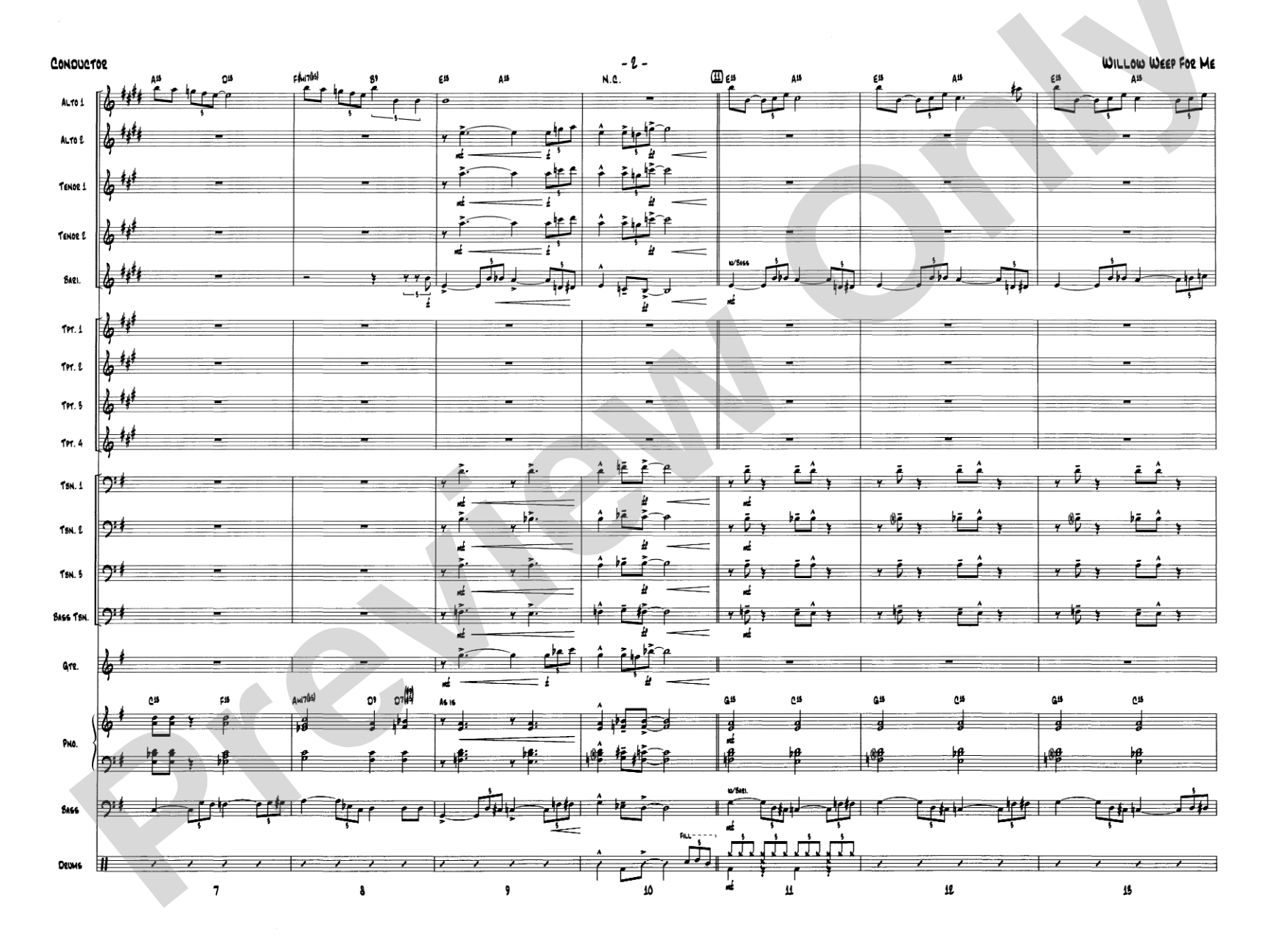
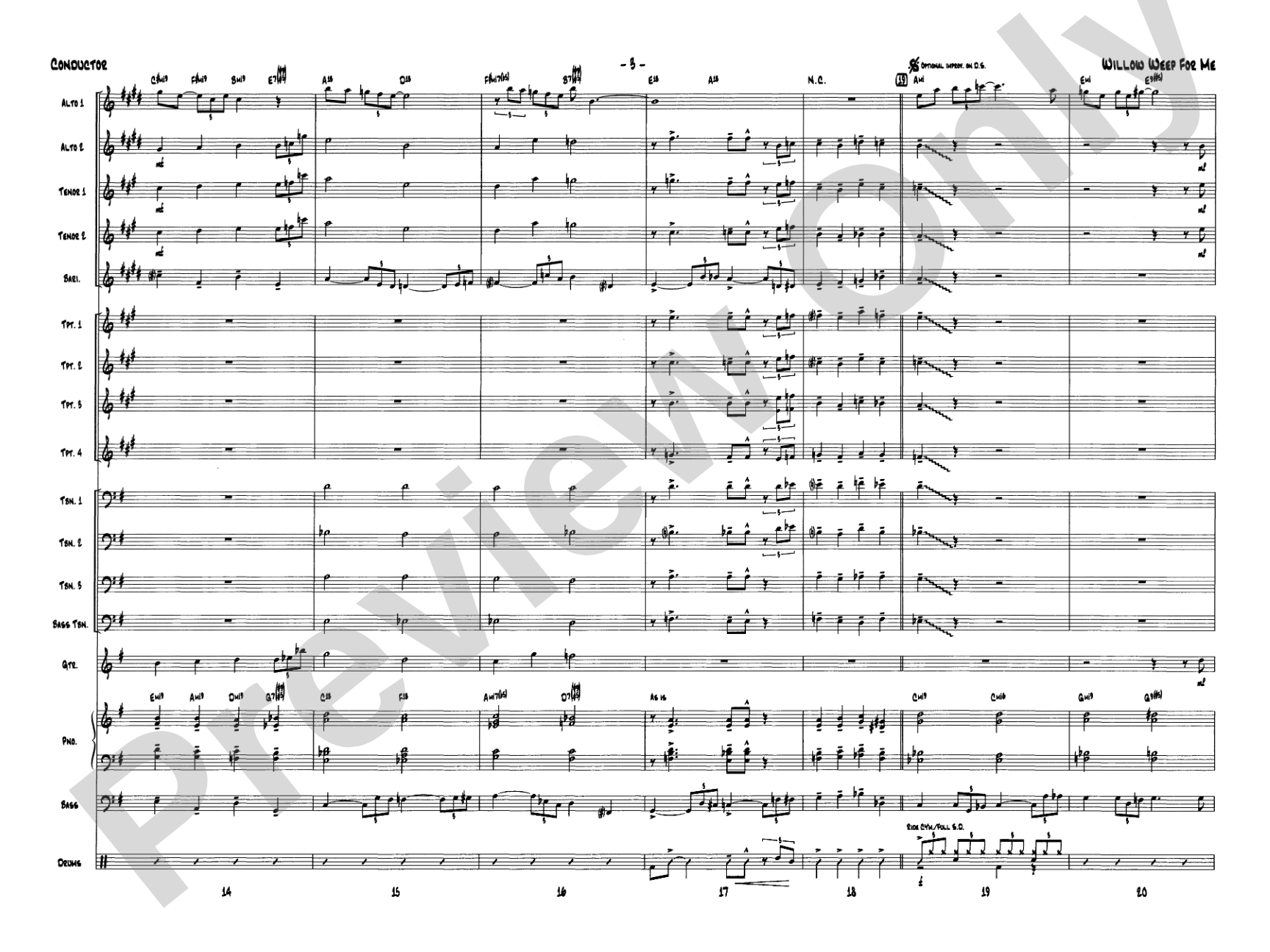
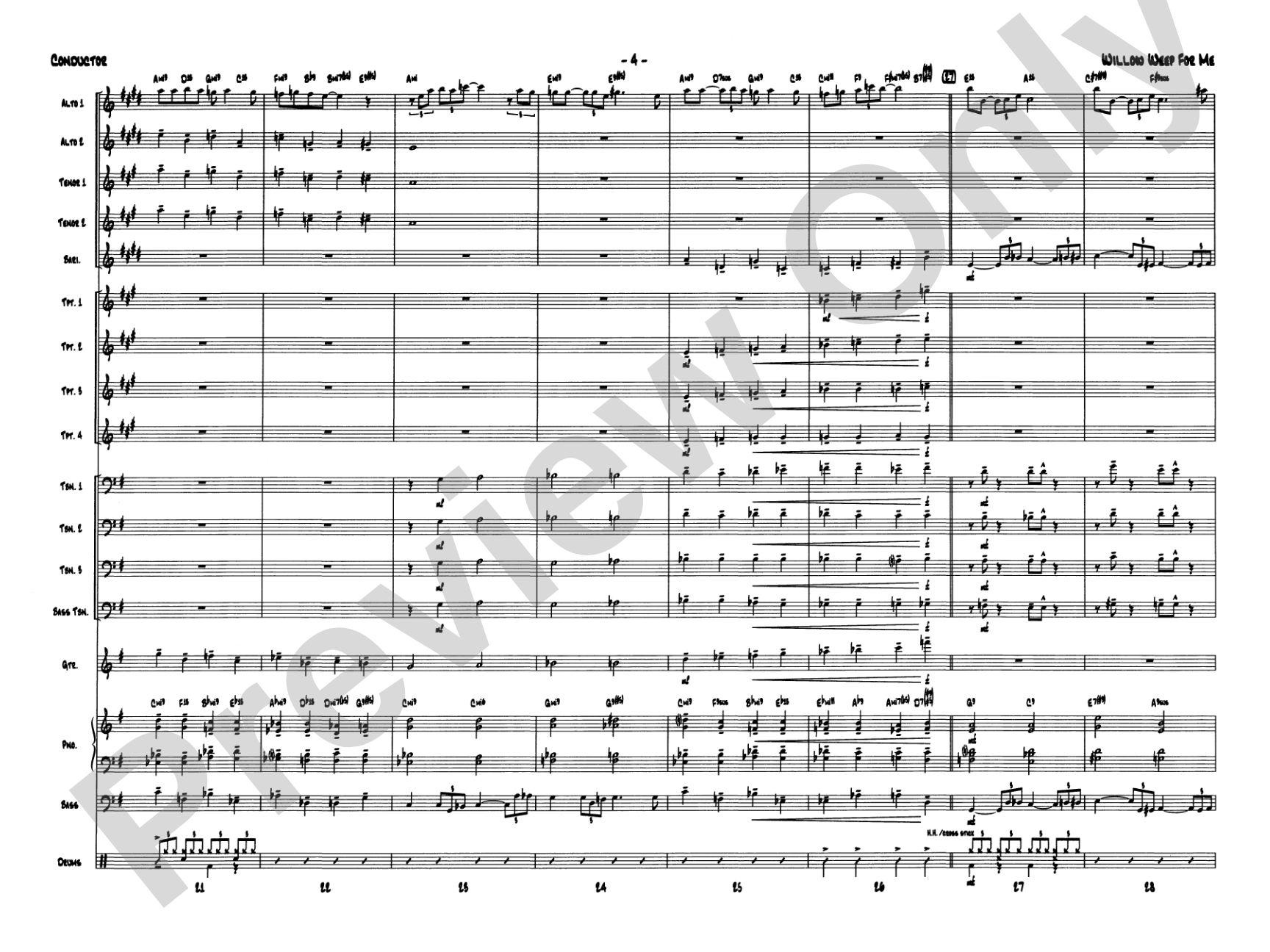
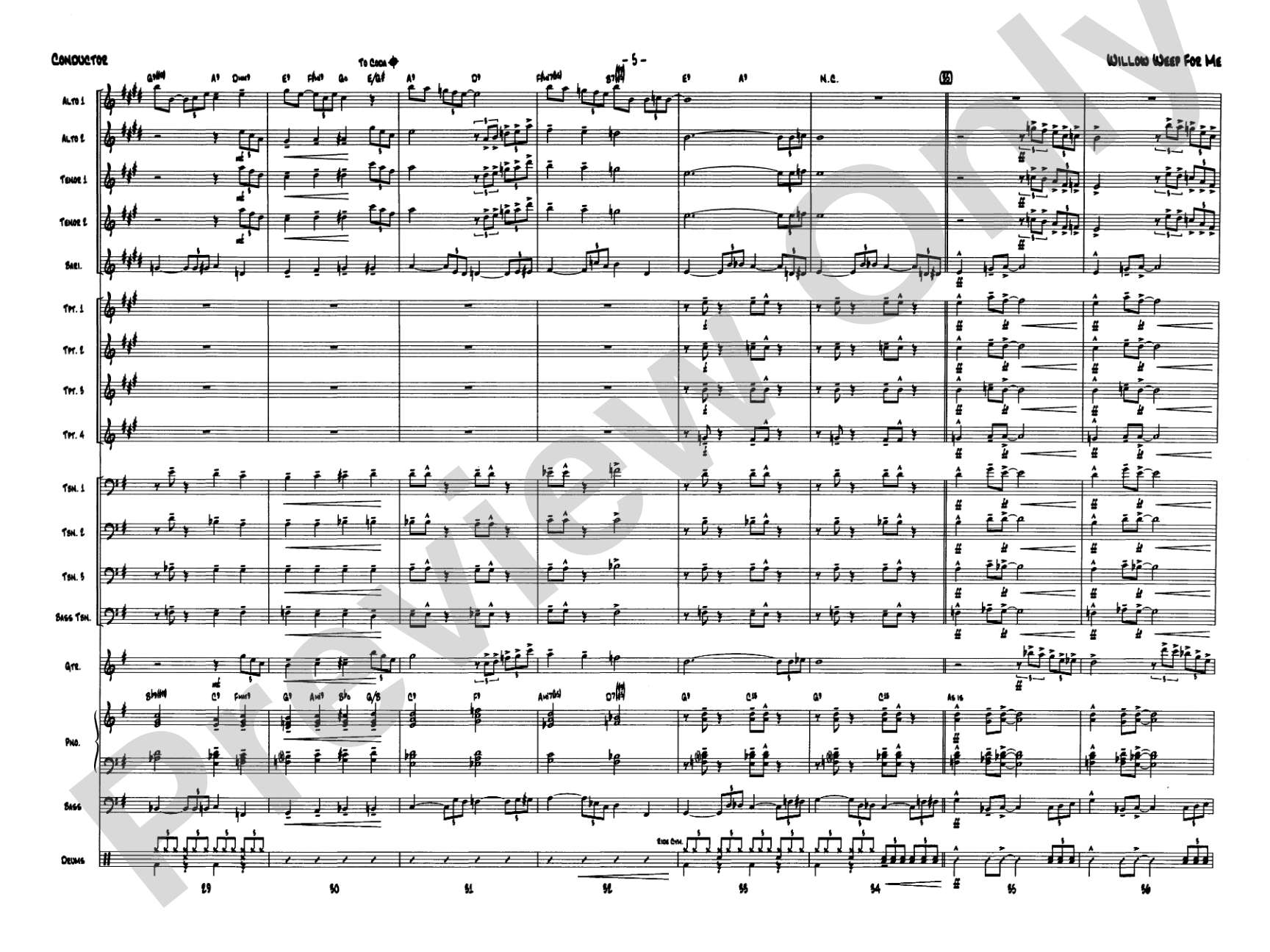
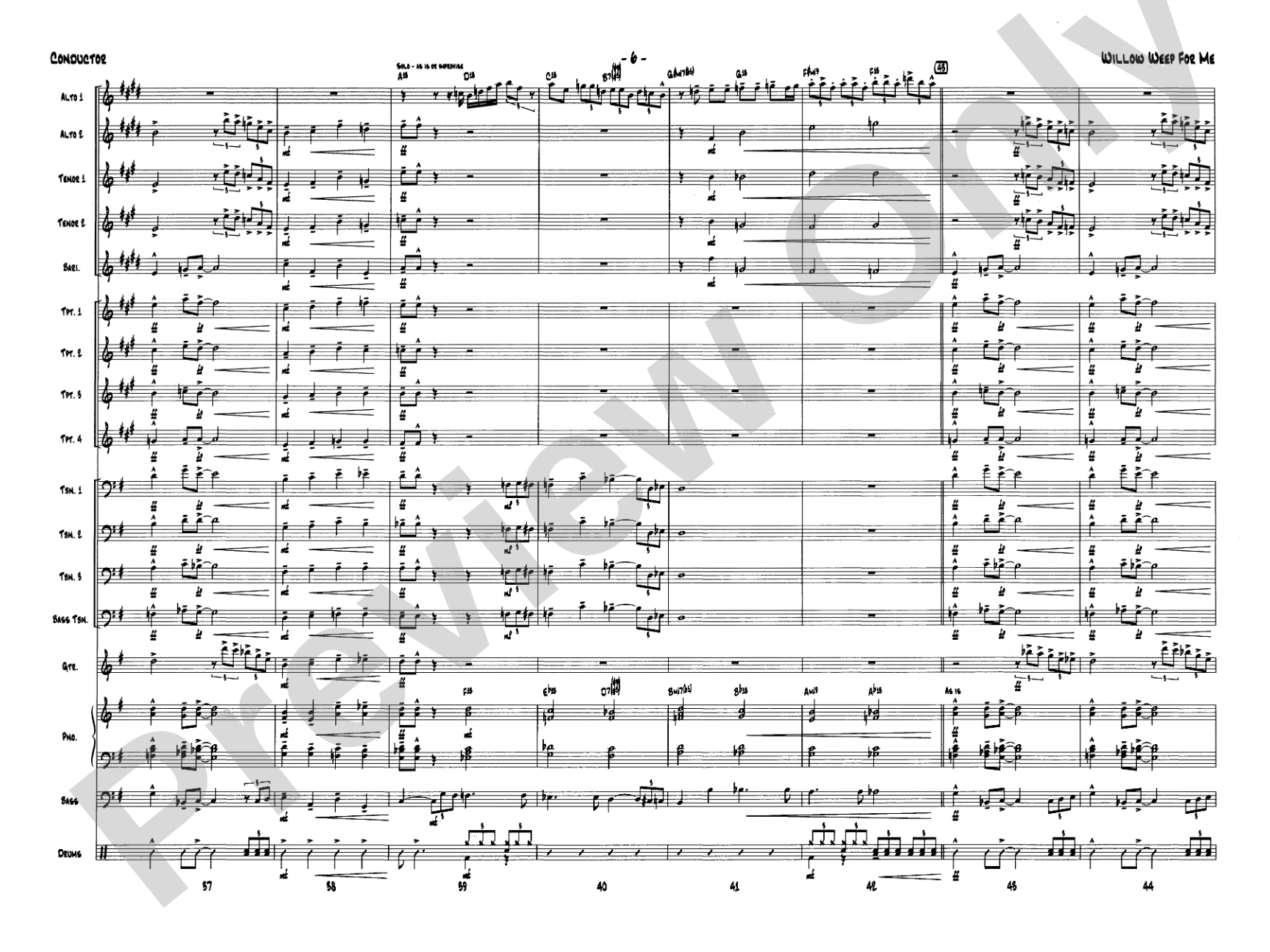
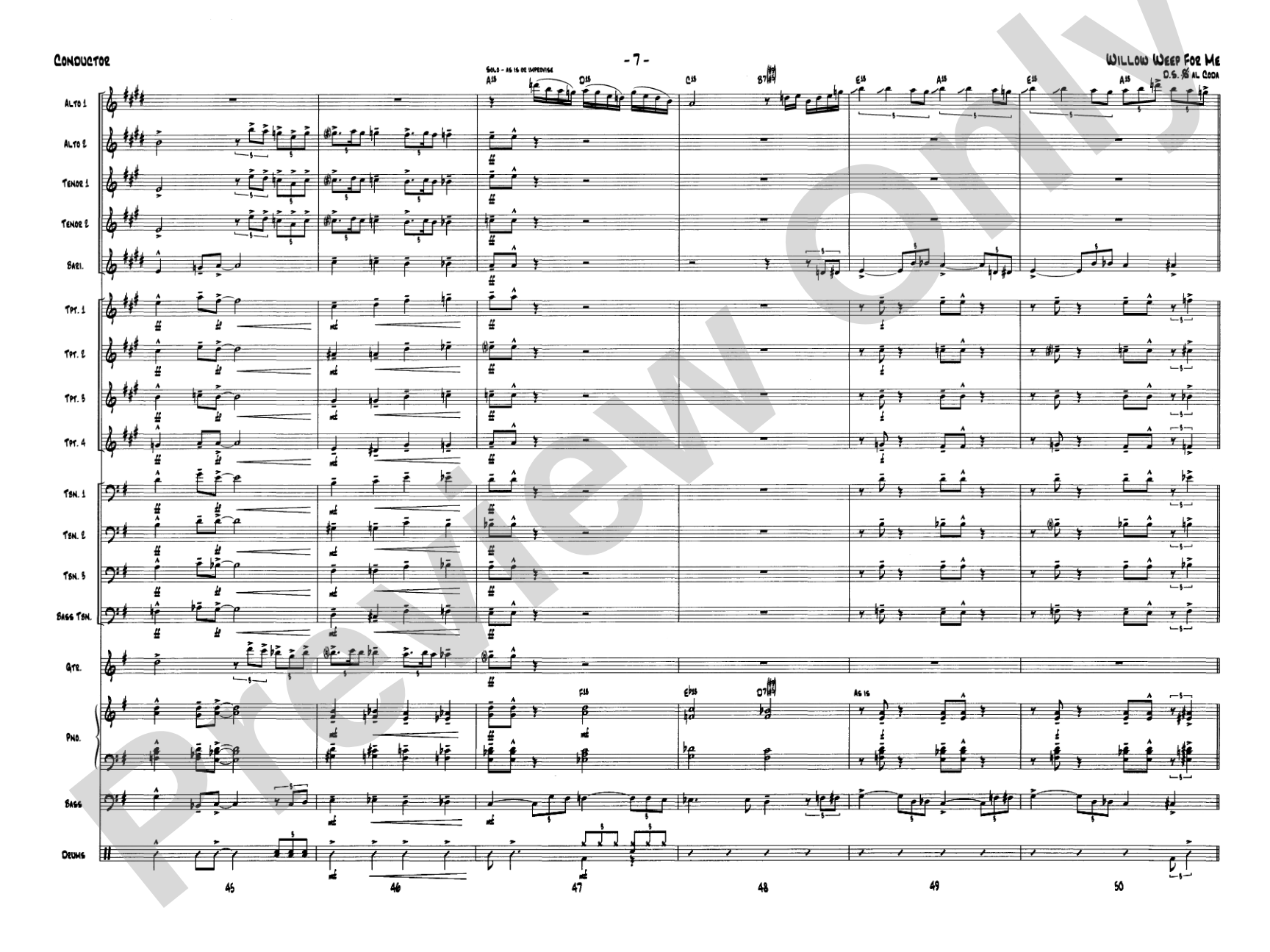
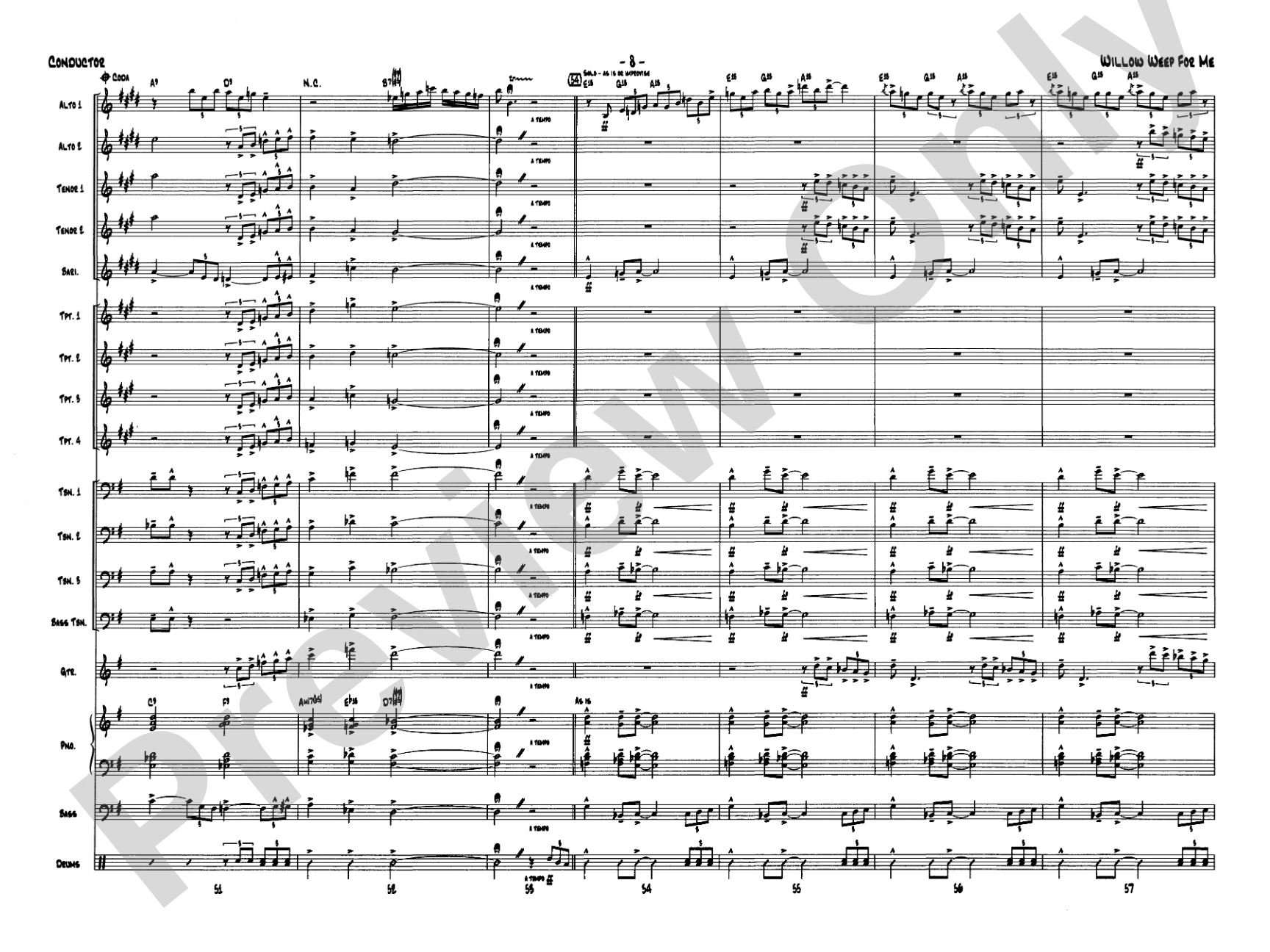
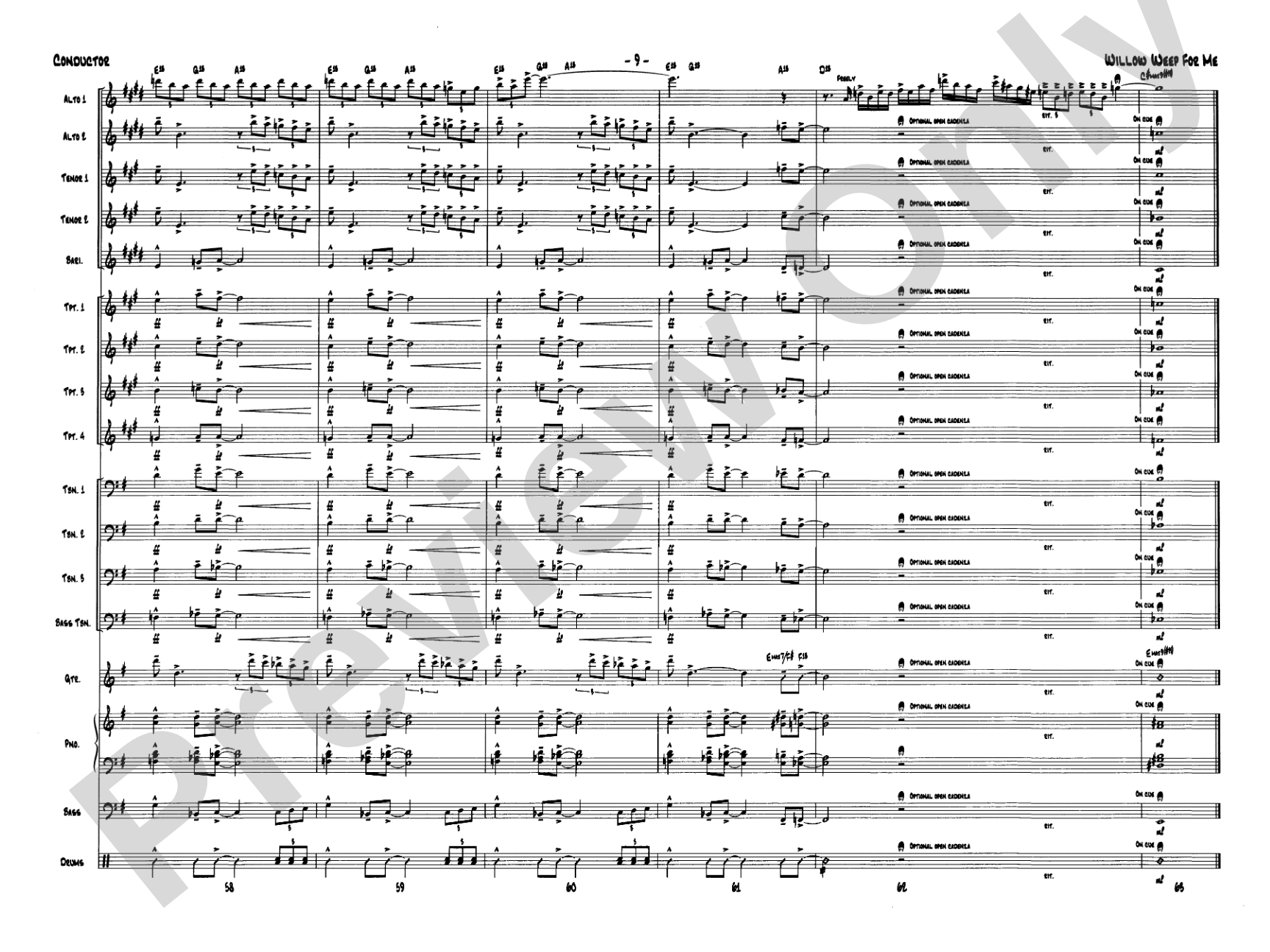

Willow Weep for Me: Jazz Ensemble Conductor Score & Parts
Words and music by Ann Ronell / arr. Kris Berg
Grade: 3 (Medium)
Item: 00-PK-0005947

$52.00
One moment…
Description
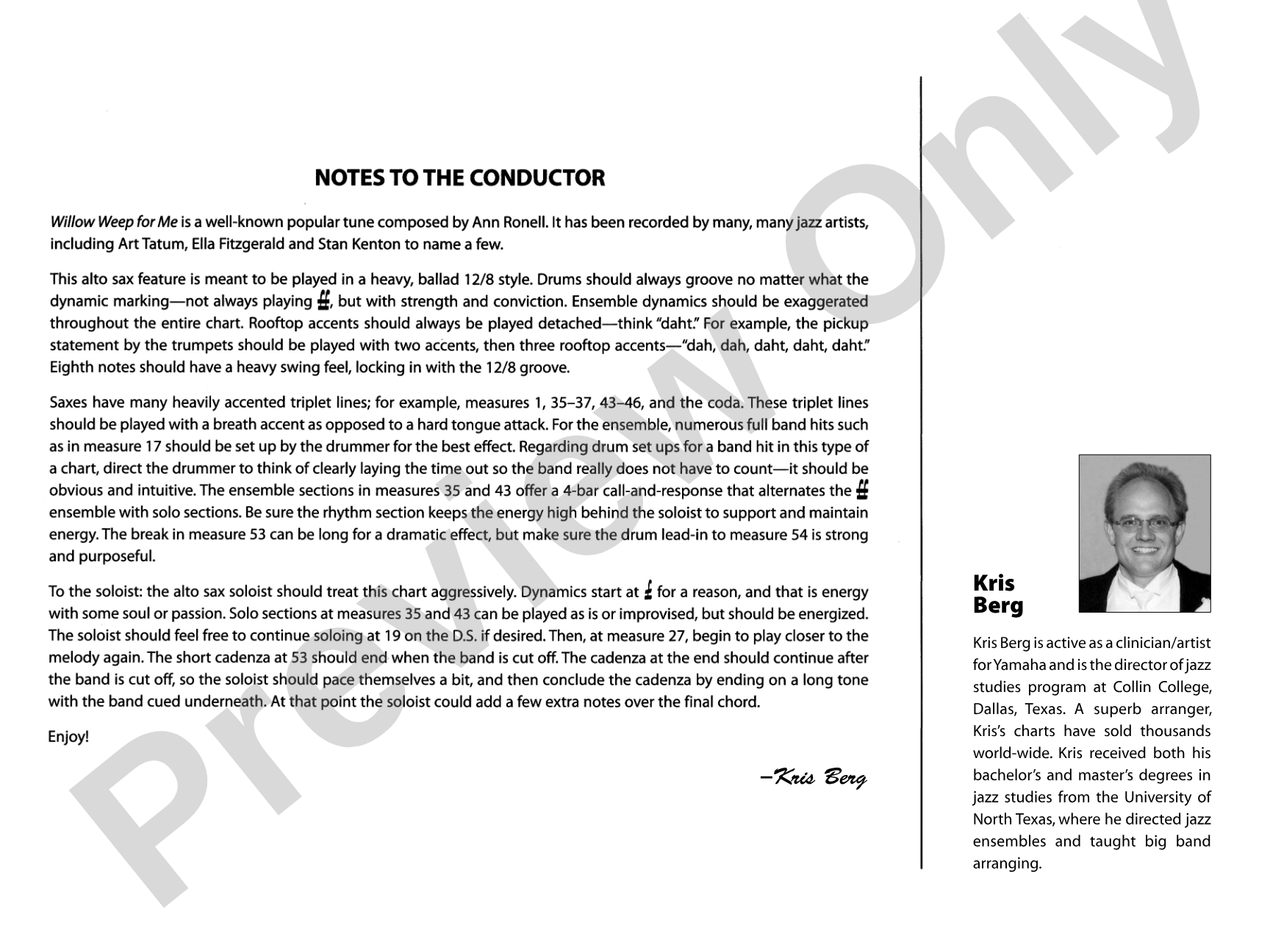
A superb alto sax feature, this is a classic 12/8 bluesy treatment of the great standard. Everything is written out for the alto player, with optional chord changes. Lead trumpet range is to written A above the staff. Give a listen to this soulful chart and decide for yourself.


Don't just read it, hear it, play along with it, and watch your students grow with it. In MakeMusic Cloud, Willow Weep for Me: Jazz Ensemble Conductor Score & Parts comes alive with professional accompaniment, adjustable tempo, and built-in practice tools that turn solo practice into real progress.
Open in the Player
Jump straight in and assign it today.
Start Your Free Trial
Open this title and explore the full library in minutes.
Sample Audio
1
Audio File
--:--
0:00
0:00
Sample Video
No sample videos found.
Additional Details
Series:
Jazz Band Series
Publisher:
Alfred Music
Page Count:
88
SKU:
00-PK-0005947
More about this title
About the Composer: Ann Ronnell
Ann Ronnell (1906-1993) was a prolific songwriter and composer whose work spanned from the 1920s through the 1960s. She composed both instrumental pieces and songs for film and theater, earning recognition for her melodic gift and versatility across genres. 'Willow Weep for Me,' written in 1932, became one of her most enduring compositions and has been recorded by countless jazz artists and vocalists over the decades.
Why we love this
Kris Berg's arrangement centers the alto saxophone with genuine voice and space to breathe, grounded in a bluesy 12/8 feel that sits naturally under the fingers. The chart gives your ensemble a chance to play a real standard that swings, while the written solo line and optional chord changes keep things accessible for groups still building their jazz literacy.
What to expect
Soulful and introspective, anchored in blues sensibility. The 12/8 meter gives the arrangement a lilting, almost conversational quality, as though the alto sax is singing a private meditation rather than delivering a showy solo.
Who it's for
Jazz ensemble directors working with Grade 3 ensembles who have a solid alto sax player and want to program a recognizable standard with genuine jazz character. This works well for groups that have developed basic section blend and can handle a moderate level of jazz vocabulary without needing extensive classroom explanation of the style.
How to get the most out of it
- Lock the rhythm section into the 12/8 pocket before rehearsing with horns; this groove is everything, and a tight foundation lifts the entire ensemble sound.
- Give the alto player freedom to interpret the written line with subtle phrasing and dynamics. This is a feature, not a reading exercise.
- Watch the lead trumpet's upper register; the written A above the staff demands clean attacks and steady air support, especially over the ensemble.
- Balance the alto feature against the supporting voices so the melody cuts through without sounding thin.
How to use it
Program this as a feature that contrasts with up-tempo swing charts or original compositions at a concert. It also works as an opener or closer, where its reflective mood can set a sophisticated tone for the evening.
Skills your students will build
- Playing and reading 12/8 meter and jazz rhythmic phrasing
- Supporting a featured soloist with ensemble balance and restraint
- Interpreting optional chord changes and understanding jazz harmony in context
- Developing lead trumpet tone and endurance in the upper register