
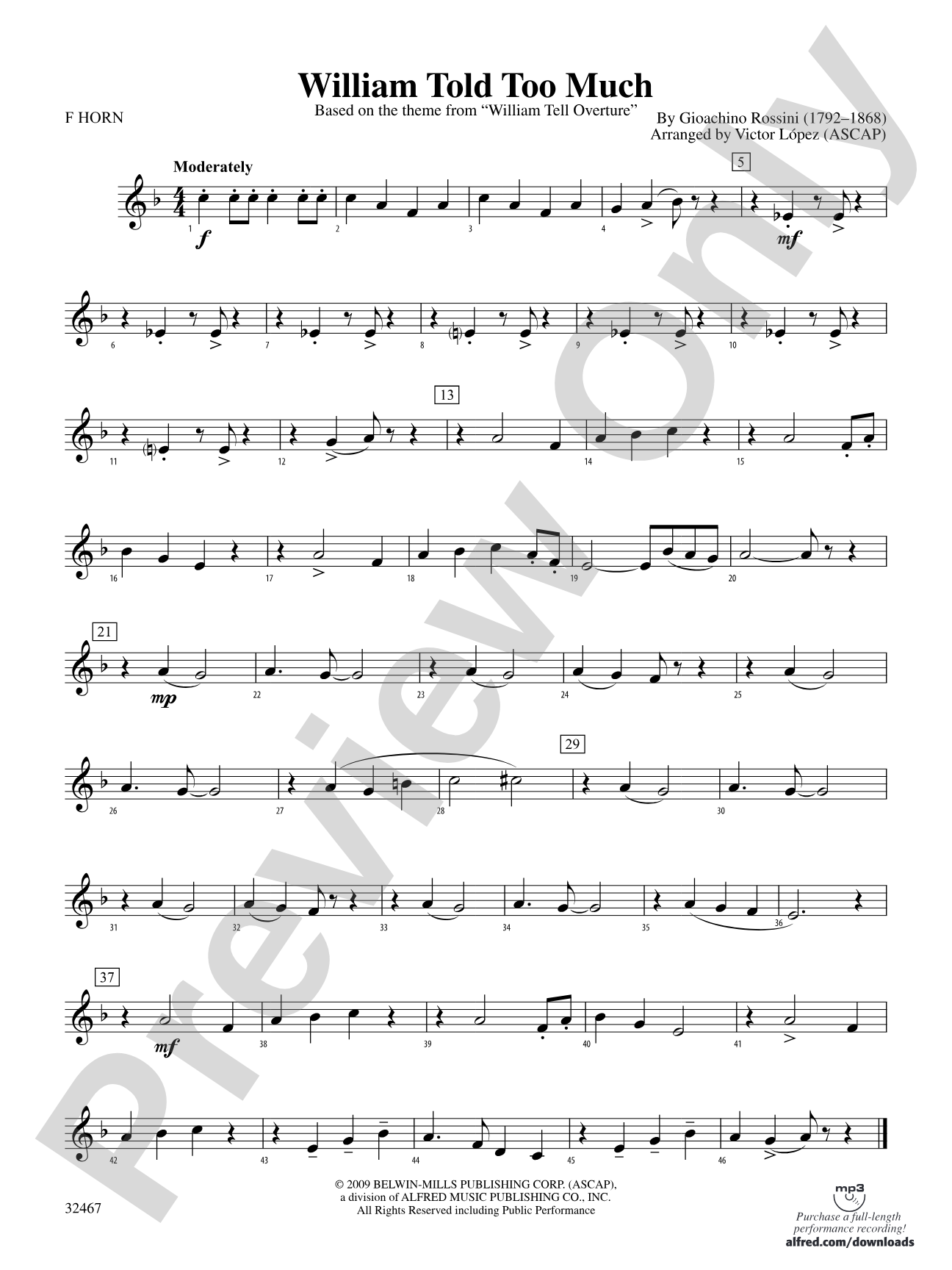

William Told Too Much: 1st F Horn
Based on the theme from William Tell Overture
By Gioachino Rossini / arr. Victor López
Grade: 1 (Very Easy)
Item: 00-PC-0014353_H1
$3.00
Pickup currently not available
Description
Victor López gives us a fresh new rendition of the theme from Rossini's "William Tell Overture" set in a rock style. This is an exciting learning tool certain to motivate students with its catchy recognizable classical melody, extremely playable arrangement, and contemporary rock style. You are guaranteed to have a winner.


Don't just read it, hear it, play along with it, and watch your students grow with it. In MakeMusic Cloud, William Told Too Much: 1st F Horn comes alive with professional accompaniment, adjustable tempo, and built-in practice tools that turn solo practice into real progress.
Open in the Player
Jump straight in and assign it today.
Start Your Free Trial
Open this title and explore the full library in minutes.
Sample Audio
1
Audio File
--:--
0:00
0:00
Sample Video
No sample videos found.
Additional Details
Series:
Belwin Beginning Band
Publisher:
Alfred Music
Page Count:
138
SKU:
00-PC-0014353_H1
More about this title
About the Composer: Gioachino Rossini
Gioachino Rossini (1792-1868) was an Italian composer whose gift for melody and theatrical flair made him one of the most performed composers of the 19th century. His operas, particularly "The Barber of Seville," remain concert staples, and his instrumental works like the "William Tell Overture" have become cultural touchstones heard everywhere from cartoons to sporting events.
The "William Tell Overture" stands as Rossini's most recognizable work outside the opera house. Its famous galloping finale has transcended classical music to become a universal symbol of adventure and action, making it an ideal foundation for arrangements that introduce students to masterworks in contemporary styles.
Why we love this
Victor López's rock treatment transforms one of classical music's most iconic melodies into something that speaks to modern ensembles without sacrificing the integrity of Rossini's unforgettable tune. Grade 1 accessibility combined with genuine contemporary energy means your students play a recognizable masterwork arrangement that sounds and feels current, building genuine enthusiasm for both classical repertoire and their own musicianship.
What to expect
A jolt of pure adrenaline wrapped around a melody everyone knows. The iconic galloping energy of Rossini's theme translates perfectly into rock idiom here, creating an arrangement that feels fresh and alive rather than quaint or oversimplified. Your students will feel like they're playing something genuinely exciting, not just a "starter" version of the real piece.
Who it's for
Beginning concert bands seeking a Grade 1 piece that motivates through recognition and contemporary energy. Directors who want to program a classical masterwork without the technical demands of the original overture will find this arrangement ideal for younger or developing ensembles.
How to get the most out of it
- Anchor the rock groove in the rhythm section; lock the kick and snare pattern early in rehearsals so the band's energy sits on a solid foundation rather than floating above it.
- Let the famous "William Tell" melody breathe when it appears; the familiarity of Rossini's theme gives students permission to phrase with confidence, so encourage expressive playing in the featured sections.
- Balance the contemporary instrumental color against clear articulation in faster passages so the rock style energizes rather than muddies the ensemble sound.
- Use the score's dynamic markings to shape the narrative arc; this arrangement builds momentum, and respecting those climbs pays off in audience engagement.
How to use it
This works brilliantly as a concert opener that immediately captures audience attention or as a centerpiece in a "Classics Reimagined" concert pairing classical and contemporary styles. Grade 1 playability also makes it valuable for festival contexts where you want to showcase both musicianship and audience connection.
Skills your students will build
- Playing with a rock groove and contemporary rhythmic feel
- Balancing melody and accompaniment parts in ensemble texture
- Shaping phrases around a recognizable tune while maintaining stylistic consistency
- Building dynamic control across multiple sections of contrasting character
- Reading a full score part while maintaining part integrity in an ensemble context