William Tell Overture: B-flat Bass Clarinet Sheet Music Preview

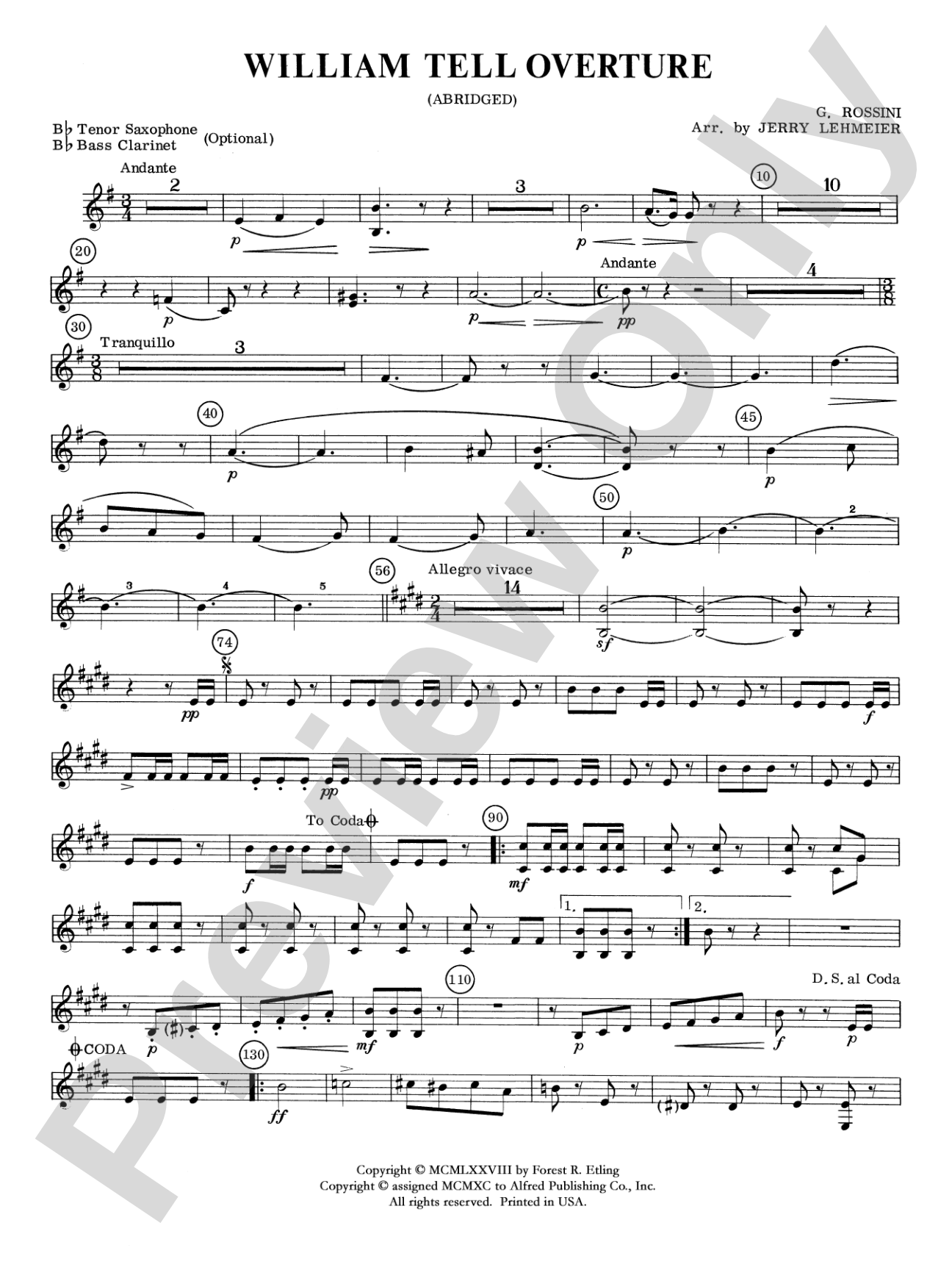
William Tell Overture: B-flat Bass Clarinet

By Gioacchino Rossini / arr. Jerry Lehmeier

Grade: 3

Item: 00-PC-0000053_CBC

Digital Download
$3.00
Description

Don't just read it, hear it, play along with it, and watch your students grow with it. In MakeMusic Cloud, William Tell Overture: B-flat Bass Clarinet comes alive with professional accompaniment, adjustable tempo, and built-in practice tools that turn solo practice into real progress.

Sample Audio
No sample audio found.
Sample Video
Additional Details
Series: Highland/Etling Full Orchestra
Publisher: Alfred Music
Page Count: 220
SKU: 00-PC-0000053_CBC

More about this title

About the Composer: Gioacchino Rossini

Gioacchino Rossini (1792-1868) composed some of the most performed operas in the world, but his instrumental works reveal a composer equally gifted at orchestration and musical storytelling. The William Tell Overture stands as his most famous orchestral composition, a masterpiece of dramatic arc and instrumental color that has captivated audiences for nearly two centuries. Rossini's gift for melody and his command of orchestral texture made him one of the defining voices of early Romantic opera.

Why we love this

This Grade 3 arrangement captures the overture's essential drama and famous melodies without requiring virtuosic execution, making it accessible for young orchestras while preserving the piece's undeniable impact. The Lehmeier arrangement balances musical authenticity with practical considerations for developing ensembles, so students learn a genuine masterwork rather than a watered-down approximation. Programming this piece guarantees recognition and excitement from audiences, and the multiple sections offer chances to highlight different sections of your orchestra.

What to expect

The William Tell Overture sweeps you from stillness into a storm of rhythmic energy, building momentum with every section until the famous march theme explodes into triumph. Rossini's orchestration alternates between delicate pastoral moments and raw orchestral power, creating a narrative arc that carries the ensemble and audience alike through exhilaration and release. The piece moves fast, demands ensemble precision, and rewards musicality with moments of genuine beauty.

Who it's for

This arrangement serves Grade 3 orchestras with developing players across all sections, from those just comfortable with reading to those eager for a showpiece that showcases genuine artistry. Directors seeking a crowd-pleasing concert or festival piece that checks the "masterwork" box without requiring an advanced ensemble will find exactly what they need here. The full instrumentation and 220-page score also give conductors a thorough, professional-quality performance material that treats young musicians seriously.

How to get the most out of it

  • Shape the famous "Lone Ranger" theme with clear phrasing and consistent vibrato in the upper strings; this melody defines the entire piece and deserves focused rehearsal time.
  • Lock the rhythm section early and often. The march section depends on rock-solid coordination between timpani, bass drum, and ensemble pulse; isolate these sections and drill them together before full runs.
  • Balance the piccolo and flute solos prominently in the storm section. These passages require confidence and a willingness to project over the ensemble without rushing the tempo.
  • Mark clear conductorial cues at major structural points (the transitions between sections are crucial), and ensure all musicians understand where they sit in the overall arc from calm to chaos to triumph.

How to use it

Open a spring concert with this piece to establish energy and polish from the first note, or place it as a second-act opener after an interval to reset the room. It pairs well with lighter contemporary works and smaller ensemble pieces, since its dramatic demands and orchestral color create a natural focal point on any program. Contest and festival directors recognize this overture immediately, and a solid Grade 3 performance demonstrates musicianship and orchestral control across the full ensemble.

Skills your students will build

  • Conducting clear orchestral transitions between contrasting sections and tempos
  • Ensemble rhythmic precision in march rhythms and syncopated passages
  • Balancing exposed solo lines (piccolo, flute, clarinet) with supporting textures
  • Reading and executing dynamic contrast across large structural forms
  • Coordinating timpani and percussion sections to anchor full orchestra texture

You May Also Like