

William Tell Overture: SATB divisi, a cappella Choral Octavo
Arr. Julie Eschliman
Item: 00-PO-0003158

$3.50
Minimum order quantity: 20 copies
Pickup currently not available
Related Items
William Tell Overture: SATB divisi, a cappella Choral Octavo |
$3.50
|
View |
Description
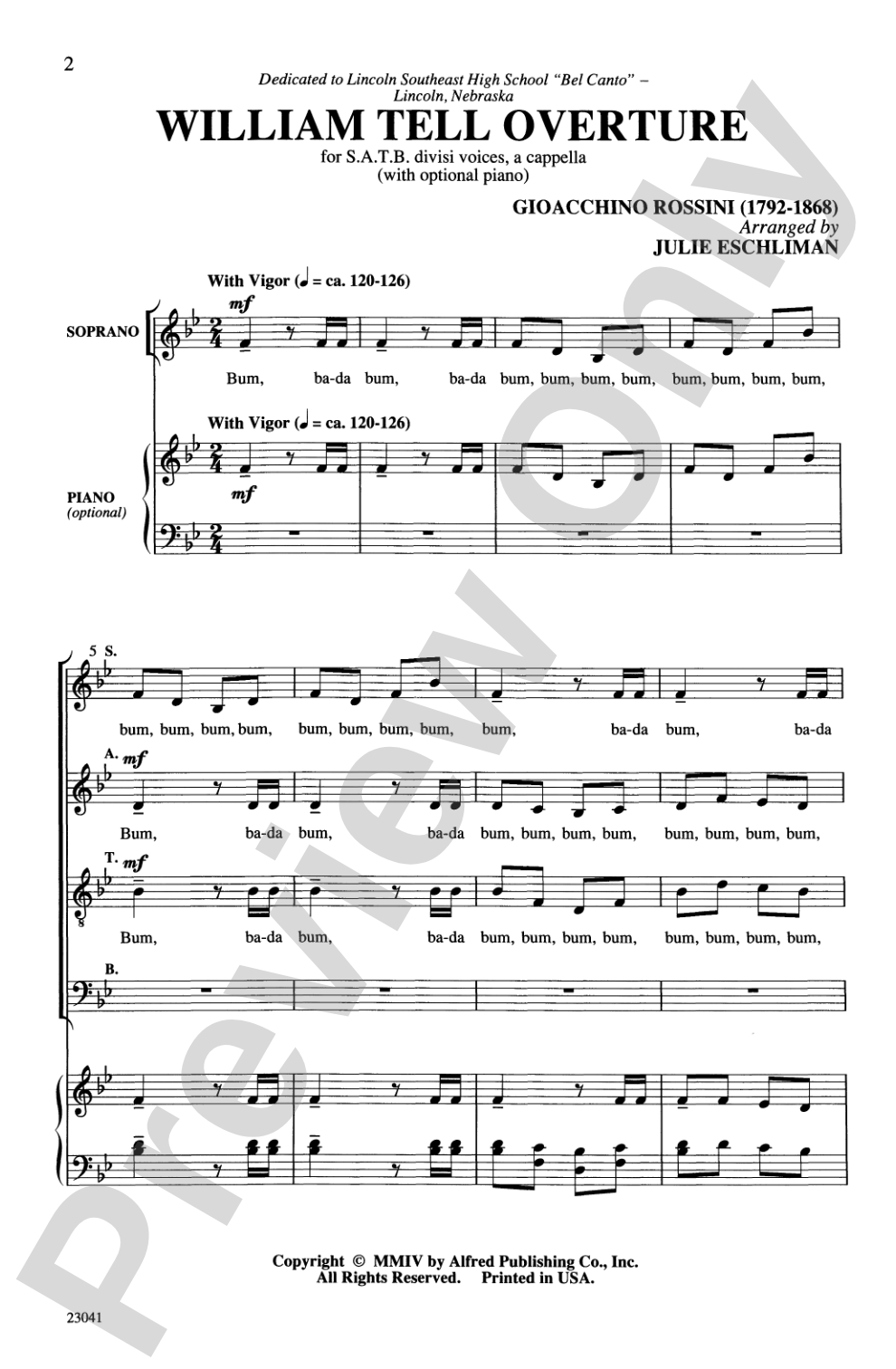
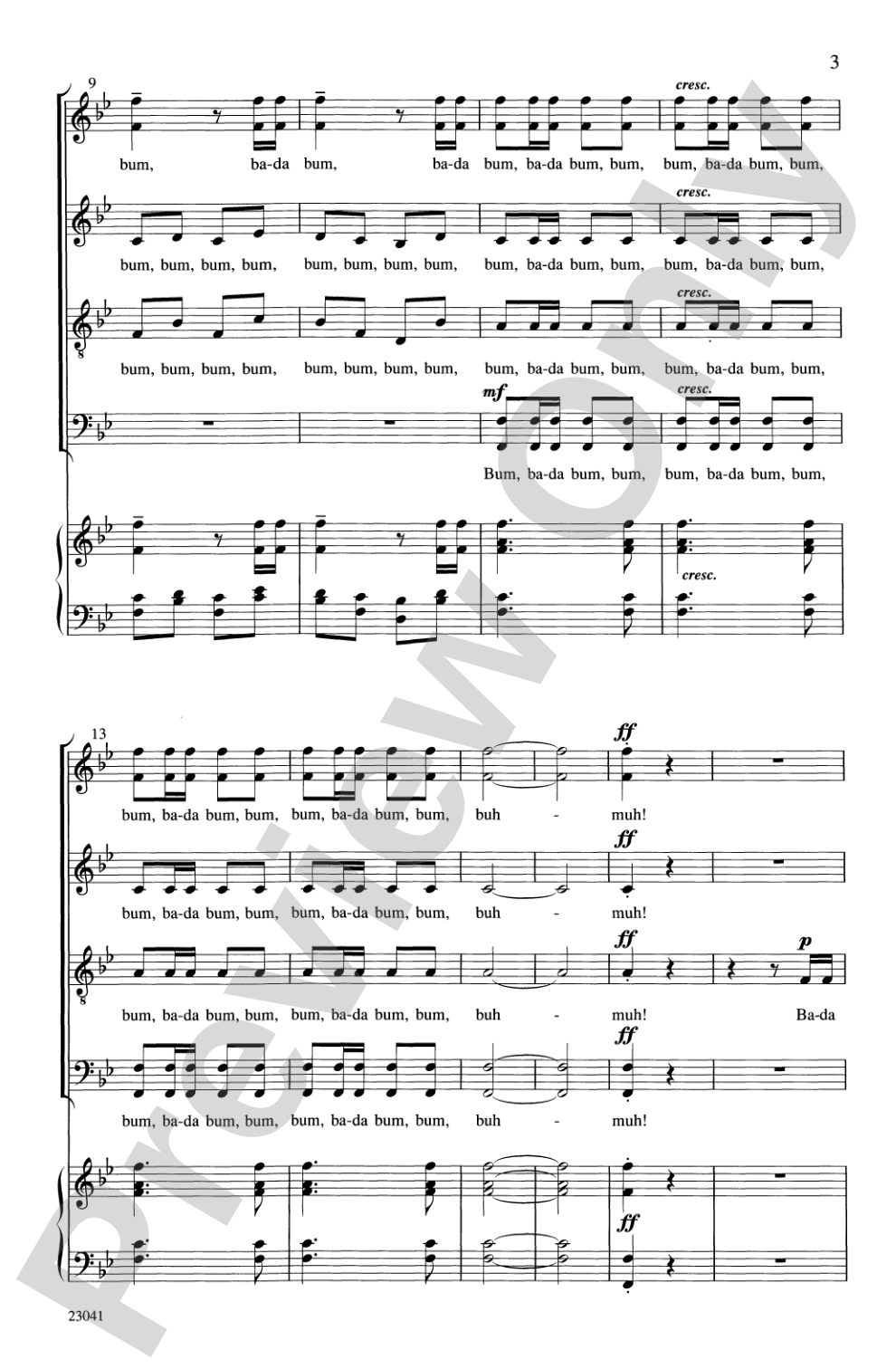
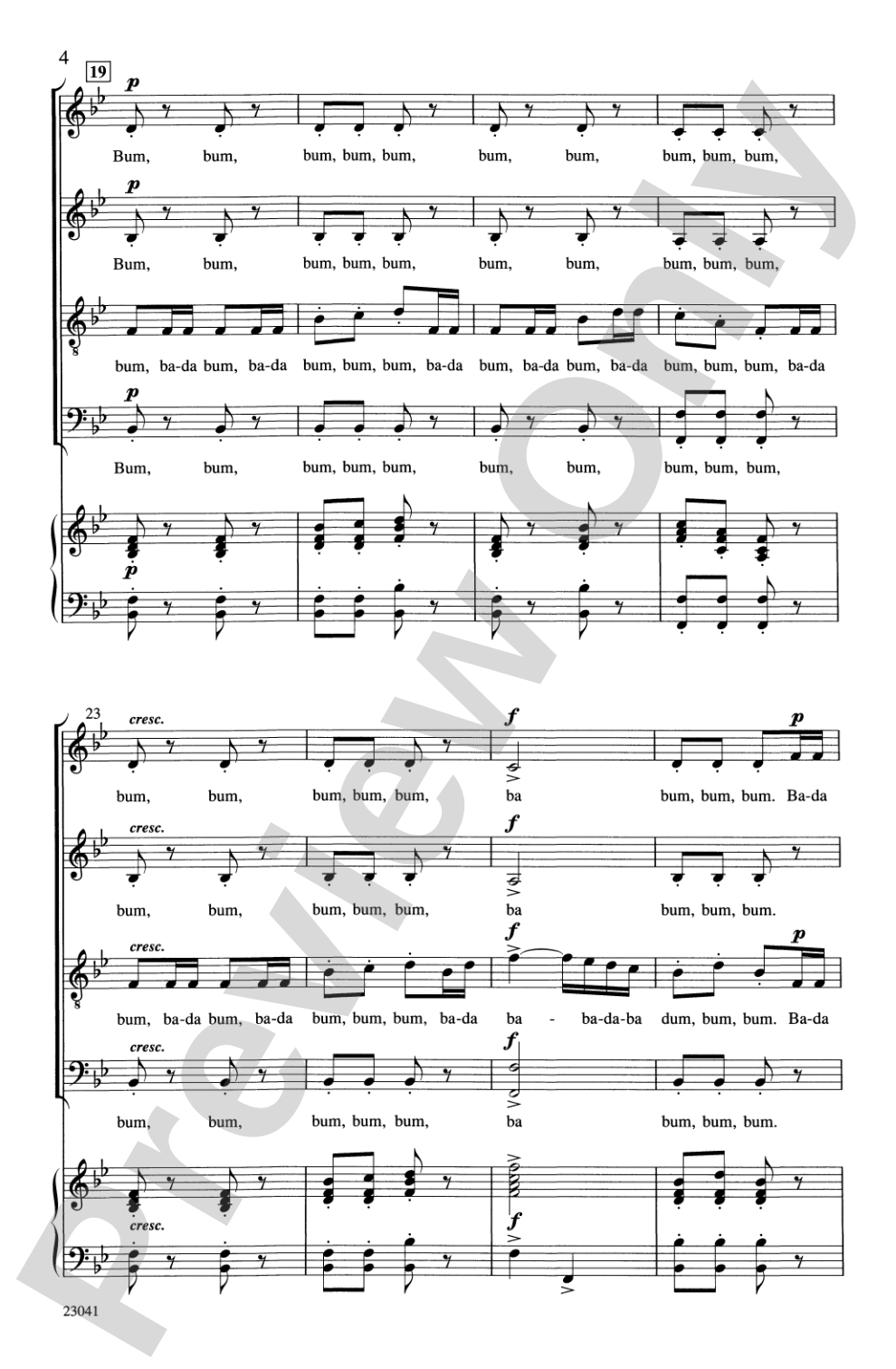
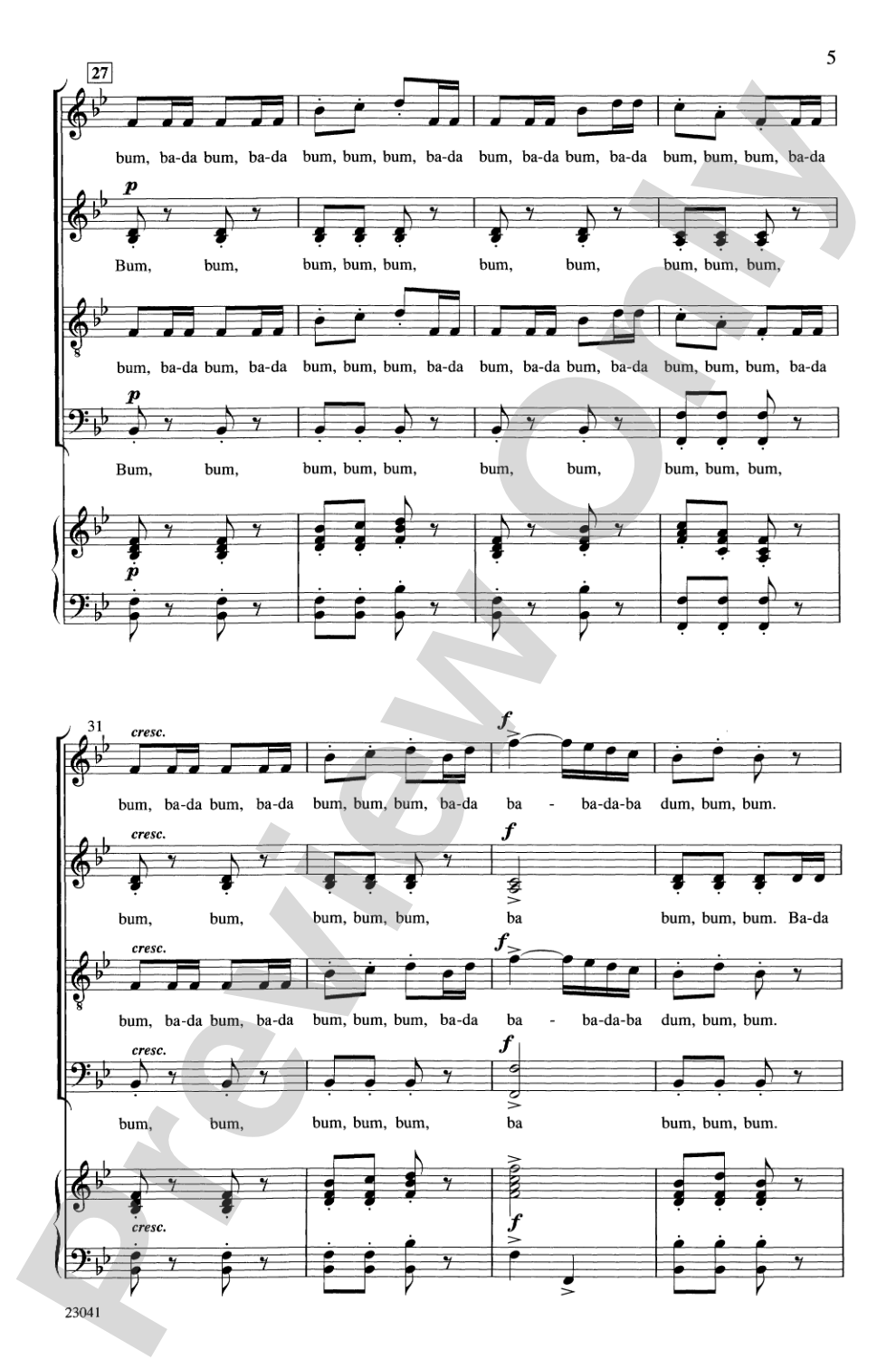
It's hard to keep a straight face while singing this hilarious novelty arrangement for "serious" choirs. Sung entirely on syllables that imitate the sounds of Rossini's original orchestral percussion, brasses, and woodwinds, this one will be best when performed tongue-in-cheek. And from the initial fanfare to the final cadence, seasoned choirs will sound great on the full chords and percussive "Lone Ranger" themes. Awesome when performed a cappella, but equally impressive with the optional supportive piano accompaniment. This title is available in Music Prodigy.


Don't just read it, hear it, play along with it, and watch your students grow with it. In MakeMusic Cloud, William Tell Overture: SATB divisi, a cappella Choral Octavo comes alive with professional accompaniment, adjustable tempo, and built-in practice tools that turn solo practice into real progress.
Open in the Player
Jump straight in and assign it today.
Start Your Free Trial
Open this title and explore the full library in minutes.
Sample Audio
1
Audio File
--:--
0:00
0:00
Sample Video
Additional Details
Series:
Alfred Choral Designs
Publisher:
Alfred Music
Page Count:
20
SKU:
00-PO-0003158
Instrumentation:
Opt. Piano
More about this title
Why we love this
Eschliman's arrangement transforms a symphonic warhorse into pure vocal comedy without sacrificing musicianship. The divisi writing gives advanced choirs genuine harmonic substance to sink their teeth into, while the onomatopoetic syllables and "Lone Ranger" themes keep the energy infectious and the humor front-and-center. It's the rare novelty piece that works equally well as a showstopper or a serious musical statement, depending on how you shape the interpretation.
What to expect
Exuberant and playful, yet undeniably sophisticated. The piece bounces between pure vocal percussion sounds (pops, clicks, and pseudo-brass articulations) and fully voiced harmonic sections, creating a thrilling sense of controlled chaos that audiences find both hilarious and musically satisfying. From the ceremonial opening fanfare through the galloping final themes, you're riding an energy wave that's impossible to resist.
Who it's for
Advanced choirs with solid rhythm skills, vocal maturity, and the confidence to perform something unconventional without losing its artistic integrity. This works for choirs that have earned their audience's trust and want to showcase both technical ability and personality in a single concert moment.
How to get the most out of it
- Commit fully to the percussive syllables from the first fanfare. Articulation clarity will make or break the comedy; think of each section as an instrument section and match attacks and releases with precision.
- Shape the familiar "Lone Ranger" themes with confidence and full voice. These moments are your chance to show that beneath the humor sits real choral sound and musicianship.
- If performing a cappella, lock in your internal pulse early in rehearsal. The rhythmic momentum and interlocking rhythmic figures demand tight ensemble work without instrumental support.
- Explore the optional piano accompaniment as an interpretive choice. It can either heighten the novelty effect or ground the piece in orchestral texture, depending on your concert context and desired tone.
How to use it
Position this late in a concert to capitalize on audience goodwill and your choir's technical command. It's an ideal palate cleanser between serious works, a powerful closer for a lighter concert half, or the perfect encore piece that leaves the house energized and talking. The novelty appeal gives it real programming flexibility without ever feeling gimmicky.
Skills your students will build
- Rhythmic precision and stylistic control across extreme dynamic and articulation contrasts
- Divisi voicing and part independence with complex harmonic textures
- Vocal percussion technique and extended articulation (plosives, fricatives, resonant syllables)
- A cappella intonation and blend in ensemble passages without instrumental support
- Performance confidence and theatrical commitment within a serious musical framework