Wildwind Overture: Oboe Sheet Music Preview

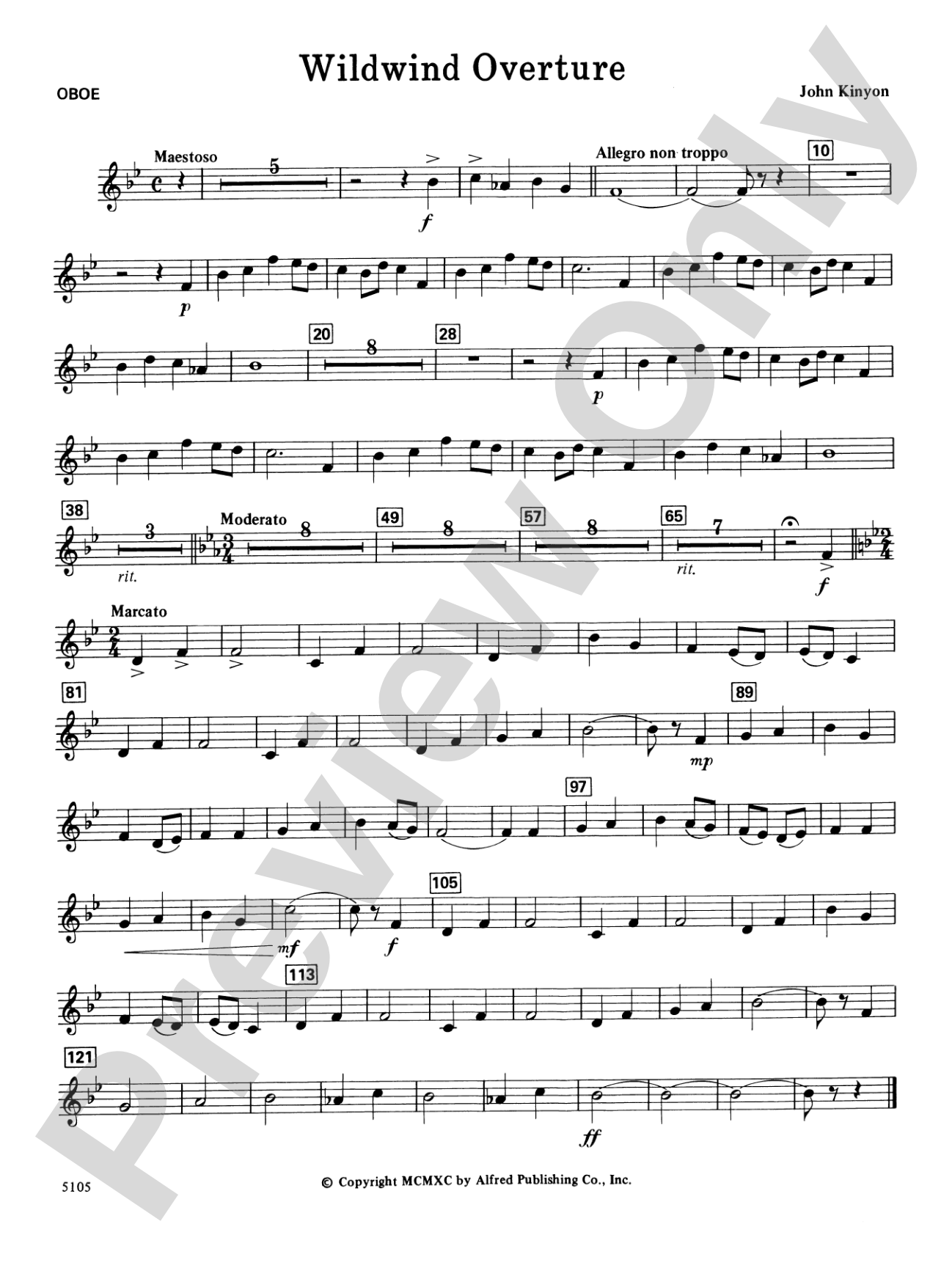
Wildwind Overture: Oboe

By John Kinyon

Grade: 1 (Very Easy)

Item: 00-PC-0016042_O1

Digital Download
$3.00
Description
This sensitive work introduces the young concert band to the classic overture form. A Maestoso introduction sets the mood for a soft and simple flute and clarinet melody. It then segues to a smooth Moderato 3/4 section accented with bells and a cornet counterline. (Grade 1) This title is available in MakeMusic Cloud.

Don't just read it, hear it, play along with it, and watch your students grow with it. In MakeMusic Cloud, Wildwind Overture: Oboe comes alive with professional accompaniment, adjustable tempo, and built-in practice tools that turn solo practice into real progress.

Sample Audio
0:00
0:00
Sample Video
Additional Details
Series: Mini Score Series
Publisher: Alfred Music
Page Count: 110
SKU: 00-PC-0016042_O1

More about this title

About the Composer: John Kinyon

John Kinyon

John Kinyon earned degrees from Ithaca College and the Eastman School of Music, institutions known for rigorous music training and composition study. He completed his formal education with an honorary doctorate from Limestone College in Gaffney, South Carolina, recognizing his contributions to music education.

Kinyon's career spanned school music direction, department leadership, and roles in both educational publishing and university instruction. He served as educational director for Warner Brothers Music in New York and later as a professor of music education at the University of Miami, Florida. Since 1982, he has maintained a semi-retired presence in Tuckasegee while continuing to compose. Over his prolific career, Kinyon has written more than 250 original works for Alfred, including marches, ballads, and overtures that range from Grade 1 to Grade 3 in difficulty.

Why we love this

Kinyon writes overture forms that actually teach the architecture of the genre without overwhelming young musicians. The structured journey from Maestoso introduction through contrasting sections gives students genuine exposure to classic form while the transparent orchestration ensures every section can hear themselves and their colleagues. This is exactly the kind of purposeful writing that makes Grade 1 repertoire feel substantial rather than simple.

What to expect

The opening carries quiet dignity, inviting attention without demanding it. As the flute and clarinet enter, the music takes on lyrical warmth before shifting into the gentle, lilting motion of the 3/4 section, where bell color adds shine and the cornet weaves a conversational line overhead.

Who it's for

This work serves Grade 1 concert bands building fundamentals of form and ensemble balance. Directors introducing overture structure benefit from Kinyon's transparent writing, which makes formal sections audible even in young ensembles with developing blend and intonation.

How to get the most out of it

  • Shape the Maestoso introduction with a sense of arriving, not rushing. Young bands often push the tempo here; a patient entrance sets up the contrast when the melody enters.
  • Balance the flute and clarinet melody so it sings over the harmonic foundation. This is where students learn that melody leadership requires presence, not loudness.
  • Let the 3/4 Moderato section breathe. The bell and cornet counterline creates natural phrasing points; encourage students to listen across sections rather than counting rigidly.
  • Use the style shift from introduction to moderato as a rehearsal teaching moment about articulation and character change. The same players become different colors in different sections.

How to use it

Program this early in a concert to establish a reflective mood and showcase your band's ability to shape dynamics and character. It pairs well alongside other Grade 1-2 concert works and works particularly effectively as an opening number when you want to settle the audience into attentive listening.

Skills your students will build

  • Understanding overture form and sectional contrast
  • Balancing melody and accompaniment in transparent textures
  • Playing with controlled dynamics in soft passages
  • Transitioning between distinct tempos and articulation styles
  • Listening across ensemble sections to maintain ensemble cohesion

You May Also Like