
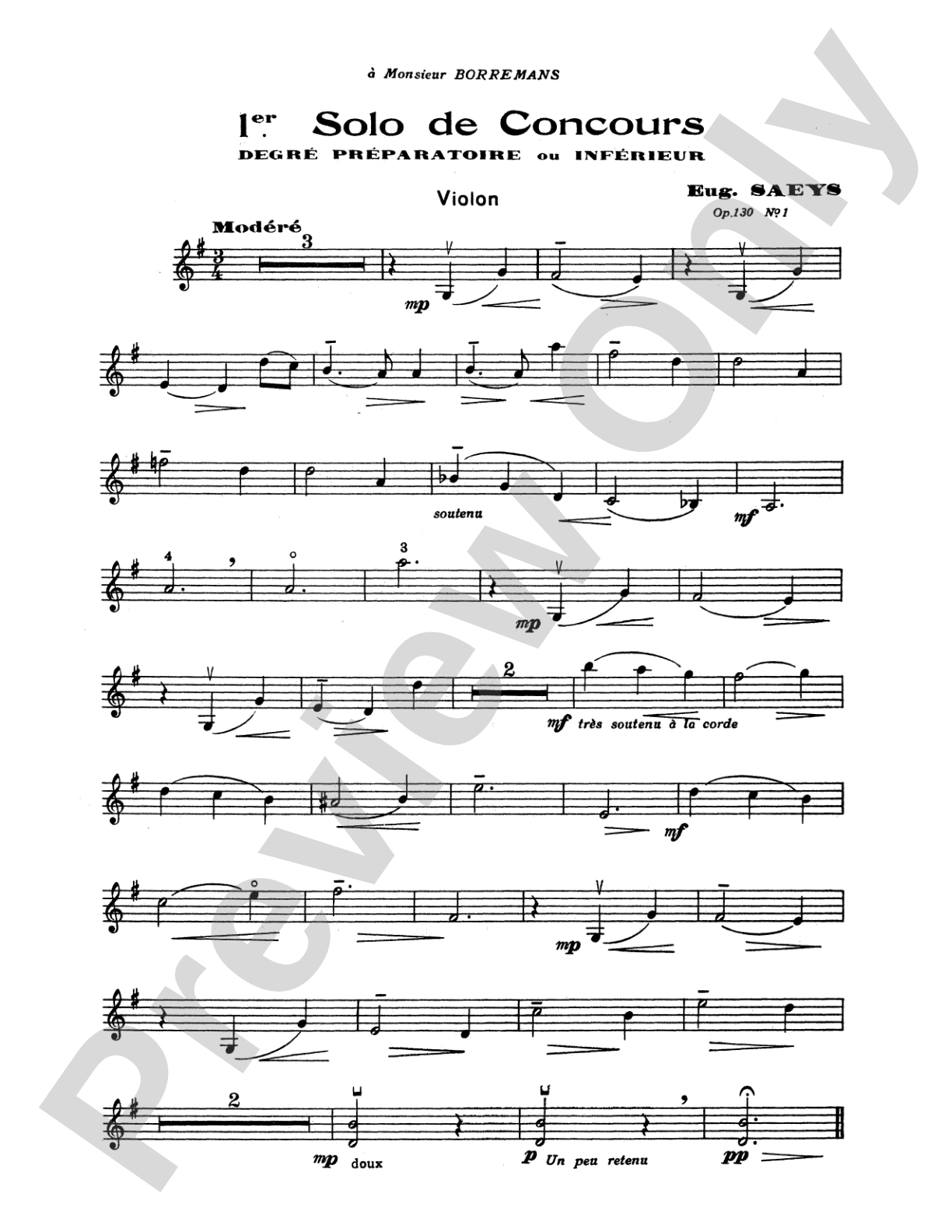

Wieniawski: Deux Solos de Concours, Op. 130 (Urtext): Violin Book
By Eugène Ysaÿe
Item: 00-PK-0003479

$7.99
Pickup currently not available
Buy Extra Parts (Digital PDF Download)
Parts Added to Cart!
Related Items
Deux Solos de Concours, Opus 130 (Urtext Edition): Violin Book |
$7.99
|
View |
Description
A Violin solo with Piano Accompaniment composed by Eugene Ysaye.


Don't just read it, hear it, play along with it, and watch your students grow with it. In MakeMusic Cloud, Wieniawski: Deux Solos de Concours, Op. 130 (Urtext): Violin Book comes alive with professional accompaniment, adjustable tempo, and built-in practice tools that turn solo practice into real progress.
Open in the Player
Jump straight in and assign it today.
Start Your Free Trial
Open this title and explore the full library in minutes.
Sample Audio
No sample audio found.
Sample Video
No sample videos found.
Additional Details
Series:
Kalmus Edition
Publisher:
Alfred Music
Page Count:
12
SKU:
00-PK-0003479
More about this title
About the Composer: Henri Wieniawski
Henri Wieniawski (1835-1880) was a Polish violinist and composer who dominated the virtuoso violin repertoire of the Romantic era. His technical innovations and idiomatic writing for the instrument established him as one of the most important voices in 19th-century string music, influencing generations of concert soloists and pedagogues.
Wieniawski's compositional legacy rests on works that showcase both technical brilliance and genuine musical substance. His concertos, polonaises, and character pieces remain central to the advanced violin repertoire because they demand and develop complete command of the instrument while rewarding musicians with substantial artistic material.
Why we love this
These two substantial solos strike a rare balance between concert-hall sophistication and genuine musical substance. They deserve far more programming attention than they receive, offering advanced violinists the chance to explore Romantic virtuosity that feels less frequently performed than the standard concerto fare.
What to expect
These solos embody the grand gesture of 19th-century Romanticism: expansive, technically uncompromising, and genuinely virtuosic. The writing sits comfortably on the violin while maintaining the expressive depth and harmonic sophistication that defines Wieniawski's best work.
Who it's for
Advanced violinists preparing for competition, recital, or audition repertoire will find these pieces essential. They suit musicians comfortable with substantial technical demands who seek something beyond the standard concerto cycle.
How to get the most out of it
- Shape the dialogue with the piano as a conversation, not a backdrop. These accompaniments carry thematic material that should inform your phrasing and timing.
- Approach double-stops and chord figures with clarity of voice separation rather than trying to blend everything into a thick wash. Wieniawski's writing rewards precision.
- Let the Romantic harmonic language breathe. Tempo rubato and subtle dynamic shaping are essential to avoiding a metronomic reading of the faster passages.
How to use it
Feature these works on recitals that explore the Romantic virtuoso tradition. They pair naturally with other 19th-century solo repertoire and provide the kind of substantial, recognizable concert music that audiences engage with immediately.
Skills your students will build
- Advanced vibrato control across extended passages
- Chord and double-stop facility with tonal clarity
- Tempo flexibility and musical timing in Romantic styles
- Partnership and ensemble balance with piano accompaniment
- Sustained technical facility over longer concert pieces