Widor: Symphony No. 4 in F Minor, Op. 13 Sheet Music Preview

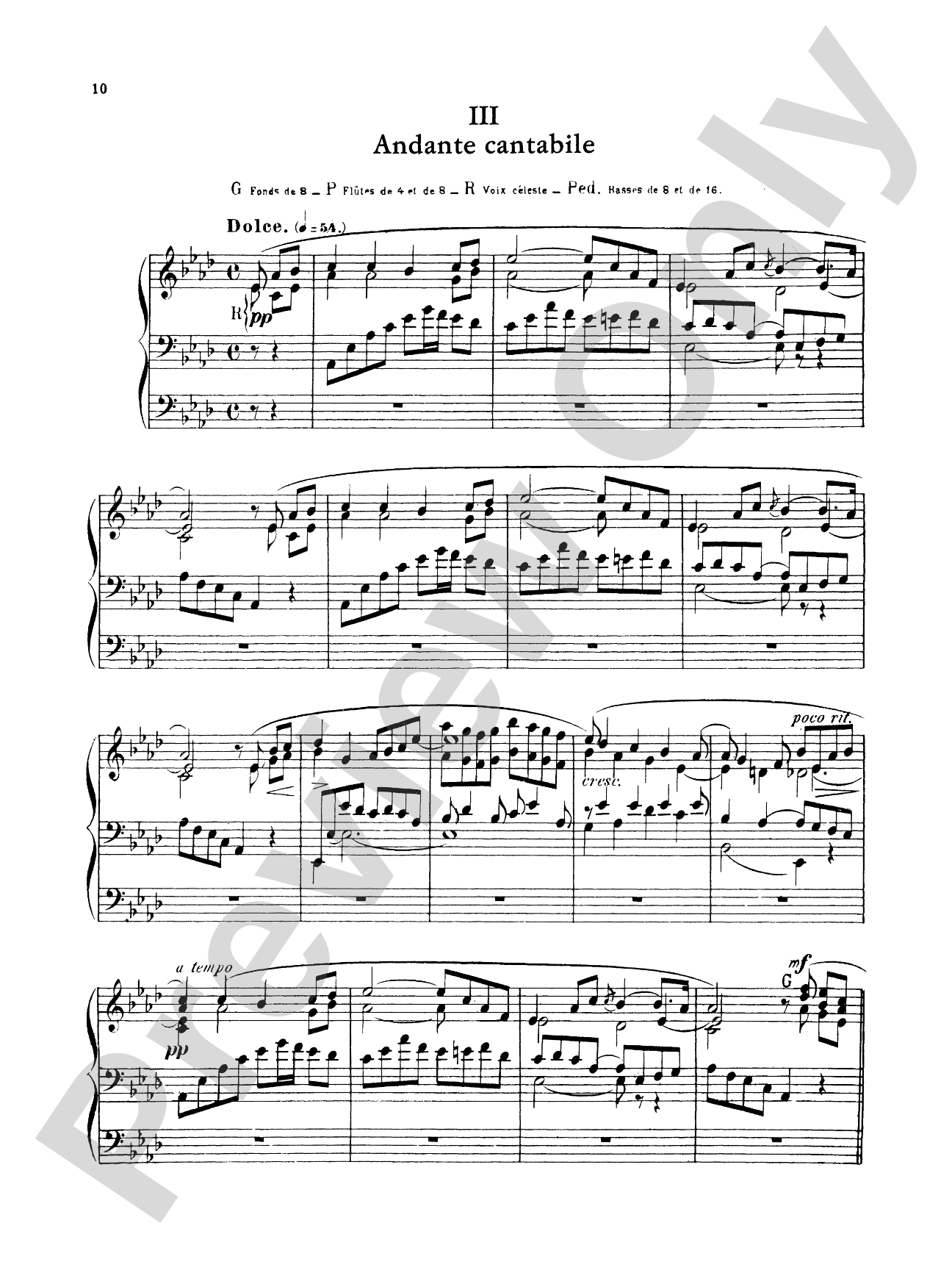
Widor: Symphony No. 4 in F Minor, Op. 13

By Charles-Marie Widor

Item: 00-PC-0009605

Digital Download
$0.99
Description
An Organ solo composed by Charles-Marie Widor.

Don't just read it, hear it, play along with it, and watch your students grow with it. In MakeMusic Cloud, Widor: Symphony No. 4 in F Minor, Op. 13 comes alive with professional accompaniment, adjustable tempo, and built-in practice tools that turn solo practice into real progress.

Sample Audio
No sample audio found.
Sample Video
Additional Details
Series: Kalmus Edition
Publisher: Alfred Music
Page Count: 36
SKU: 00-PC-0009605

More about this title

About the Composer: Charles-Marie Widor

Charles-Marie Widor (1844-1937) was a French organist and composer who shaped the Romantic organ repertoire through his ten symphonies for the instrument. His command of orchestral color at the keyboard established the organ as a concert instrument capable of architectural grandeur and lyrical depth, influencing generations of composers who followed.

Widor served as organist at Saint-Sulpice in Paris for over sixty years, a position that allowed him to compose ambitious works for the church while also advancing organ design and performance practice across Europe. His symphonies remain central to the professional organ repertoire and continue to define what the instrument can express.

Why we love this

This symphony demands serious technical control and musical maturity from the performer, rewarding both with dramatic architectural sweep and moments of genuine vulnerability. The writing showcases Widor's gift for orchestral thinking at the keyboard, where multiple manual and pedal lines create textures that feel symphonic without sounding awkward on the organ.

What to expect

The F minor key grounds the work in darkness and introspection, yet Widor refuses to stay there. The symphony moves through contrasting emotional territories, from turbulent passagework to serene chorale-like textures, building toward moments of genuine transcendence. Playing it feels like conducting an orchestra from the bench.

Who it's for

Advanced organists preparing for recital programming, competition, or church service playing at an ambitious level. This work suits performers with secure pedal technique, familiarity with multi-manual registration, and the interpretive maturity to shape a large-scale Romantic structure.

How to get the most out of it

  • Navigate the key signature and tonal movement with structural clarity; treat the work as a four-movement exploration rather than a collection of episodes.
  • Balance the demands of manual independence and pedal technique by mapping out manual couplings and registration shifts well in advance.
  • Approach the lyrical passages with the same care you would give to a vocal line; Romantic phrasing applies to keyboard music too.

How to use it

Open a recital of Romantic organ music or program it as the centerpiece of a concert exploring nineteenth-century keyboard composition. It pairs naturally with other French organ works of the era or can stand alone as a substantial single offering that showcases the full range of the instrument.

Skills your students will build

  • Independent manual control and complex registration changes
  • Pedal technique in demanding contrapuntal and scalar passages
  • Large-scale structural architecture in multi-movement works
  • Romantic era phrasing and rubato at the keyboard
  • Orchestral transcription reading and orchestration awareness

You May Also Like