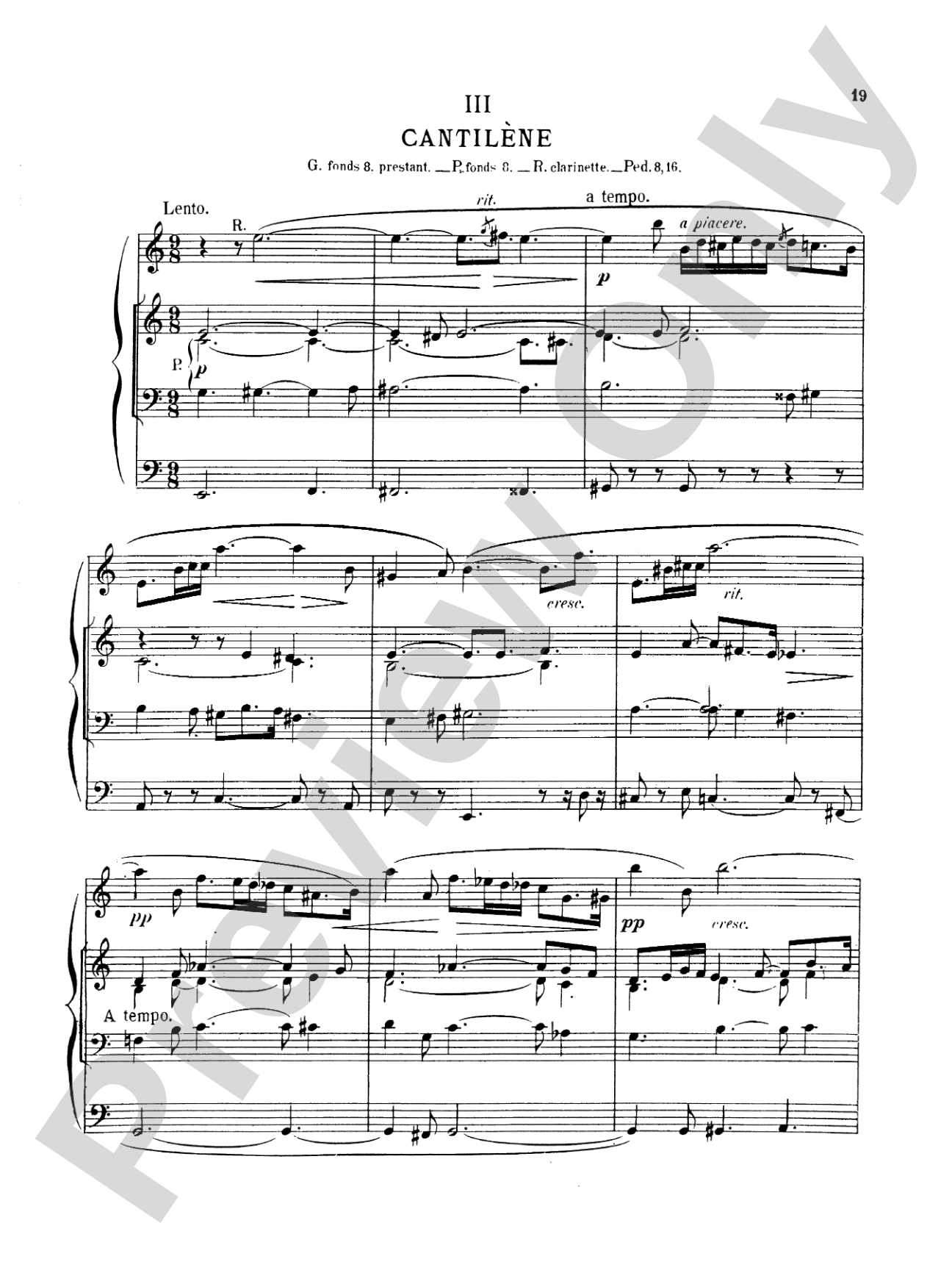
Widor: Symphonie Romaine, Op. 73 Sheet Music Preview

Widor: Symphonie Romaine, Op. 73

By Charles-Marie Widor

Item: 00-PC-0009635

Digital Download
$1.99
Description
A solo, for Organ, composed by Charles-Marie Widor.

Don't just read it, hear it, play along with it, and watch your students grow with it. In MakeMusic Cloud, Widor: Symphonie Romaine, Op. 73 comes alive with professional accompaniment, adjustable tempo, and built-in practice tools that turn solo practice into real progress.

Sample Audio
No sample audio found.
Sample Video
Additional Details
Series: Kalmus Edition
Publisher: Alfred Music
Page Count: 40
SKU: 00-PC-0009635

More about this title

About the Composer: Charles-Marie Widor

Charles-Marie Widor (1844–1925) was a dominant figure in French organ music during the late Romantic era. His ten symphonies for organ rank among the most important works in the instrument's repertoire, written while he served as organist at Saint-Sulpice in Paris for over sixty years.

Widor's compositional approach synthesized the symphonic structures of the Classical tradition with the full resources of the modern organ, expanding what the instrument could express beyond religious service music. His Symphonies remain central to professional organ recital programming and remain essential study for advanced organists seeking to command the full scope of orchestral color at the keyboard.

Why we love this

The Symphonie Romaine stands as one of Widor's most rewarding works for advanced players seeking repertoire with genuine architectural substance and emotional breadth. The piece demands serious engagement with registration, pedal technique, and phrasing across forty pages of genuinely orchestral thinking, making it an ideal vehicle for demonstrating mastery rather than mere technical facility.

What to expect

The work unfolds with the breadth and grandeur of a full orchestral symphony, translating Romantic ideals into organ idiom through sweeping melodic lines, rich harmonic language, and textures that move seamlessly from intimate dialogue to overwhelming climactic power. Widor's Roman title suggests classical monumentality paired with Romantic passion, resulting in music that is both intellectually structured and deeply expressive.

Who it's for

Advanced organists preparing repertoire for recital or church concert settings will find the Symphonie Romaine a substantial and musically rewarding choice. This work belongs in the hands of players with secure command of the full organ specification, comfortable reading in multiple keys, and the interpretive maturity to sustain large architectural ideas across extended forms.

How to get the most out of it

  • Invest time mapping registration across the entire work; Widor's textures shift dramatically between movements, and thoughtful preparation of stops and couplers transforms the musical experience.
  • Balance the pedal line as a genuinely independent voice, particularly in passages where it carries harmonic content or thematic material alongside the manuals.
  • Shape longer phrases by considering the architectural weight of each section; treat the Symphonie as a complete journey with distinct emotional zones rather than a sequence of moments.
  • Experiment with tempo relationships between movements to establish strong connections; Widor's symphonic thinking values coherence across structural divisions.

How to use it

Program this as a centerpiece of a recital devoted to French organ masterworks or pair it with other Widor symphonies to showcase the breadth of his contributions to the form. The work also serves as an excellent culminating study for advanced students in organ repertoire courses exploring Romantic instrumental literature.

Skills your students will build

  • Advanced registration planning and tonal color selection across multiple movements
  • Independent pedal voice management in symphonic contexts
  • Reading and interpreting complex harmonic language in extended Romantic forms
  • Sustaining large-scale structural coherence across substantial works
  • Phrasing and shaping in texturally rich music with multiple simultaneous lines

You May Also Like