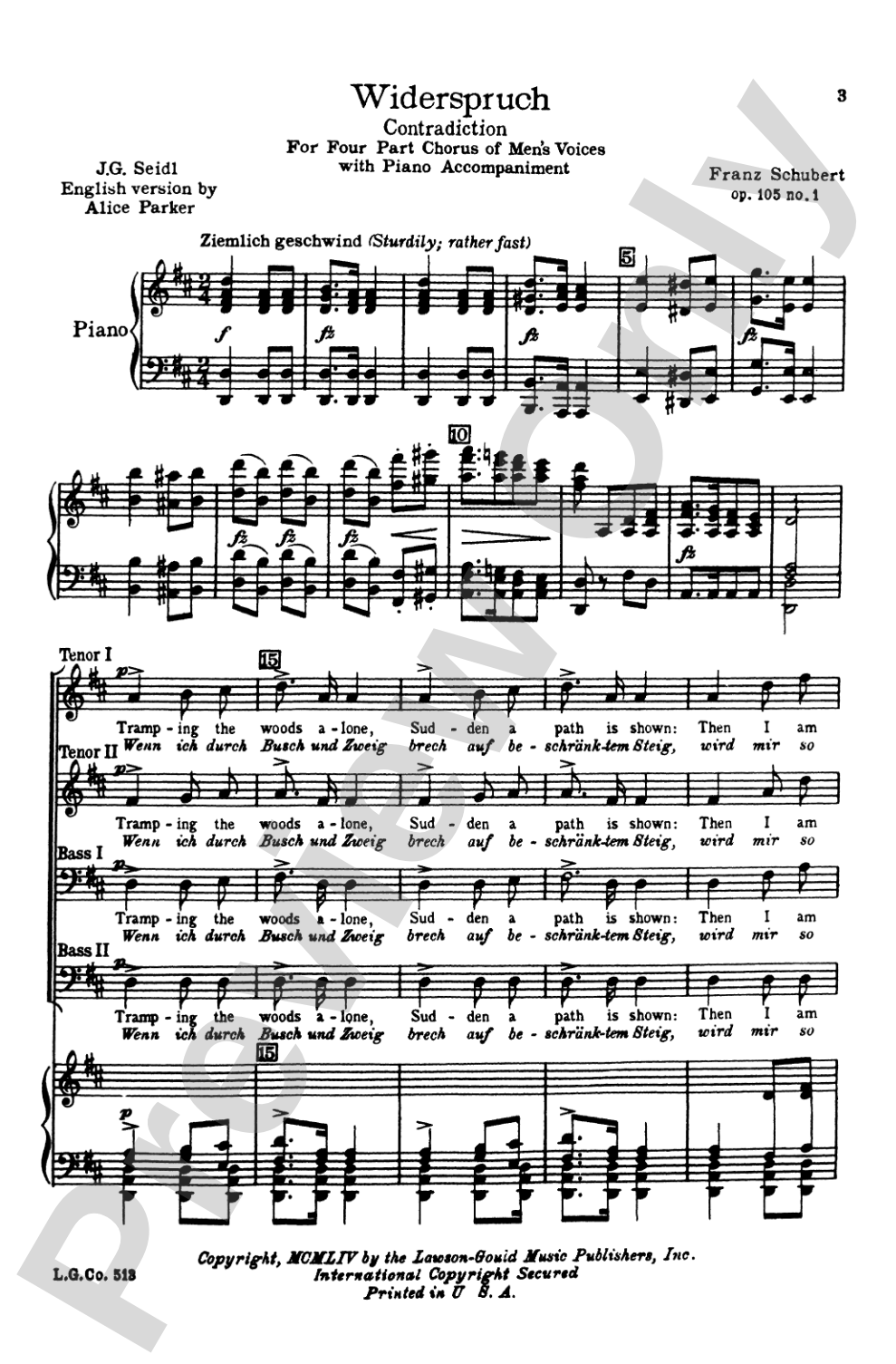
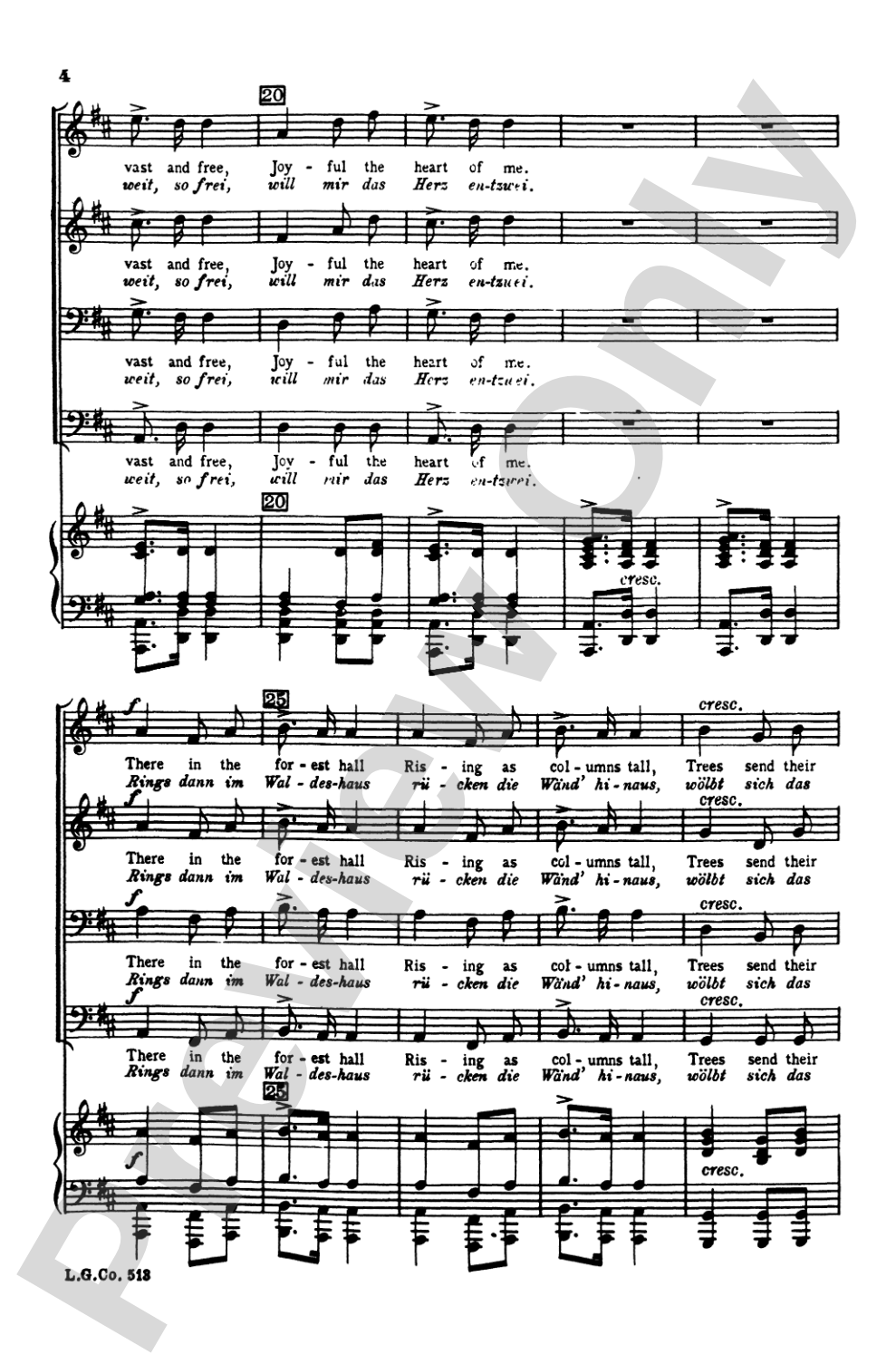
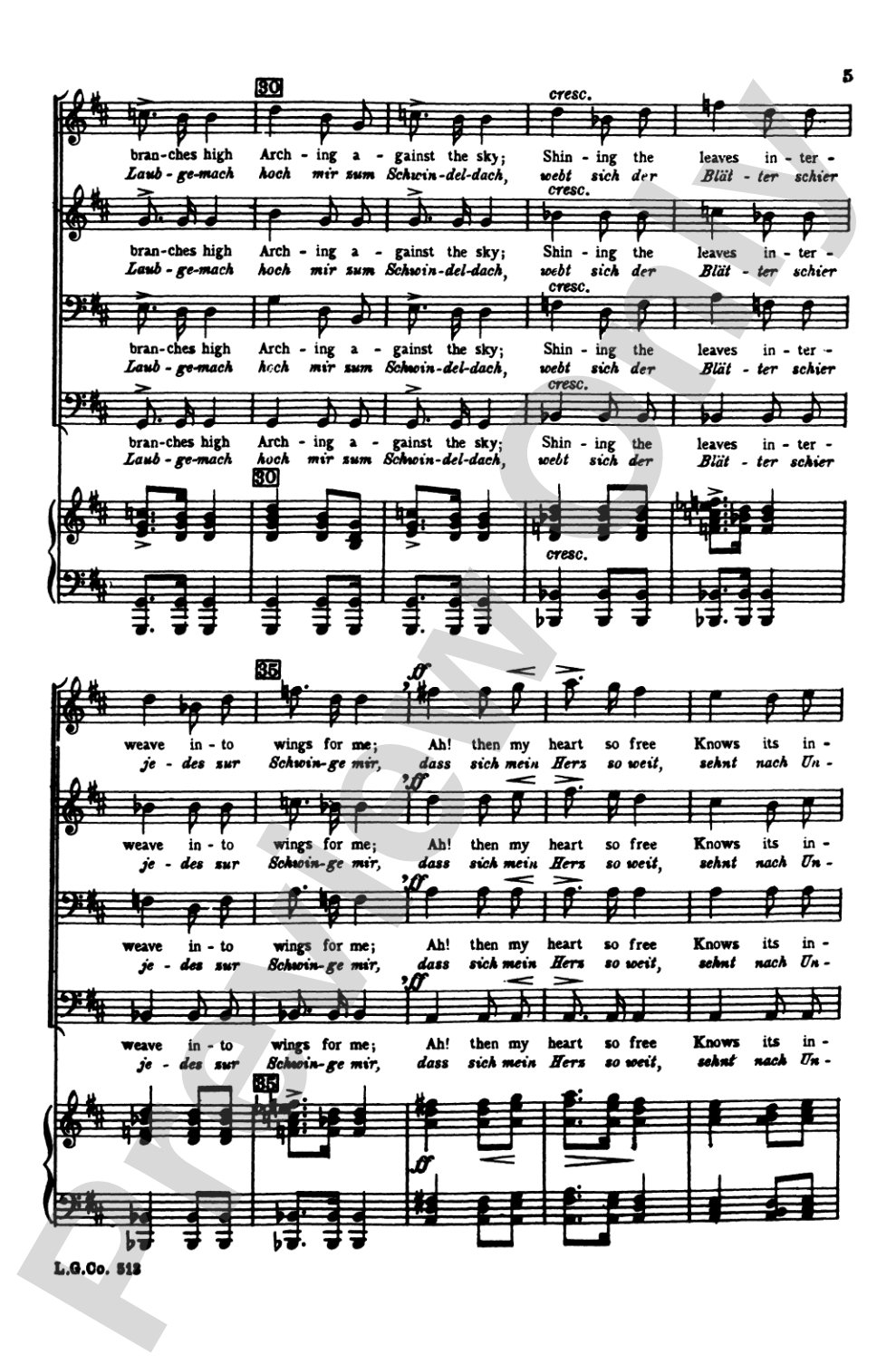
Widerspruch (Contradiction) Sheet Music Preview

Widerspruch (Contradiction): TTBB Choral Octavo

(Contradiction)

By Franz Schubert / ed. Robert Shaw and Alice Parker

Item: 00-PO-0002996

Digital Download
$2.95

Minimum order quantity: 20 copies

Description

Widerspruch (Contradiction): TTBB Choral Octavo isn't in MakeMusic Cloud just yet...but it could be. Let us know you'd like to see it, and you'll help shape what comes next. In the meantime, start a free trial and dive into thousands of interactive titles your students can play along with today.

Sample Audio
No sample audio found.
Sample Video
Additional Details
Series: Alfred Archive Edition: Lawson-Gould Music Publishers
Publisher: Alfred Music
Page Count: 16
SKU: 00-PO-0002996

More about this title

About the Composer: Franz Schubert

Franz Schubert (1797–1828) composed over 600 works across every major genre despite his short life, yet his output of choral music remains underperformed relative to its artistic value. His secular part songs for male voices rank among the most sophisticated vocal writing in the Romantic repertoire, blending the clarity of Classical form with harmonic and textural innovations that point toward later 19th-century developments.

Schubert's choral works reveal a composer deeply invested in text expression and ensemble sonority. He understood the unique timbre of male voice combinations and wrote with both dramatic ambition and intimate lyricism, qualities that make his octet and part song repertoire essential for serious choral programs.

Why we love this

Schubert's command of harmonic color and dramatic pacing makes this work feel both intimate and structurally compelling; the text setting refuses sentimentality while maintaining vocal elegance. Programming this piece signals to singers and audiences alike that your ensemble engages with genuine masterworks, not just familiar standards. The piece demands interpretive maturity from singers, rewarding careful preparation with musical depth that extends far beyond surface charm.

What to expect

The piece unfolds with a blend of introspection and harmonic sophistication; Schubert moves through moments of lyrical warmth and passages colored by gentle chromaticism and unexpected tonal shifts. The overall character is contemplative rather than bombastic, inviting listeners into a private conversation rather than declaring a public statement.

Who it's for

Directors of upper-level men's choirs seeking repertoire with both artistic substance and technical challenge. This work suits groups with secure pitch control and comfort with Classical and early Romantic idioms, whether in an academic setting, a preprofessional ensemble, or an amateur chorus with strong singers.

How to get the most out of it

  • Balance the inner voices carefully, especially in moments where harmonic tension builds through interior lines rather than the outer voices. Schubert's voicing rewards attention to tutti blends and sectional listening.
  • Shape phrases through vowel color and breath placement rather than aggressive dynamics; the piece communicates most effectively when tonal warmth remains consistent throughout.
  • Attend closely to text inflection and word stress, allowing Schubert's setting to guide phrasing rather than imposing period-style breathing patterns that might interrupt the flow of his harmonic argument.
  • Take time in rehearsal to explore the harmonic progressions, especially passages where chromaticism or unexpected chord movement occurs. Understanding the reasoning behind each progression deepens singers' interpretive choices.

How to use it

Pair this with other Romantic choral repertoire to create a concert exploring harmonic innovation of the era, or program it alongside Schubert's instrumental chamber works to show the breadth of his compositional voice. The piece works particularly well as a concert anchor because its sophistication commands full attention without requiring elaborate staging or thematic programming.

Skills your students will build

  • Reading and responding to Romantic-era harmonic language including chromaticism and unexpected chord progressions
  • Blending and balance within four-part male voice texture
  • Text-based phrasing and interpretive choice within a sophisticated harmonic framework
  • Intonation precision in passages with chromatic voice leading

You May Also Like