
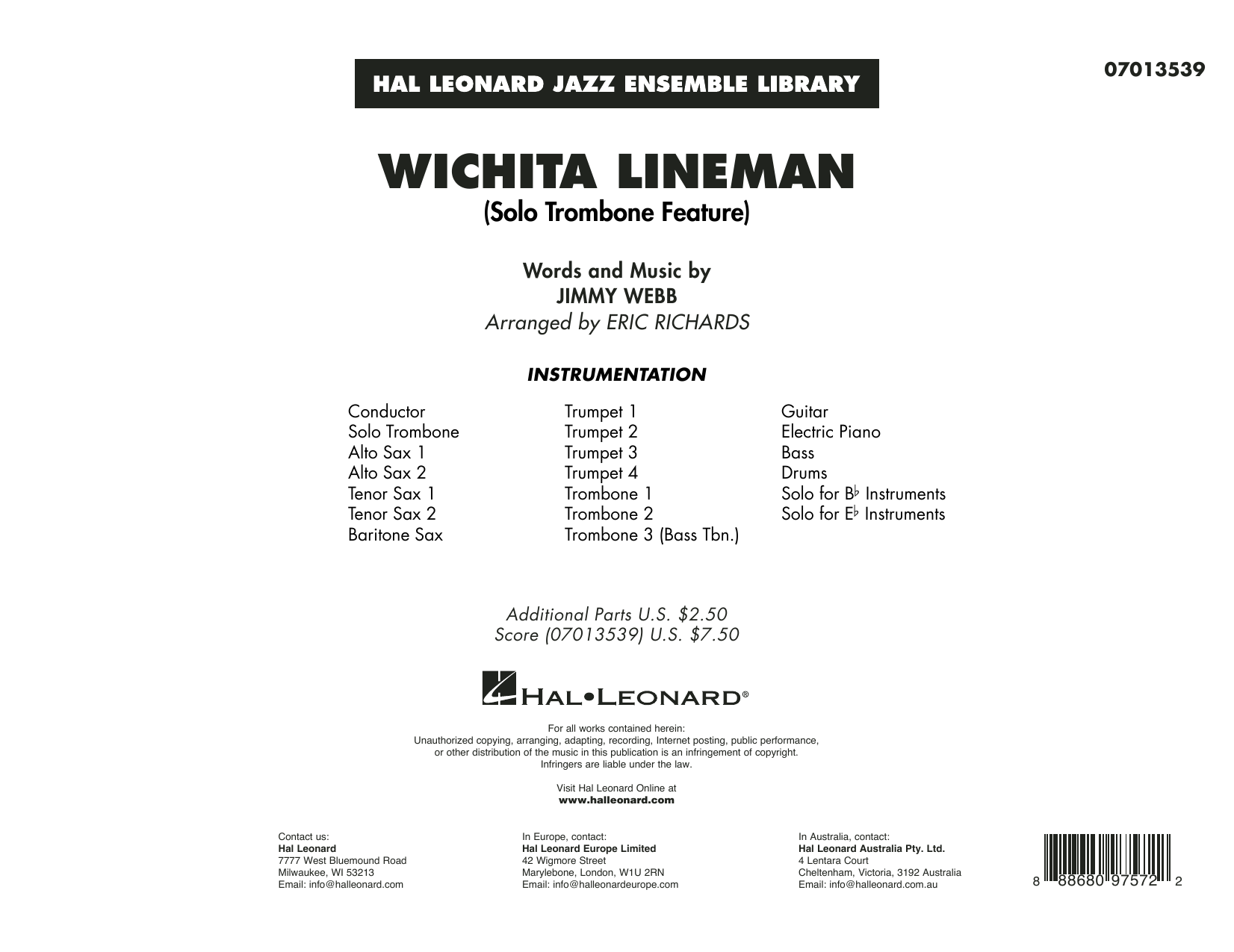

Wichita Lineman (arr. Eric Richards): Jazz Ensemble Conductor Score & Parts
Arranged by Eric Richards
Grade: 4
Item: 35-PK00456865
$55.00
Pickup currently not available
Buy Extra Parts (Digital PDF Download)
Parts Added to Cart!
Description
Although this was a pop hit back in the late '60s this familiar ballad lends itself nicely for jazz ensemble treated here as jazz waltz. Scored to feature a solo trombone, alternate solo parts are provided for Bb and Eb instruments for added flexibility. This terrific setting features a driving style with solid hits for the full ensemble, as well as feature spots for the brass section and also saxes.


Wichita Lineman (arr. Eric Richards): Jazz Ensemble Conductor Score & Parts isn't in MakeMusic Cloud just yet...but it could be. Let us know you'd like to see it, and you'll help shape what comes next. In the meantime, start a free trial and dive into thousands of interactive titles your students can play along with today.
Request This Title
Tell us you want it.
Start Your Free Trial
Explore everything that's ready to play right now.
Sample Audio
No sample audio found.
Sample Video
No sample videos found.
Additional Details
Publisher:
Hal Leonard
SKU:
35-PK00456865
More about this title
About the Arranger: Eric Richards
Eric Richards brings decades of experience across composition, orchestration, and ensemble direction to every project he undertakes. Currently on the composition faculty at the University of Nebraska-Lincoln School of Music, Richards has placed his work in some of the world's most prestigious venues, from Carnegie Hall to the Montreux Jazz Festival, with performances by ensembles ranging from the US Army Field Band to the Boston Pops Orchestra.
Richards spent twenty years (1984-2004) as composer and arranger for the US Army Field Band, a position that shaped his ability to write accessibly for a wide range of skill levels and instrumentation. His work bridges classical rigor with the practical demands of working ensembles, making him a trusted voice for arrangements that sound sophisticated without overreaching the players.
Why we love this
Richards transforms a beloved pop standard into a genuinely swinging vehicle for a Grade 4 ensemble without condescending to the level. The waltz frame gives the arrangement unexpected sophistication, while the alternate solo voicings (Bb and Eb instruments) mean your section will actually want to fight for featured moments rather than watch from the sidelines.
What to expect
Warm and sophisticated, like someone sat down with a classic tune and asked what it could become in a jazz context. The waltz meter gives it a floating quality, while the hits and section features keep it grounded and swinging.
Who it's for
Jazz ensembles at the intermediate level who want something with genuine character beyond a stock big band chart. Directors looking for a standard that audiences recognize but with an arrangement that keeps the band engaged and challenged.
How to get the most out of it
- Establish the rhythm section's swing feel before adding the melody. This waltz sits at a tempo where the pulse can easily feel clumsy if the piano and bass aren't locked in on the half-note triplet subdivision.
- Balance the solo trombone against the ensemble hits so the featured voice cuts through without the full band pulling back. The horn should sing; the ensemble should punctuate.
- Bring out the saxophone section features with the same attention you'd give a string passage. These aren't throwaway moments; they're what makes the arrangement come alive.
- Treat the driving rhythmic figures as a drum conversation, not just background. The engine of this arrangement runs on what the rhythm section commits to.
How to use it
Slot this into a spring or fall concert where you want a moment that bridges the gap between jazz and pop repertoire. It works beautifully as a ballad feature that sits comfortably between up-tempo charts, giving your ensemble a chance to demonstrate musicality alongside groove.
Skills your students will build
- Swing rhythm interpretation in triple meter
- Balancing featured soloists against ensemble texture
- Reading and executing rhythmic figures that sit behind a featured voice
- Understanding how standards can be recontextualized for jazz settings