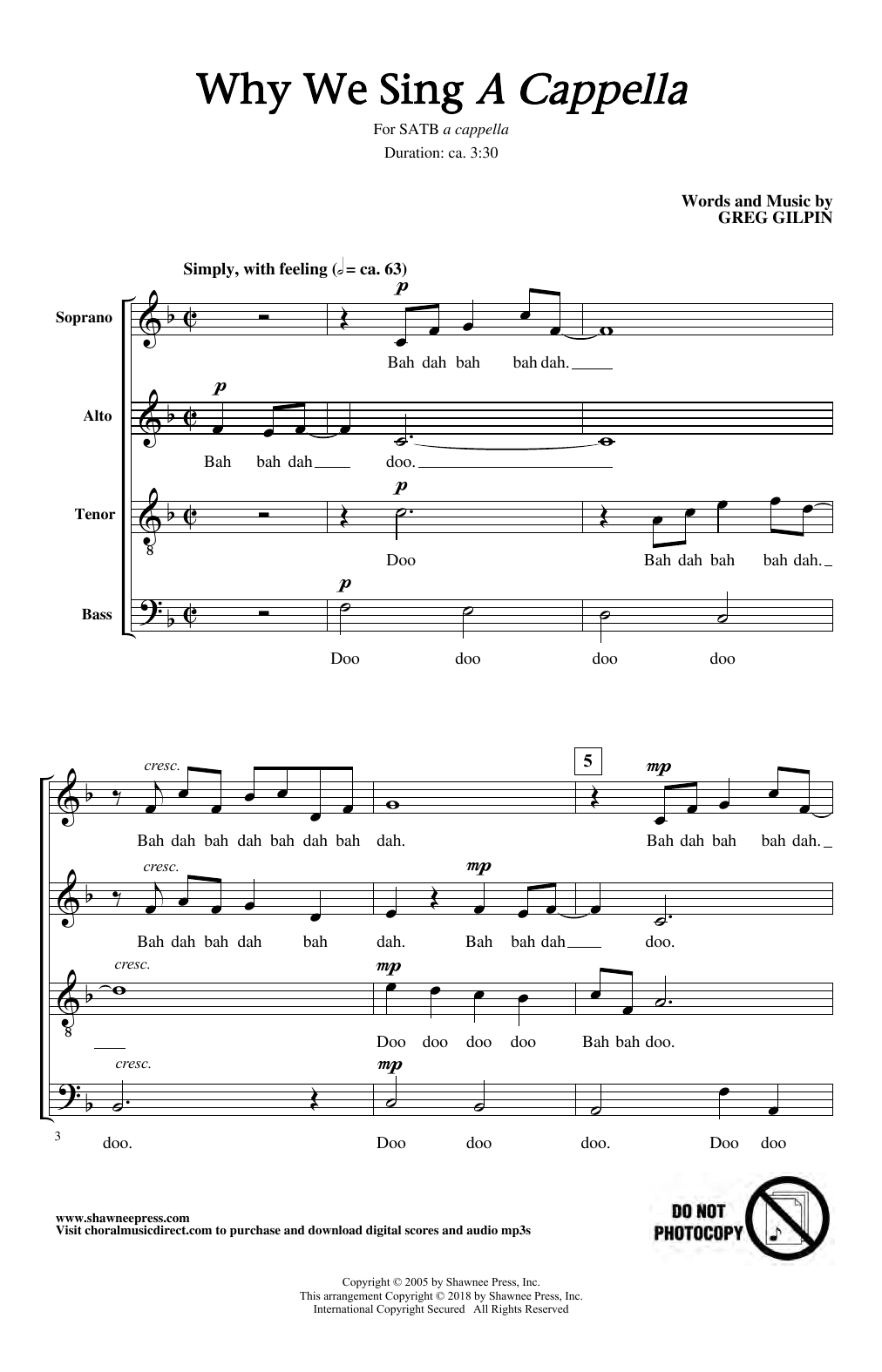
Why We Sing (a capella) Sheet Music Preview

Why We Sing (a capella): SATB Choral Octavo

Item: 35-DS00431164

Digital Download
$2.99
Description

Why We Sing (a capella): SATB Choral Octavo isn't in MakeMusic Cloud just yet...but it could be. Let us know you'd like to see it, and you'll help shape what comes next. In the meantime, start a free trial and dive into thousands of interactive titles your students can play along with today.

Sample Audio
No sample audio found.
Sample Video
Additional Details
Publisher: Hal Leonard
Page Count: 11
SKU: 35-DS00431164

More about this title

Why we love this

An a cappella arrangement that trusts the voices to carry everything means your singers must listen to each other with real intention. This piece demands the kind of ensemble cohesion that transforms a group into a genuine choir, and that work pays dividends across your entire program.

What to expect

A cappella singing strips away the safety net and puts everything on the singers. This arrangement sits in that space where vulnerability becomes strength, and ensemble members discover what they can accomplish when they truly listen to one another.

Who it's for

Choirs with solid intonation skills and genuine interest in unaccompanied singing. This works well for groups that have spent time building blend and can focus on musical phrasing rather than fighting pitch.

How to get the most out of it

  • Establish a clear conductor pulse before the first note sounds. Without instrumental support, your singers need visual grounding to stay locked together.
  • Balance the inner voices carefully during rehearsal. Sopranos and basses often dominate naturally, so give tenors and altos specific moments to own their lines.
  • Record sectional rehearsals and play them back to the group. Singers hear themselves differently in isolation than in the full ensemble, and this builds awareness fast.

How to use it

Include this on a concert celebrating pure vocal artistry, or use it as a bridge piece between accompanied works to showcase your singers' control and confidence. It also serves as a powerful moment in programs built around specific themes or messages.

Skills your students will build

  • intonation control without instrumental reference
  • active listening within the ensemble
  • independent voice part maintenance
  • a cappella blend and balance
  • phrasing as a unified choir rather than individual singers

You May Also Like