
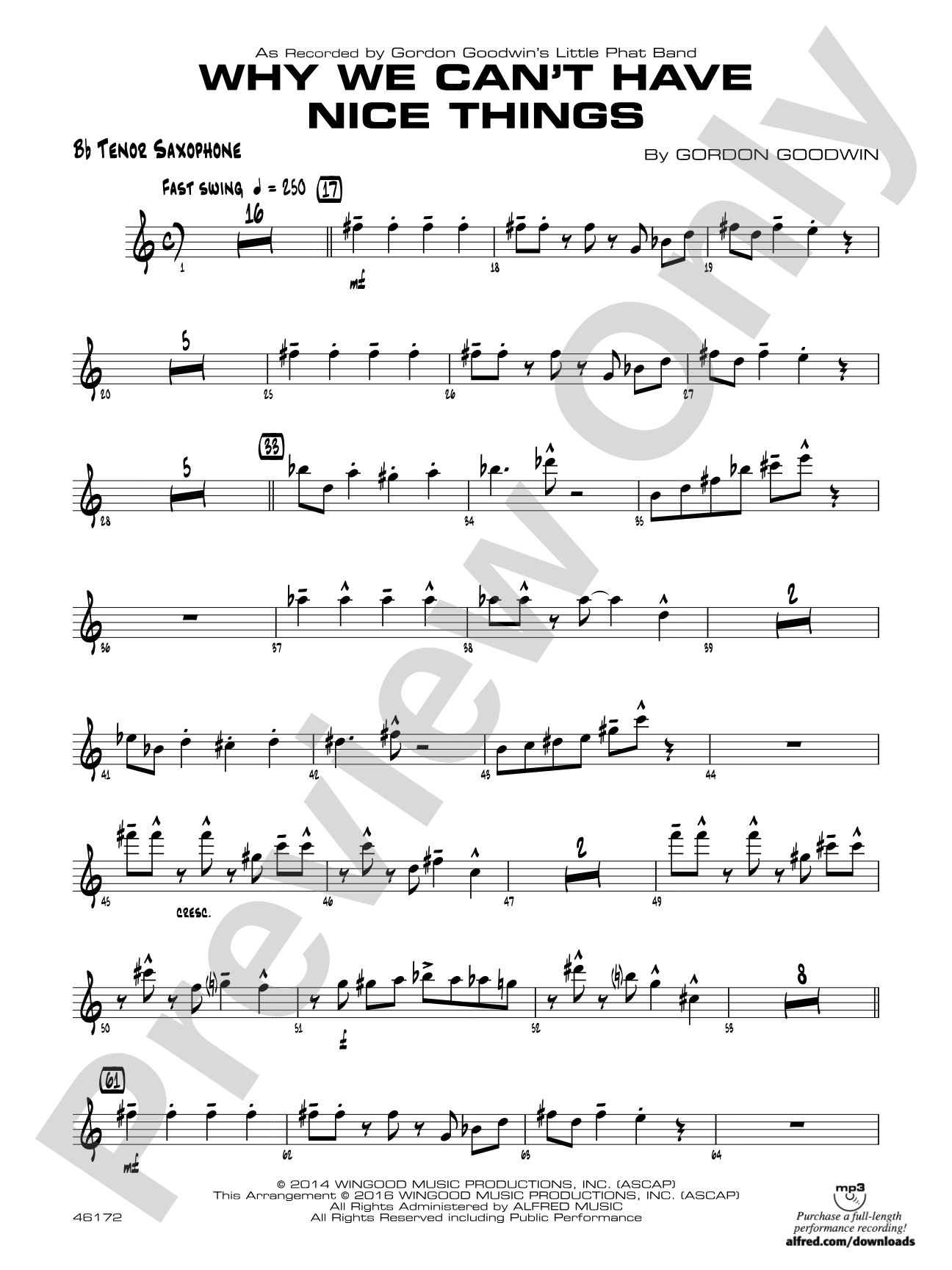
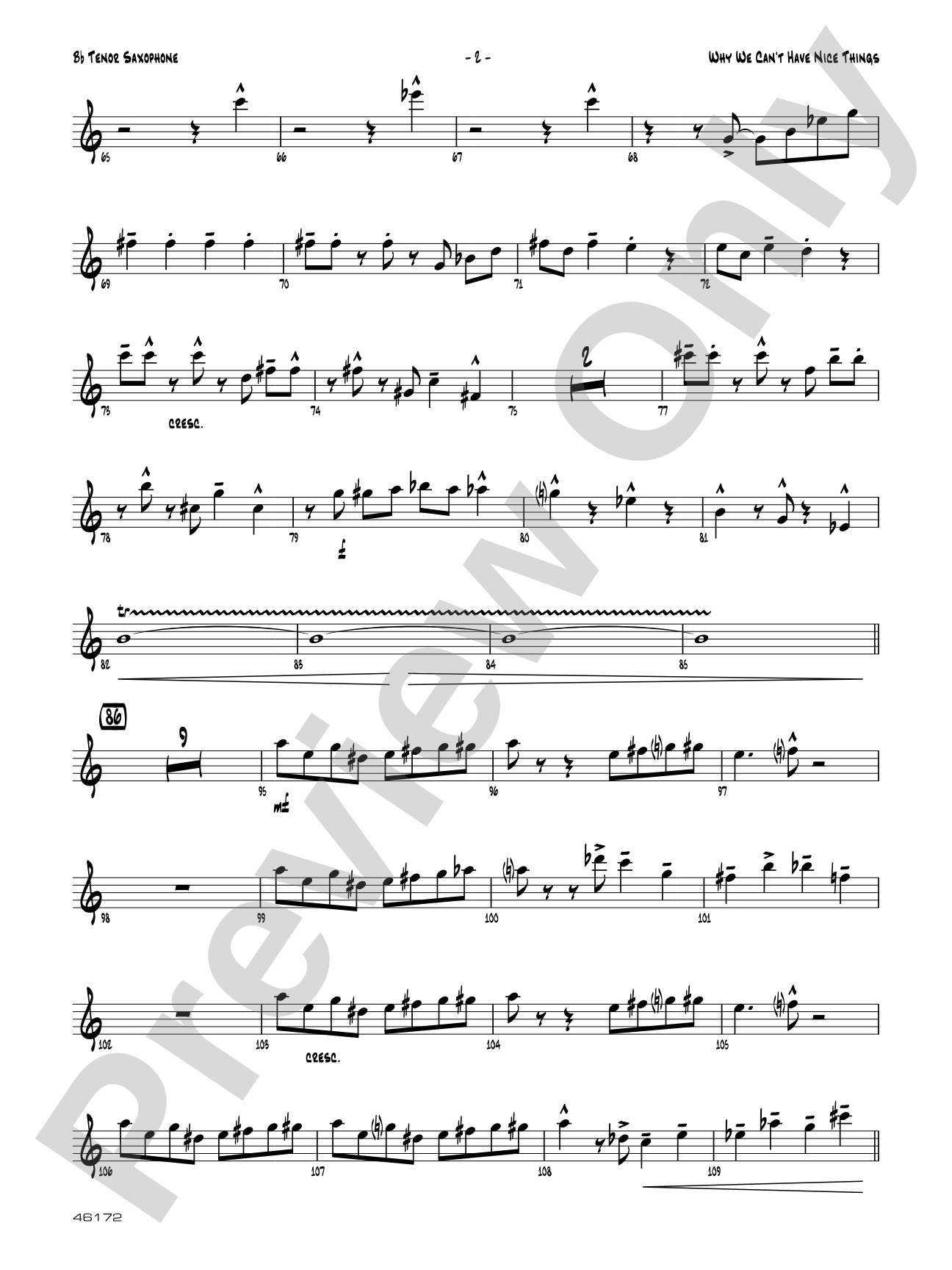

Why We Can't Have Nice Things: B-flat Tenor Saxophone
By Gordon Goodwin
Grade: 6 (Professional / Very Advanced)
Item: 00-PC-0017761_TX1
$3.00
Pickup currently not available
Description
Gordon Goodwin's "Why We Can't Have Nice Things" is your basic flag-waving, barn-burning, straight-ahead swing chart for an eight-piece band: tenor, trumpet, trombone, piano, guitar, bass, drums, and auxiliary percussion. Sure it's a challenge, but it's very doable with experienced players. Solo space for sax, trumpet, and trombone as recorded by the Little Big Phat Band on the CD An Elusive Man. Can you handle it . . .? (6:18) This title is available in MakeMusic Cloud.


Don't just read it, hear it, play along with it, and watch your students grow with it. In MakeMusic Cloud, Why We Can't Have Nice Things: B-flat Tenor Saxophone comes alive with professional accompaniment, adjustable tempo, and built-in practice tools that turn solo practice into real progress.
Open in the Player
Jump straight in and assign it today.
Start Your Free Trial
Open this title and explore the full library in minutes.
Sample Audio
1
Audio File
--:--
0:00
0:00
Sample Video
No sample videos found.
Additional Details
Series:
Gordon Goodwin Little Phat Band Series
Publisher:
Alfred Music
Page Count:
55
SKU:
00-PC-0017761_TX1
More about this title
About the Composer: Gordon Goodwin
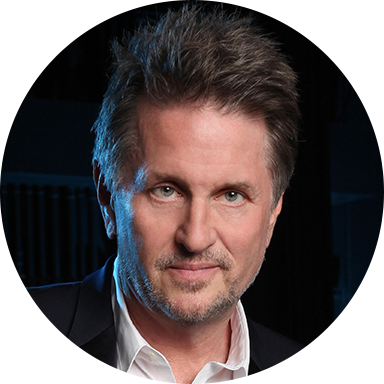
Gordon Goodwin wrote his first complete composition at five years old, working from the melodies already formed in his mind. By thirteen, he had composed his first big band chart, a facility that would define his career across film, television, and concert music. His work has earned three Emmy Awards and multiple Grammy nominations, with his orchestrations featured in films including Bad Boys II, Con Air, Enemy of the State, and Remember the Titans. He has written for and performed alongside world-class artists ranging from Quincy Jones to Christina Aguilera.
In 2000, Goodwin founded Gordon Goodwin's Big Phat Band, establishing himself as a bandleader and curator of contemporary big band jazz. The ensemble's recordings have charted multiple Grammy nominations and cemented his reputation as one of the most distinctive voices in modern jazz composition and arranging. His charts balance technical sophistication with genuine swing, demanding precision while rewarding ensemble chemistry.
Why we love this
Goodwin writes for the ensemble that can execute at a high level, and this chart respects that ambition without apology. The solo spaces (tenor, trumpet, trombone) pull directly from the Little Big Phat Band recording, giving your advanced players a clear model while leaving room for interpretation. It's the kind of piece that sounds impossibly complex until the rhythm section locks in and the band discovers the groove underneath all that activity.
What to expect
A propulsive, confidence-soaked swing chart with the rhythmic snap of straight-ahead big band tradition and the harmonic sophistication Goodwin brings from his orchestral background. The barn-burning energy never relents, but the compositional craft underneath keeps it interesting; this isn't groove for its own sake. It demands commitment and precision, then rewards both with genuine fun.
Who it's for
This chart is built for experienced jazz ensembles with solid section cohesion and soloists comfortable navigating contemporary big band vocabulary. Your band needs reliable readers and players who understand swing rhythm, not just play it mechanically. If your ensemble has placed at festivals and your soloists regularly perform, this is the level of material where they belong.
How to get the most out of it
- Study the recorded version with your ensemble before the first read; Goodwin's articulation and phrasing choices are integral to the chart's personality, and hearing the source material accelerates learning.
- Lock the rhythm section (piano, guitar, bass, drums) in sectional rehearsals before running the full chart; the soloists and horns will find their pocket once the foundation is solid.
- Allow adequate space for soloists to prepare and rehearse their material separately; the tenor, trumpet, and trombone solo sections reward individualized practice and phrasing choices.
- Balance the auxiliary percussion carefully; it's easy for brushes and hits to overwhelm the ensemble at concert dynamic, so check levels during full-band rehearsals.
How to use it
Program this for a festival or end-of-year concert where your ensemble can compete or showcase alongside other advanced groups; the six-minute duration and professional-level sound balance classical art song programs effectively. It also works as the centerpiece of a jazz-focused concert, especially when paired with other contemporary big band repertoire that similarly challenges your players.
Skills your students will build
- reading and executing complex swing articulation across the ensemble
- maintaining groove and time feel through syncopated rhythmic figures
- balancing solo space with ensemble support and blend
- understanding contemporary big band voicing and harmonic movement
- coordinating section and full-band dynamics in a high-energy context