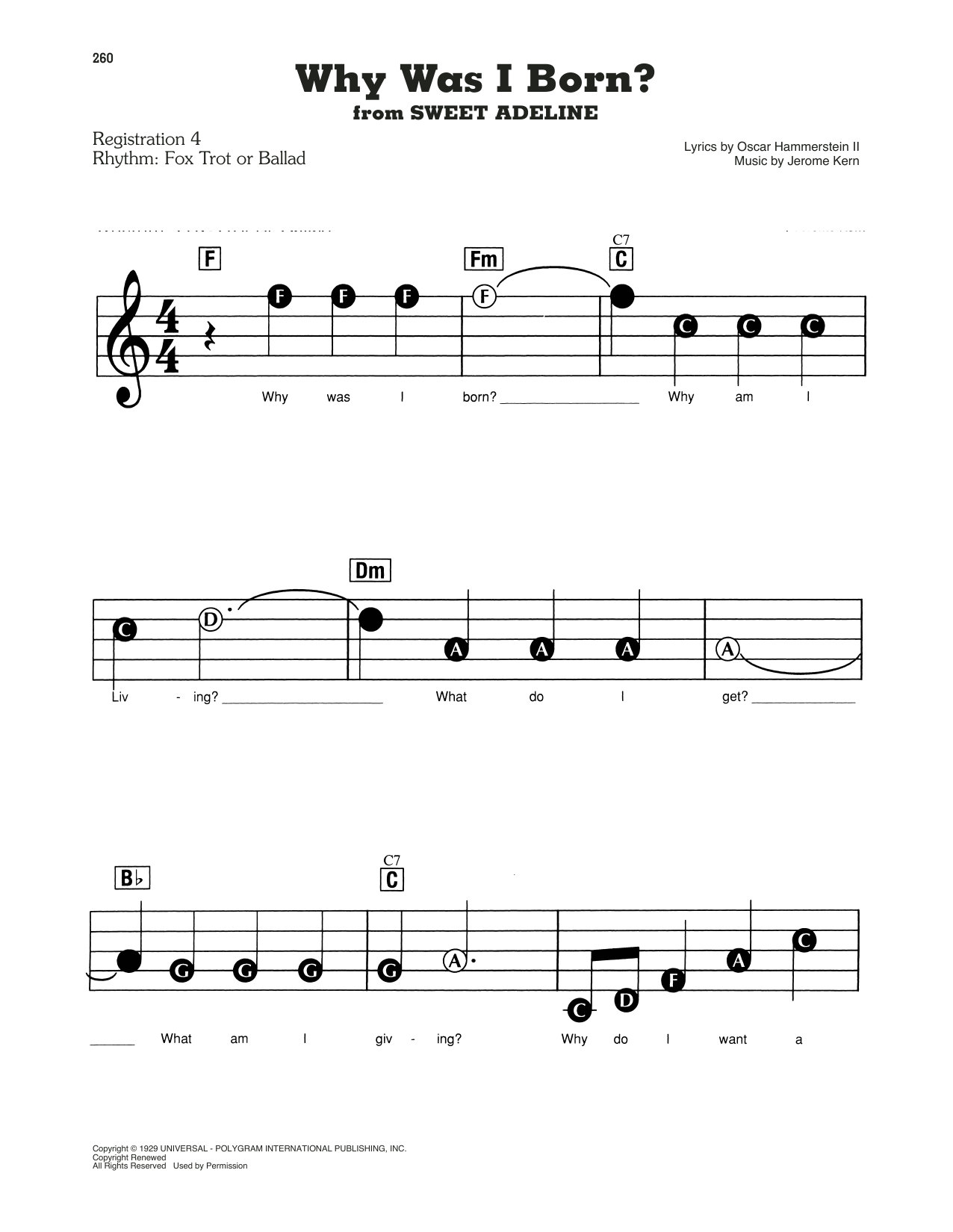
Why Was I Born? (from Sweet Adeline) Sheet Music Preview

Why Was I Born? (from Sweet Adeline): E-Z Play Today

As performed by Jerome Kern

Item: 35-DS01867916

Digital Download
$4.99
Description

Why Was I Born? (from Sweet Adeline): E-Z Play Today isn't in MakeMusic Cloud just yet...but it could be. Let us know you'd like to see it, and you'll help shape what comes next. In the meantime, start a free trial and dive into thousands of interactive titles your students can play along with today.

Sample Audio
No sample audio found.
Sample Video
Additional Details
Publisher: Hal Leonard
Page Count: 3
SKU: 35-DS01867916

More about this title

About the Artist: Jerome Kern

Jerome Kern (1885–1945) revolutionized American musical theater by elevating the craft of songwriting from vaudeville conventions to an art form rivaling classical composition. His melodies became the foundation of the Great American Songbook, influencing generations of jazz musicians and remaining central to jazz education curricula.

Why we love this

Kern's harmonic language rewards careful listening and sensitive interpretation. This selection offers pianists a chance to inhabit genuinely sophisticated voice leading without requiring virtuosic technical demands, making it accessible for intermediate players ready to think like jazz accompanists and interpreters.

What to expect

Bittersweet and introspective, the piece carries the melancholy of asking existential questions while wrapped in the warmth of Kern's golden-age orchestration sensibility. There's a yearning quality that draws the listener inward, inviting reflection rather than spectacle.

Who it's for

Pianists working toward jazz literacy and singers preparing classic American standards benefit most from this arrangement. Teachers introducing students to Kern's harmonic sophistication will find three manageable pages that reward detailed study.

How to get the most out of it

  • Treat the melody as a vocalist would. Shape phrases toward their peaks rather than playing them metronomically, allowing slight rubato to breathe.
  • Balance transparency in the left hand. Kern's harmony benefits from clear voice leading, so consider which chord tones deserve prominence rather than filling every beat with block chords.
  • Explore the recorded accompaniment to hear how the melody sits against jazz rhythm section conventions, then decide where you want your interpretation to align or diverge from that reference.

How to use it

Pair this with other Broadway standards to create a themed recital segment, or use it as a teaching example when studying American songbook harmony alongside jazz students. It also works well as a solo piano interlude in a larger concert context where you want an intellectual and emotional pause.

Skills your students will build

  • Understanding voice leading in jazz harmony
  • Interpreting rubato and phrasing in popular song arrangements
  • Recognizing and executing characteristic rhythms of 1920s–1930s Broadway style
  • Accompanying vocal lines with appropriate harmonic support and texture

You May Also Like