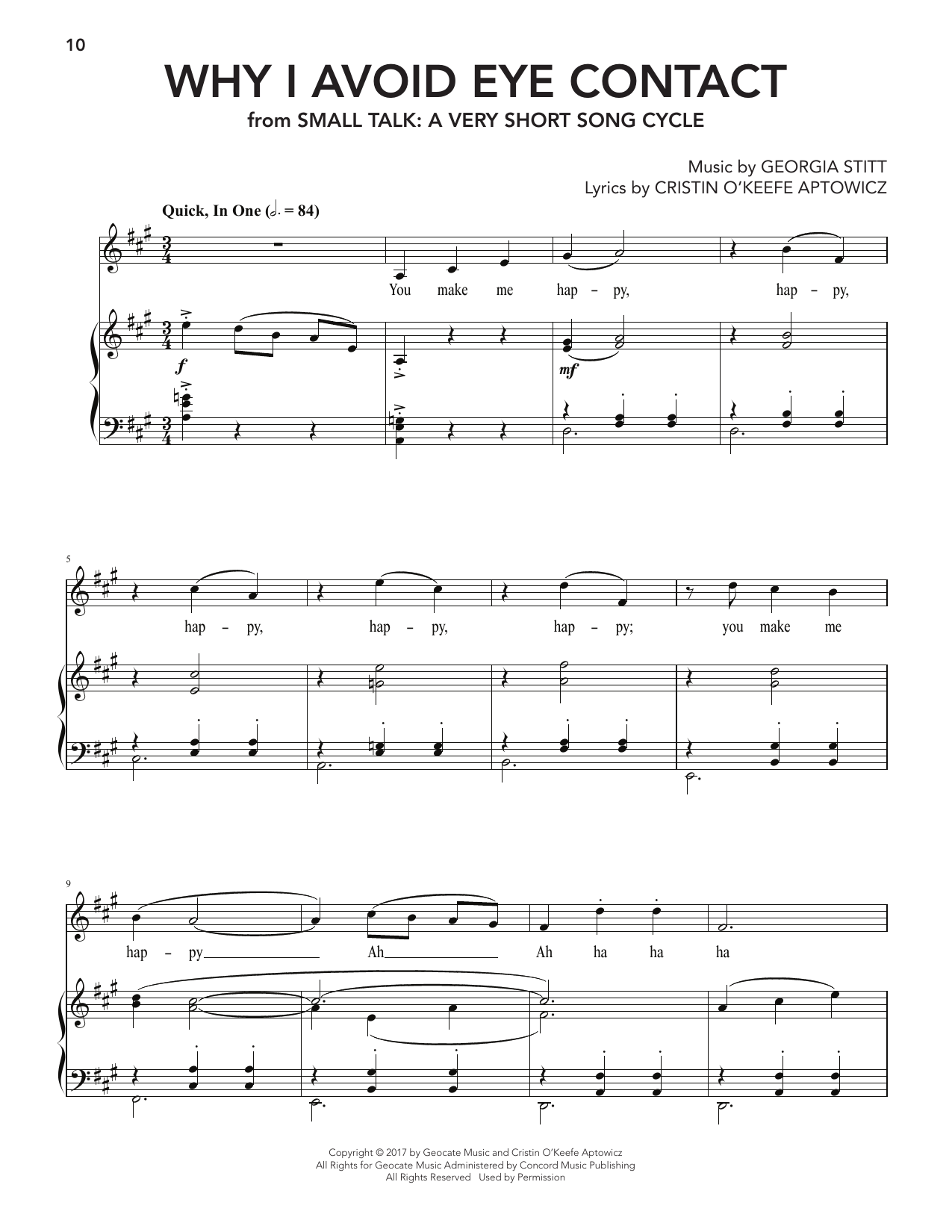
Why I Avoid Eye Contact (from Small Talk: A Very Short Song Cycle) Sheet Music Preview

Why I Avoid Eye Contact (from Small Talk: A Very Short Song Cycle): Piano Vocal

As performed by Georgia Stitt

Item: 35-DS01905410

Digital Download
$5.99
Description

Why I Avoid Eye Contact (from Small Talk: A Very Short Song Cycle): Piano Vocal isn't in MakeMusic Cloud just yet...but it could be. Let us know you'd like to see it, and you'll help shape what comes next. In the meantime, start a free trial and dive into thousands of interactive titles your students can play along with today.

Sample Audio
No sample audio found.
Sample Video
Additional Details
Publisher: Hal Leonard
Page Count: 5
SKU: 35-DS01905410

More about this title

About the Artist: Georgia Stitt

Georgia Stitt is a composer and lyricist whose work spans musical theatre, art songs, and concert music. Her writing combines sophisticated harmonic language with text-driven storytelling, creating pieces that demand both musical and dramatic intelligence from performers. Stitt's catalogue reflects a deep understanding of the voice and an ability to find the human truth in seemingly small moments.

Why we love this

This song distills social anxiety into five pages of genuine musical substance. Rather than relying on comedic exaggeration, Stitt crafts something that resonates because it's honest about the discomfort of human interaction. The writing rewards careful attention to text and subtext, making it ideal for singers learning to build character from the inside out.

What to expect

There's a carefully controlled energy to this piece, like someone managing their breathing in an uncomfortable room. The music walks a fine line between dark comedy and genuine pathos, never quite tipping into either extreme. You emerge from it understanding loneliness that's both deeply personal and widely recognizable.

Who it's for

Singers developing art song technique and interpretive maturity will find substantial material here. This works equally well in voice lessons, recital programs, or competitions where contemporary repertoire with literary merit is valued.

How to get the most out of it

  • Commit to the stillness the title suggests. Physical restraint often communicates more than gesture when the emotional content is about avoidance.
  • Treat the piano part as a scene partner rather than accompaniment. Notice where it mirrors or contradicts what you're singing, and let those moments inform your interpretive choices.
  • Find specificity in the lyrical details. What exact moment of awkwardness is this song about? Build your performance around that particular image.
  • Balance vulnerability with the character's defenses. The humor lives in the gap between what's being felt and what's being expressed.

How to use it

Pair this with other songs from the cycle for a cohesive program statement about modern social experience, or use it as a standalone piece that humanizes the anxieties your audience already knows. Its modest length makes it an excellent recital filler that packs genuine dramatic weight.

Skills your students will build

  • Text interpretation and subtext work in contemporary classical repertoire
  • Coordinating vocal phrasing with piano texture and harmonic movement
  • Performing comedy and vulnerability simultaneously without undermining either
  • Character building in music without relying on large dramatic gestures

You May Also Like