Why Don't We Get Drunk Sheet Music Preview

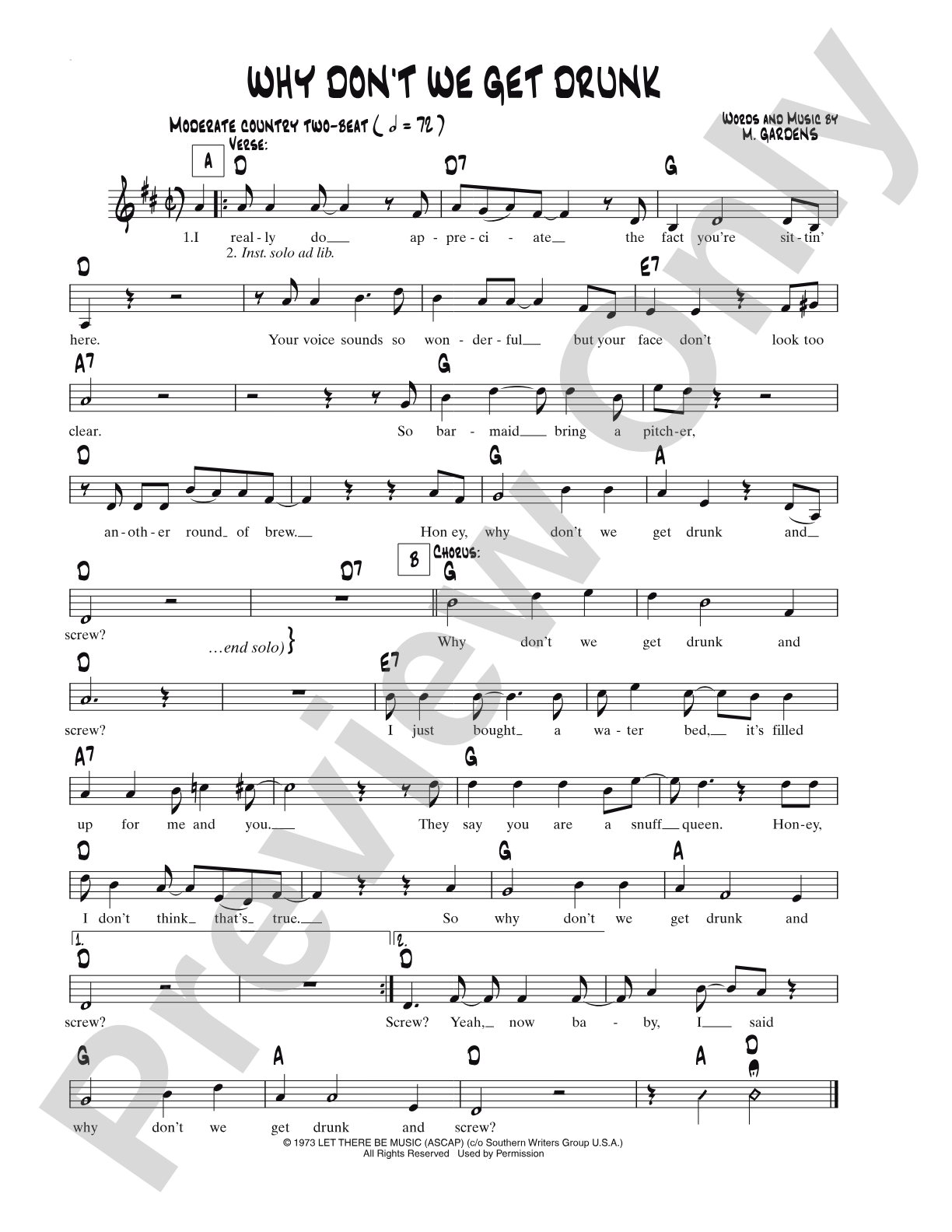
Why Don't We Get Drunk: Lead Sheet

Jimmy Buffett

Item: 00-PSL-000684

Digital Download
$1.99

One moment…

Description
Titles are: Boat Drinks * Changes in Latitudes, Changes in Attitudes * Cheeseburger in Paradise * Come Monday * Fins * Grapefruit-Juicy Fruit * He Went to Paris * Margaritaville * Pencil Thin Mustache * A Pirate Looks at Forty * Son of a Son of a Sailor * Volcano * Why Don't We Get Drunk.

Why Don't We Get Drunk: Lead Sheet isn't in MakeMusic Cloud just yet...but it could be. Let us know you'd like to see it, and you'll help shape what comes next. In the meantime, start a free trial and dive into thousands of interactive titles your students can play along with today.

Sample Audio
No sample audio found.
Sample Video
Additional Details
Publisher: Alfred Music
Page Count: 76
SKU: 00-PSL-000684

More about this title

About the Artist: Jimmy Buffett

Jimmy Buffett emerged as a distinctive voice in popular music during the 1970s, blending rock, country, and Caribbean influences into a laid-back yet sophisticated sound. His catalog spans decades of songwriting that balances humor, storytelling, and genuine musical craftsmanship, establishing him as both a recording artist and a prolific composer whose work has become embedded in American popular culture.

Buffett's songwriting often reflects narrative depth and melodic accessibility, making his compositions valuable for vocalists and pianists exploring contemporary popular repertoire. His influence extends across genres and generations, with his music remaining central to both casual and serious study of late 20th-century American songwriting.

Why we love this

This collection captures Buffett's signature storytelling in lead sheet format, giving vocalists and pianists direct access to his melodic writing without obscuring arrangements. Each tune stands independently while sharing a cohesive sensibility, making it ideal for singers building a contemporary repertoire or pianists exploring the intersection of accessibility and genuine compositional craft. The harmonic vocabulary and rhythmic ease of these pieces reward careful interpretation while remaining performable by intermediate musicians.

What to expect

These songs embody a relaxed, sun-soaked sensibility that feels both intimate and accessible. The melodies are memorable without being simplistic, and the harmonies support the warmth of the storytelling while leaving room for personal interpretation. Whether you're navigating the bittersweet reflection of "A Pirate Looks at Forty" or the easy charm of "Cheeseburger in Paradise," the collection invites you into a musical world where technical ease coexists with genuine emotional resonance.

Who it's for

Vocalists building a contemporary popular repertoire will find reliable, singable material with real melodic character. Pianists and keyboardists seeking accessible yet thoughtfully written arrangements of recognizable songs can develop both sight-reading fluency and interpretive judgment. This collection works equally well for recital performance, casual accompaniment work, or vocal coaching preparation.

How to get the most out of it

  • Pay attention to the lyrical narrative in each song; Buffett's melodies are built to serve the story, so phrase with attention to how words land and breathe
  • Treat the rhythmic swing in these pieces as integral rather than ornamental; the relaxed feel of tunes like "Margaritaville" and "Come Monday" comes from how you inhabit the pocket
  • Use the chord changes to shape dynamics and color; these aren't complex harmonies, but their effectiveness depends on how you voice and voice-lead them
  • Find the vernacular simplicity in your vocal approach; these songs work when they sound conversational rather than polished

How to use it

These pieces work well as encores or lighter selections in a recital program, particularly when paired with other contemporary or American songwriting repertoire. A vocalist could build an entire concert around Buffett's catalog or select individual songs to complement a thematic program about narrative and storytelling in popular music. The lead sheet format makes these particularly useful for jazz singers, cabaret performers, or anyone exploring song interpretation in a contemporary context.

Skills your students will build

  • Reading lead sheets with melody, lyrics, and chord symbols
  • Interpreting and performing swing rhythms and syncopation in contemporary popular music
  • Shaping phrasing and dynamics based on lyrical content
  • Understanding voice-leading and harmonic function in accessible popular song
  • Developing conversational, natural vocal delivery
  • Accompanying singers at the piano while maintaining rhythmic pocket and musical flexibility

You May Also Like