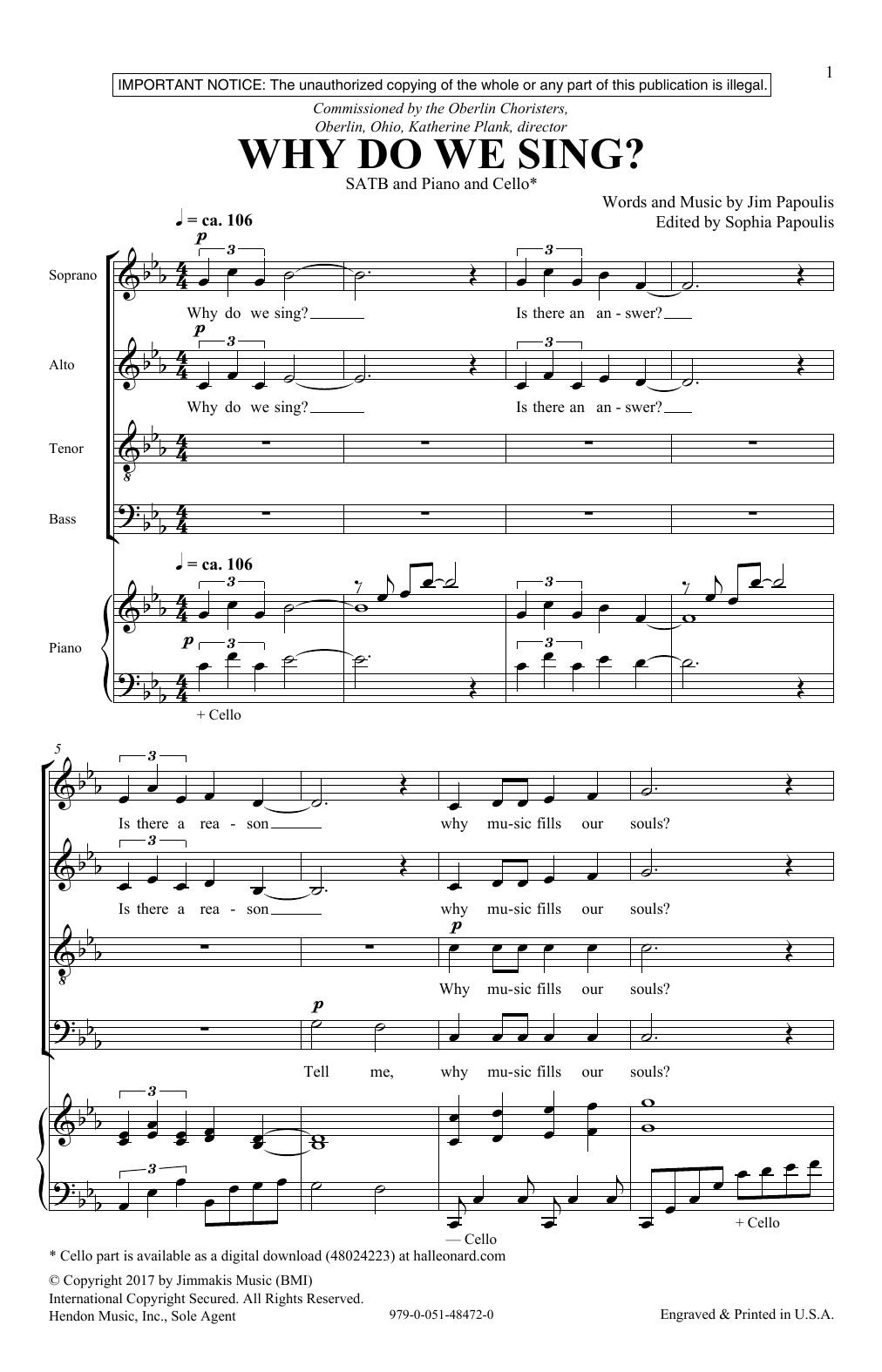
Why Do We Sing Sheet Music Preview

Why Do We Sing: SATB Choral Octavo

By Jim Papoulis

Item: 35-DS00400705

Digital Download
$2.99

One moment…

Description

Why Do We Sing: SATB Choral Octavo isn't in MakeMusic Cloud just yet...but it could be. Let us know you'd like to see it, and you'll help shape what comes next. In the meantime, start a free trial and dive into thousands of interactive titles your students can play along with today.

Sample Audio
No sample audio found.
Sample Video
Additional Details
Publisher: Hal Leonard
Page Count: 17
SKU: 35-DS00400705

More about this title

About the Composer: Jim Papoulis

Jim Papoulis is a composer and arranger whose work consistently brings contemporary sensibility to choral music. His compositions for choir balance accessibility with musical substance, making them reliable choices for singers seeking repertoire that is both engaging to perform and meaningful to audiences.

Why we love this

This piece asks a fundamental question and lets your singers answer it through music. The writing respects the SATB balance while creating moments where each section carries genuine weight, and the concert setting reveals a piece that works equally well for festival adjudication or a thoughtful program finale.

What to expect

There's quiet introspection here paired with genuine warmth. The piece invites singers into a conversation about their own musical motivation, creating an emotional landscape that feels personal without becoming sentimental.

Who it's for

This octavo works for intermediate and advanced high school choirs, community ensembles, and college singers looking for concert repertoire with substance. It suits programs that value lyrical writing and ensemble cohesion over technical display.

How to get the most out of it

  • Let the text drive the phrasing. Since the piece centers on a reflective question, resist the urge to impose artificial phrase breaks. Follow the singers' breath and the natural rhythm of speech.
  • Balance the harmonic colors by rehearsing sections separately on their individual lines before bringing everyone together. This prevents the choir from defaulting to soprano dependence.
  • Record a section rehearsal and play it back for the group. Hearing themselves often reveals intonation issues and blend problems that ear alone misses in the moment.

How to use it

Situate this as a centerpiece rather than an opener, allowing the philosophical weight to land after the audience is settled. It pairs naturally with both contemporary and classical repertoire, and works beautifully as the penultimate selection before a final, contrasting piece.

Skills your students will build

  • Maintaining independence within four-part harmony
  • Shaping long phrases across harmonic changes
  • Blending vowels and consonants across SATB sections
  • Connecting text meaning to musical expression

You May Also Like